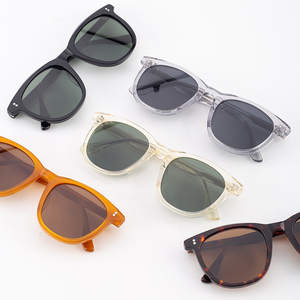
Precision Optical Profiles & Tooling-Ready Eyewear
Explore production-ready injection frames, cellulose acetate structures, and ultra-light metal assemblies designed for scalable OEM/ODM mass production.
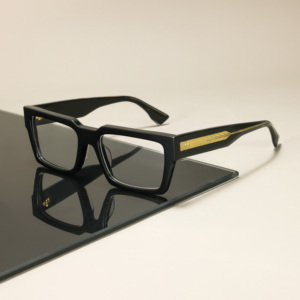
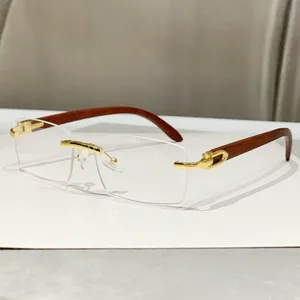

Enterprise Capacity & Industrial Footprint
Combining heritage craft discipline with scaled high-precision manufacturing, we provide complete vertical integration from digital surface generation to mass batch replication.
75+
Years Industry Lineage
3,000
Daily Output Capacity (Pcs)
1,000+
Tooling Sets Developed/Yr
90+
Global Export Markets
Full In-House Tooling Integration
Every phase—including multi-axis CNC surface milling, wire EDM spark erosion, copper electrode formulation, and optical master cavity polishing—is retained entirely within our controlled clean-room environment.
Tri-Material Tooling Competence
Our tooling workshop executes hardened steel molds for thermoplastic injection (TR90, CP, Ultem), progressive stamping and bending dies for performance metals (Titanium, Stainless Steel, Monel), and profile routers for premium Mazzucchelli acetate blocks.
Guaranteed IP Discretion & Compliance
We implement bank-level technical project isolation. Custom CAD geometries, temple ergonomics, hinge linkages, and proprietary tool configurations remain strictly protected under enforceable bilateral non-disclosure protocols.
Technical Whitepaper: Precision Eyewear Tooling Engineering & Export Protocols
Tooling development represents the fundamental barrier to scale in industrial eyewear manufacturing. For international private label brands, optical retail syndicates, and precision sports eyewear developers, selecting a tooling development exporter involves analyzing critical micro-tolerances, material metallurgy, thermal balance dynamics, and dimensional repeatability across five-figure unit runs.
1. Mold Metallurgy and Core Cavity Micro-Machining
The lifespan and dimensional consistency of an injection tool or blanking die rest squarely on steel selection. For injection-molded eyewear involving high-shrinkage polymers (such as Grilamid TR90, transparent polyamides, and bio-based plastics), our engineering facilities deploy high-grade Swedish Uddeholm Stavax ESR or Japanese Daido NAK80 premium stainless tool steel hardened to 48–52 HRC. This level of hardness resists cavity wear from fiber-reinforced pigments and corrosive plasticizers.
Precision CNC high-speed milling operates at spindle velocities up to 40,000 RPM, delivering optical surface finishes with peak-to-valley micro-roughness below Ra 0.05 µm. This micro-precision eliminates mold release marks and post-molding flow distortions across complex wrap-around geometries, such as 8-base cycling frames.
Tooling Engineering Benchmark: Cavity tolerance must be regulated within ±0.01mm on critical hinge pockets, lens bevel grooves, and nose pad attachment fixtures to ensure absolute interchangeability of sunglass polarized lenses and ophthalmic demo lenses across successive production batches.
2. Advanced Simulation: Mold Flow Dynamics & Structural Stress Relief
Prior to steel cutting, our design division executes comprehensive CAD/CAE rheological mold flow simulations. Key structural factors optimized during simulation include:
- Sub-Surface Gate Configuration: Locating injection gate points along non-visible interior frame planes to eliminate surface vestige trimming flaws.
- Uniform Cooling Jacket Distribution: Conformal cooling channels configured around contour curves prevent asymmetric warping, differential crystallization, and residual internal stress in optical frames.
- Shear Rate Stabilization: Mitigating excessive molecular shear during high-speed cavity fills ensures material optical neutrality and eliminates birefringence in tinted lenses and transparent frame bridges.
3. Tooling for Multi-Component & Hybrid Eyewear Constructs
Modern luxury and high-performance eyewear designs combine contrasting materials—such as featherweight beta-titanium sheet temples anchored to hand-finished Mazzucchelli acetate eye-wires, or co-injected rubber ear-socks over TR90 skeletal structures. Tooling development for hybrid assemblies requires coordinated die-set fabrication:
- Progressive Stamping Dies: Up to 14 sequential stamping, piercing, and coin-embossing stations handle titanium and stainless steel rim wires, delivering uniform bevel angles for automated rim-locking screw assemblies.
- Two-Shot (2K) Rotary Tooling: Dual-material molds enable in-mold bonding of soft thermoplastic elastomer (TPE) grips directly onto rigid structural chassis without hazardous solvent adhesives.
- Diamond-Turned Acetate Routing Master Profiles: In-house multi-axis acetate cutting master jigs replicate bespoke geometric silhouettes, maintaining continuous aesthetic coherence from pilot samples to bulk delivery.
Strategic Procurement Trends: The Future of Global Eyewear Tooling (2025–2030)
Global procurement teams are moving away from fragmented sourcing models toward vertically integrated technical suppliers capable of bridging industrial design, tooling development, and compliance certification under one roof. The following market shifts define the next generation of eyewear export manufacturing:
Integration of Rapid 3D Micro-SLA with Hardened Soft-Tooling
Traditionally, brand development teams waited 45 to 60 days to evaluate functional frame samples from production molds. Today, advanced agile tooling allows brands to validate mechanical hinge performance, facial ergonomics, and pantoscopic tilt within 5 to 7 days via ultra-high-definition SLA prototyping and sacrificial soft-tool validation before initiating Class-A hardened steel tooling investments.
Sustainable Material Compatibility & Tool Compensation
As international supply chain legislation pushes for circularity, procurement specifications mandate compliance with bio-based polyamides, recycled PET (rPET), and biodegradable cellulose acetates (with bio-content exceeding 68%). These sustainable compounds display distinct thermal shrink rates, cooling curves, and flow dynamics compared to traditional petroleum polymers. Contemporary tooling engineering incorporates variable cavity compensation algorithms to ensure eco-friendly frames maintain standard ophthalmic sizing parameters.
Decoupled Tooling Ownership & Decentralized Assembly Protocols
Leading optical groups are actively hedging geopolitical risks by contracting China-based toolmakers to engineer, qualify, and validate production-ready tooling, which is then retained for local production or exported directly to overseas final-assembly hubs. Tooling platforms must conform to standardized injection press interfaces (such as Euromap standards) and include comprehensive technical documentation to facilitate seamless multinational production.
Frequently Asked Questions for Eyewear Sourcing Directors
Key technical, financial, and logistical insights on commissioning custom eyewear tooling and scaling volume export production.
What is the typical lead time from initial 2D/3D design to validated T1 mold samples?
+
Under standard development workflows, 3D engineering validation and mold design require 5 to 7 business days. CNC steel machining, EDM spark erosion, and heat treatment take approximately 25 to 30 calendar days. First article T1 trial samples—including initial CMM dimensional reports—are shipped to clients within 35 to 45 days from approved tooling blueprints.
How do you guarantee tooling lifespan and cavity dimensional tolerances over extended production cycles?
+
We use premium European and Japanese tool steels (such as Stavax ESR and NAK80). Our high-precision injection molds are rated for 300,000 to 500,000 cycles under systematic preventative maintenance. Tool maintenance, cavity degreasing, ultrasonic cleaning, and cooling line descaling are performed every 25,000 cycles at our facility at zero additional cost to the client.
Who owns the intellectual property and physical tooling once the development fees are paid?
+
The client maintains 100% proprietary ownership of all 3D CAD/CAM models, electrode programs, optical surface profiles, and physical steel mold assemblies. Tooling is assigned a secure tracking serial number and cannot be modified, displayed, or used to produce units for any third party without explicit written authorization from the owner.
What regulatory standards and compliance testing are incorporated into mold qualification?
+
Tooling parameters directly govern structural compliance. We engineer and calibrate molds to meet or exceed international standards including ISO 12870 (Ophthalmic Optics - Spectacle Frames), ISO 12312-1 (Eye and Face Protection - Sunglasses), ANSI Z80.3 (Nonprescription Sunglasses and Fashion Eyewear Requirements), and AS/NZS 1067.1. Frame samples undergo strict hinge endurance (minimum 5,000 open-close cycles), bridge deformation resistance, nickel leaching release, and thermal stability testing.
Can existing tooling developed elsewhere be transferred and adapted to your production floor?
+
Yes. Our tooling engineering team regularly receives client mold sets globally. We conduct full diagnostic evaluations of mold base integrity, guide pin alignments, manifold heating systems, and cooling efficiency, modifying clamping plates or ejection mechanisms where needed to fit our automated injection centers.
What are the minimum order quantities (MOQ) once custom tooling is approved for production?
+
For injection molded frames (TR90, CP, PC), the standard production MOQ is typically 600 to 1,200 pieces per model, which can be divided across 2 to 4 custom colorways. For bespoke hand-crafted acetate profiles, MOQs start as low as 300 pieces per model to accommodate independent boutique collections.
Initiate Your Next Eyewear Tooling Project
Connect directly with our precision toolmakers and optical engineering consultants. Review our complete product catalog, request DFM assessments, and secure your competitive manufacturing edge.