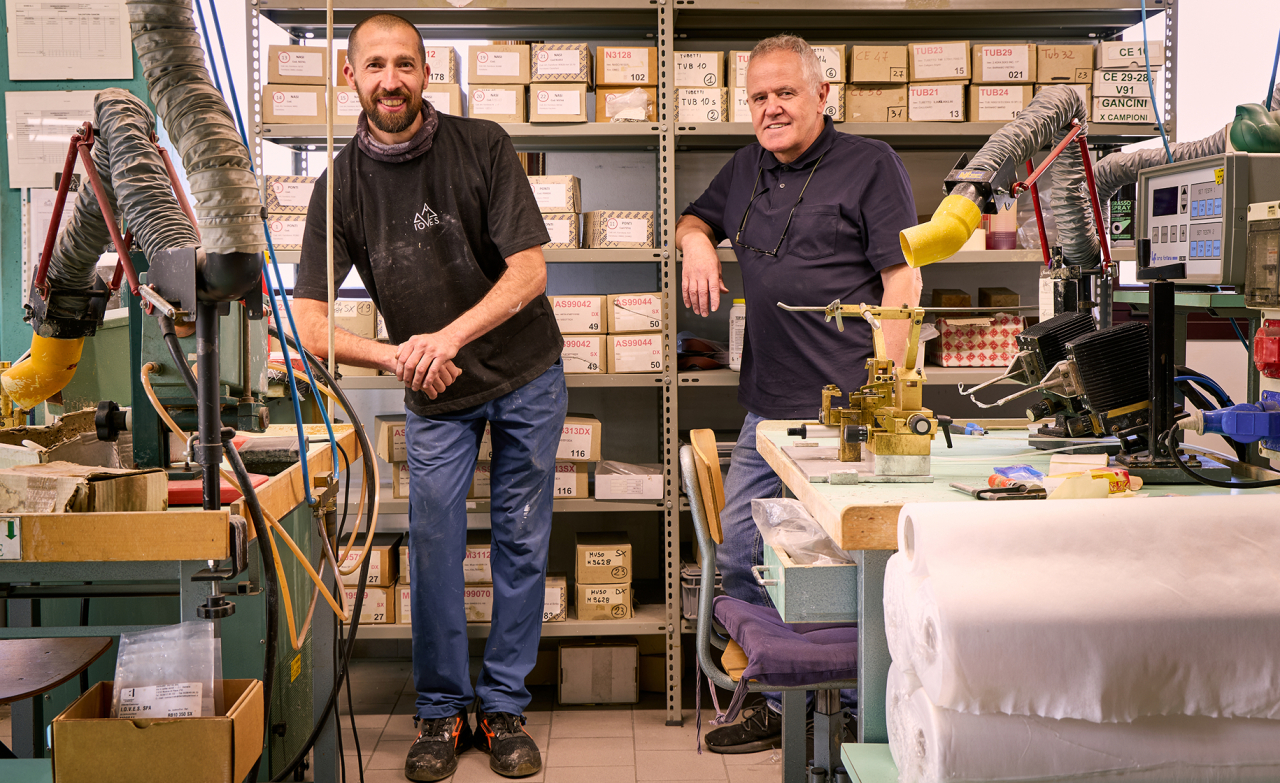
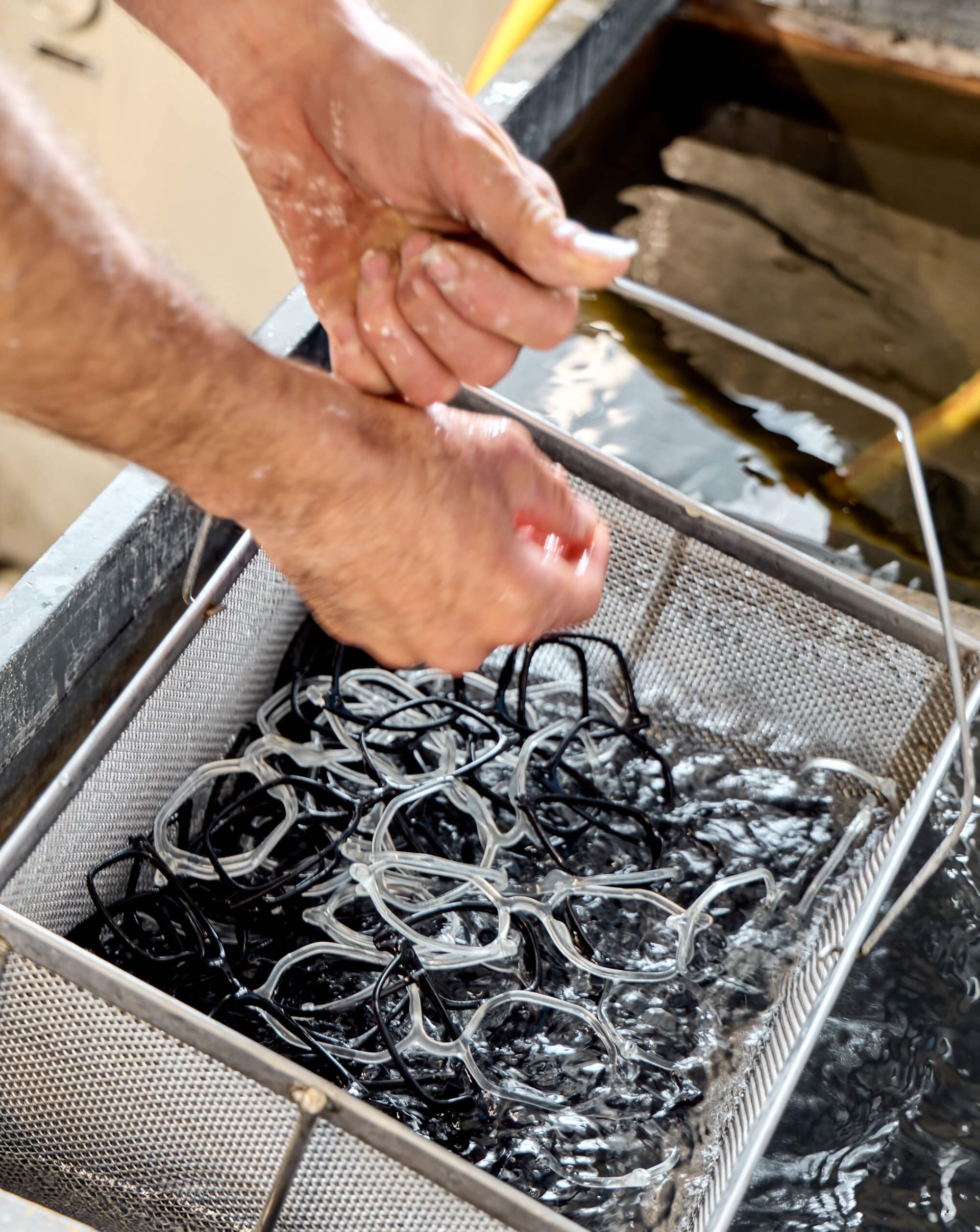
Automated CNC precision milling and tumbling for acetate optical frames at the IOVES facility in Cadore
Italian heritage of handcrafted acetate optical frames manufacturing in Lozzo di Cadore since 1950
Master eyewear artisan calibrating custom acetate optical frame fronts and hand-setting hinges
Detailed inspection of cured Mazzucchelli acetate optical frames in Lozzo di Cadore workshop
Engineering & OEM Directory Lozzo di Cadore, Belluno — Italy Cellulose Acetate Excellence Since 1950

Acetate Optical Frames: The Definitive B2B Sourcing, Technical Engineering & Global Procurement Guide

The Material Benchmark

Cellulose acetate optical frames represent the undisputed standard in premium ophthalmic eyewear. For optical dispensary chains, high-volume retail buyers, and luxury private label brands, sourcing premium acetate frames requires navigating complex technical variables—from polymer plasticizer migration and hygroscopic slab curing to 5-axis CNC router tolerances, barrel tumbling media recipes, and ergonomic pantoscopic tilt angles.

Manufactured at the intersection of natural plant-based chemistry and precision mechanical engineering, high-grade acetate optical frames offer structural memory, hypoallergenic skin contact, and infinite chromatic depth. Unlike low-cost thermoplastic injection-molded eyewear that degrades under UV light and resists optical cold-snap adjustments, hand-finished cellulose acetate frames provide ophthalmic labs and opticians with predictable glazing malleability and enduring comfort.

Founded in 1950 in Lozzo di Cadore—the alpine cradle where Italian eyewear engineering was established—IOVES delivers vertically integrated production for acetate optical frames. Our Cadore facility transforms raw block and sheet acetate into finished, compliant, and beautifully detailed frames, yielding an industrial capacity of 3,000 pieces per day with full European medical device standard certification.

Established in Cadore
1950
Years of Acetate Craft
75+
Bespoke Models / Year
1,000+
Daily Frame Production
3,000
Global Markets Supplied
90+
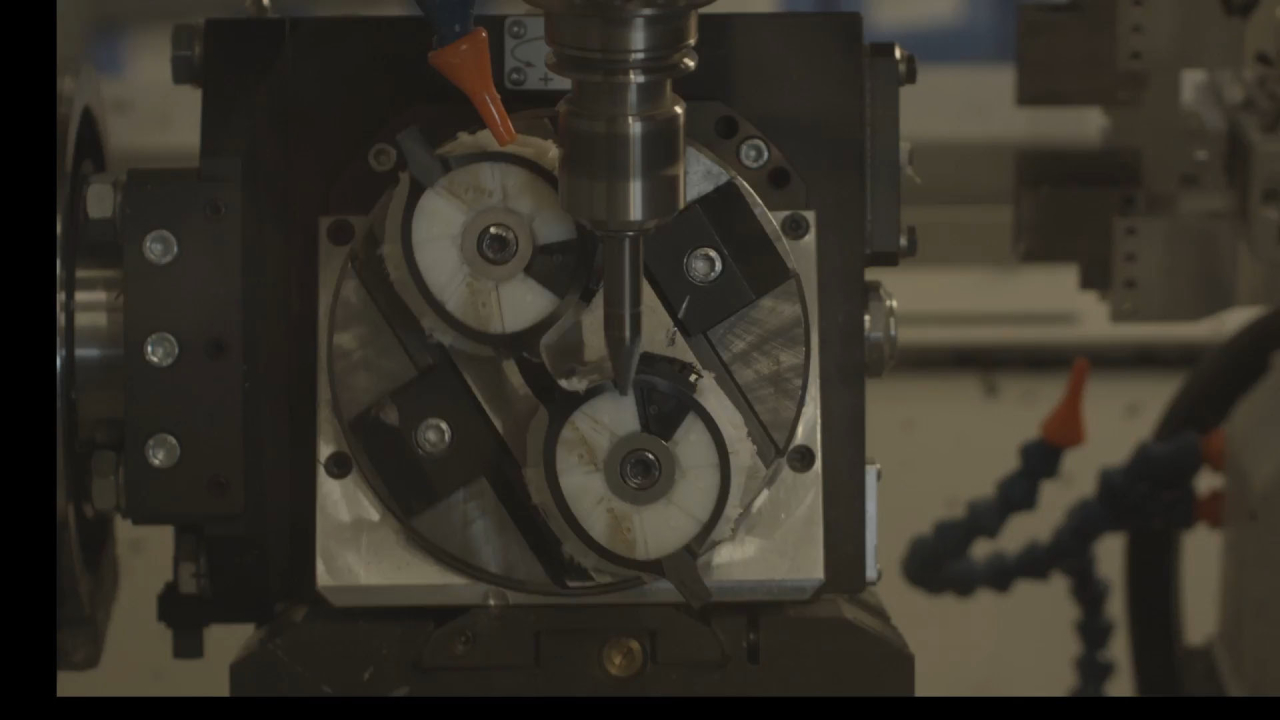
Milling and finishing raw cellulose acetate blocks at IOVES Lozzo di Cadore factory
Cadore Clean-Room Curing & Milling Floor
Craftsmen assembling core wire temples and verifying hinge alignment on acetate optical frames
Vertical Precision: 5-Axis Milling, Wire Shooting & Hand-Buffing
Technical Material Analysis

Cellulose Acetate vs Alternative Eyewear Polymers

Understanding the mechanical and chemical parameters of optical frame materials is crucial for procurement officers seeking to minimize returns, maximize glazing yield, and protect brand reputation.

Material Property Cellulose Acetate (Block / Extruded) Bio-Based Acetate TR-90 (Grilamid Polyamide) Polycarbonate / Injection CP
Raw Material Source Natural Wood Pulp & Cotton Linters + Plasticizers Renewable Biomass + Plant-Based Bio-Plasticizers Petroleum-derived synthetic polymer (Nylon 12) Petroleum-based aromatic hydrocarbon resins
Manufacturing Method Sheet lamination, multi-axis CNC routing, tumbling Sheet casting, CNC diamond cutting, hand polishing High-pressure molten injection molding Hot thermal fluid mold injection
Optometric Adjustability Superior: Easily heated (60°–70°C) and adjusted by opticians Superior: Retains memory curves post-glazing adjustment Poor: Extreme spring-back memory; difficult to customize Brittle: High risk of snap fractures when heated
Surface Finish & Luster Deep, organic multidimensional chatoyancy; repolishable Silky warm organic touch; high depth of transparency Flat, uniform surface coat; requires spray lacquering Superficial gloss; peels and clouds over prolonged wear
Glazing Groove Stability ±0.05 mm tolerance; holds high-prescription optical lenses High dimensional stability; zero cold shrinkage Variable bevel tension; risk of lens pop-out under heat Prone to stress cracking upon alcohol contact
Product Recommendations

High-Performance Acetate Optical Architectures for Modern Retail

Based on global order telemetry from our network in 90+ countries, these three core acetate configurations represent the most dependable revenue generators across optical dispensary chains and prestige labels.

Ergonomic everyday acetate optical frames engineered for universal fit

The Architectural Classic

Everyday Optical Series

Engineered with 6.0 mm Italian cellulose acetate faceplates and customized 3.5 mm step-down wire-core temples. Developed for high-volume commercial programs requiring universal ergonomic nose bridge geometries, effortless progressive lens fitting, and reliable colorways including Havana tortoise and deep crystalline smoke.

Laminated multi-layer acetate optical frames with sculpted bevels

Sculpted Multi-Layer Acetate

Design Forward Collection

Featuring bi-layer and tri-layer thermal bonding with custom Italian acetate laminations. Intricate 3D diamond chamfering along the brow-line creates refined shadows and showcases the internal custom metal core wire. Engineered with 5-barrel German OBE hinges for smooth, long-term friction control.

Luxury acetate-metal combination optical frames with micro-detail accents

Combination Acetate-Metal

Luxury Ophthalmic Class

Combining high-density cellulose acetate with surgical-grade monel and stainless steel inner skeletons. Ideal for luxury collections requiring genuine Swarovski crystal settings, laser filigree temple engravings, and integrated titanium nose pads tailored for varied nasal anatomies.

Market Intelligence & Sourcing Outlook

Procurement teams navigating the 2025–2030 optical cycle face rapidly evolving consumer expectations, regulatory scrutiny, and supply chain realignments.

01

Strict Traceability & The Bio-Acetate Mandate

Corporate Sustainability Due Diligence Directive (CSDDD)

European and North American regulatory authorities are moving beyond green claims to mandate verifiable material provenance. The sourcing of acetate optical frames is shifting heavily toward ISCC Plus-certified cellulose acetate derived from sustainably harvested coniferous forests. Procurement contracts increasingly require proof of non-phthalate plasticizers (such as triacetin and bio-based ester formulations), ensuring end-of-life biodegradability under ISO 14855 standards without sacrificing mechanical stability.

02

Decoupling and Nearshoring to Established Italian Districts

Cadore's Industrial Advantage

Geopolitical disruptions and volatile maritime shipping rates have driven Tier-1 optical brands to shorten supply lines. Sourcing acetate eyewear directly from the Cadore manufacturing cluster eliminates 45-day ocean transits, mitigating inventory holding costs while offering genuine 'Made in Italy' certification that carries a proven 25%–40% retail markup advantage in North America, Europe, and developed Asia.

03

Hyper-Sculpted 8mm–10mm Vintage Profiles vs Ultralight Acetate

Bimodal Portfolio Demands

Consumer optical buying has split into two distinct mechanical paradigms: heavyweight bold vintage aesthetics utilizing 8.0 mm to 10.0 mm block-milled sheets with dramatic beveling, contrasted with ultra-thin 3.0 mm high-density acetate (HDCA) providing featherweight all-day comfort. Manufacturers must possess both heavy CNC milling capacity and delicate curing controls to prevent thin-profile warpage.

04

Digital Fitting Integration & Global Fit Geometry

Optimizing Dispensary Conversion

Modern optical buyers require CAD-level parametric adaptability. Acetate frames must be engineered for automated 3D virtual try-on platforms, while pad arms and nose bridges are calibrated for Asian, European, and universal ergonomic profiles. This reduces return rates in direct-to-consumer and omnichannel retail networks.

Technological Evolution

Engineering Advancements in Optical Frame Production

The manufacturing of acetate optical frames has transformed from simple pantograph routing into an exact science combining algorithmic 5-axis CNC machining with time-honored artisanal finishing.

Historically, cellulose acetate frames suffered from dimensional instability if the material was cut immediately after extrusion. Today, at IOVES, raw acetate blocks undergo controlled environmental stabilization in specialized curing chambers, where moisture levels and thermal gradients are carefully modulated for up to 30 days. This process eliminates internal polymer stresses, preventing bridge torsion and frame splay when prescription lenses are glazed into place.

Furthermore, contemporary CNC routing machines now cut internal eyewire lens grooves at compound bevel angles with micron-level accuracy. This guarantees that modern high-index prescription lenses sit flush against the frame rim, preventing unsightly gap lines and maximizing lens retention across extreme temperature variations.

Following CNC cutting, frames undergo a four-stage tumbling process lasting over 96 hours in rotating beechwood and birch barrels with specialized abrasive pumice, polishing paste, and carnauba wax. This removes machining ridges and produces the smooth, luminous surface finish that distinguishes authentic Italian eyewear craftsmanship.

Connect With Our Engineering Team
In-House Manufacturing Workflow

From Raw Slab to Finished Acetate Optical Frame

IOVES manages every phase under one roof in Lozzo di Cadore. This complete vertical integration gives global buyers absolute quality control, consistent lead times, and certified traceability.

  1. 01

    Slab Selection & Curing

    Top-tier cellulose acetate slabs from certified suppliers undergo thermo-hygrometric seasoning in our curing ovens to equalize internal material tension.

  2. 02

    5-Axis CNC Precision Milling

    High-speed diamond router bits mill the frame fronts, compound eye bevels, and bridge geometries to exact tolerances within ±0.05 mm.

  3. 03

    Core Wire Insertion & Hinges

    Custom stainless steel or nickel-free brass wire cores are precisely shot into heated acetate temples, followed by ultrasonic or riveted hinge anchoring.

  4. 04

    96-Hour Tumbling & Hand Buff

    Multi-stage barrel tumbling in natural birch chips with organic pumice, followed by artisan wheel buffing with carnauba wax for deep visual gloss.

  5. 05

    100% Optometric Inspection

    Individual piece-by-piece verification: hinge torque resistance, eyewire bevel curvature, bridge alignment, and packaging under strict ISO/MDR standards.

Three generations of Italian optical frame manufacturing heritage in Cadore

Preserving Italian Eyewear Heritage in Cadore Since 1950

75+ Years of Cadore Excellence

Three generations of family ownership. From handcrafted workshop beginnings in Lozzo di Cadore to a global manufacturing presence serving over 90 countries. We transform the finest Italian cellulose acetate into optical collections that carry authentic design credibility and lasting durability.

Institutional Enterprise Advantages

Why Global Brands Partner with IOVES for Acetate Optical Frames

Professional optical procurement officers require suppliers with verifiable stability, advanced engineering capacity, and absolute intellectual property security. Here is how IOVES delivers.

01

Three Generations of Cadore Know-How

Continuous Manufacturing Since 1950

With over 75 years of specialized eyewear production in Lozzo di Cadore, our technical teams possess deep institutional expertise in acetate polymer behavior, shrinkage compensation, and mechanical joint integration. We turn difficult design concepts into commercially viable, reliable optical frames.

02

Complete Vertical Integration Under One Roof

From CAD Design to Final Quality Control

Every step—from industrial design, technical prototyping, and tooling to CNC milling, core insertion, tumbling, and manual buffing—is executed in our own Cadore facility. Eliminating external subcontractors means tighter quality control, consistent batch coloring, and predictable production schedules.

03

Substantial Production Capacity & Agility

3,000 Frames Daily / 1,000+ Models Annually

Our facility combines industrial scalability with workshop flexibility. We produce 3,000 finished pieces per day and develop more than 1,000 distinct models annually, supporting large optical retail chains and exclusive boutique lines with dependable consistency.

04

Guaranteed Intellectual Property Protection

Confidentiality as Standard Practice

We protect your proprietary designs, mold tools, and retail rollouts under strict European non-disclosure protocols. Private label CAD files and custom laminated acetate patterns are kept strictly confidential and never shared across client programs.

05

Comprehensive Regulatory Compliance & Documentation

CE, ISO 12870 & FDA Registration

Frames leaving our facility include complete European MDR 2017/745 Class I medical device documentation, CE conformity declarations, REACH test reports, and FDA registration support for seamless customs clearance across global ports of entry.

Procurement Intelligence

Frequently Asked Questions for Acetate Optical Frame Buyers

Key technical and contractual answers addressing the most common questions raised by optical sourcing managers, distributors, and eyewear brand founders.

Ask a Project Question

What distinguishes premium cellulose acetate optical frames from cheap injection plastic?

Cellulose acetate is a semi-synthetic polymer derived from renewable plant cellulose (wood pulp and cotton linters). The material is blended with plasticizers, cured, pressed into dense sheets, and precision-milled using multi-axis CNC machines before undergoing days of tumbling and hand-buffing. This yields a rich, warm surface touch with deep internal color layers.

Crucially for optical dispensaries, acetate frames can be repeatedly heated between 60°C and 70°C to adjust pantoscopic tilt, bridge alignment, and temple wrap to fit individual patient head shapes without losing mechanical memory. In contrast, low-cost injection-molded plastics (such as petroleum-based polycarbonates or acrylics) are molded from liquid resin. They lack internal core wires, snap easily under strain, and resist heating, making precise ophthalmic lens glazing difficult and uncomfortable for wearers.

What are the standard Minimum Order Quantities (MOQs) and lead times for custom acetate optical frames?

For custom OEM and private label acetate frame developments, our production MOQs typically begin at 300 to 500 units per model, which can be split across 3 to 4 distinct color combinations. When utilizing stocked, seasoned Italian acetate slabs from our standard material reserve, rapid prototyping can deliver 3D fit models and master physical hand-carved acetate samples in 3 to 4 weeks.

Full-scale production runs generally require 75 to 90 days following final sample sign-off. This timeline accommodates essential production steps, including thorough oven curing, 5-axis CNC routing, 96 hours of barrel tumbling, hinge assembly, pad printing, and comprehensive quality control inspection.

Can IOVES supply certified eco-friendly or bio-based acetate optical frames?

Yes. As environmental stewardship becomes a core requirement for international optical retail groups, IOVES works directly with premier Italian suppliers—including Mazzucchelli 1849—to process certified bio-acetate formulations. In these materials, traditional fossil-fuel phthalate plasticizers are replaced with plant-based esters.

Our bio-acetate optical frames are certified to biodegrade according to ISO 14855 standards while maintaining the mechanical strength, clarity, and easy adjustments required for professional ophthalmic glazing. We provide full certificates of origin and compliance documentation with every production shipment.

How does IOVES ensure batch-to-batch color stability and dimensional precision in acetate optical frames?

Color stability and dimensional integrity depend directly on the curing and machining steps. IOVES uses seasoned acetate slabs cured in climate-controlled environments to remove residual solvents and prevent post-production twisting or shrinkage.

Frame fronts and temple pieces are cut on precision CNC machines calibrated to tight tolerances of ±0.05 mm. Eyewire bevel grooves are cut with dedicated diamond tooling, ensuring that optical lenses snap securely into place across automated glazing lines without requiring manual filing or frame warping.

Does IOVES support global compliance, CE marking, and FDA registrations for acetate eyewear imports?

Every optical frame leaving our Lozzo di Cadore facility is fully certified under the European Medical Device Regulation (MDR 2017/745 Class I) and meets international ISO 12870 standards for ophthalmic frames. We provide full CE Declarations of Conformity, REACH certifications confirming the absence of hazardous chemicals, and nickel-release documentation (EN 1811) for internal core wires and metal hinges.

For clients importing into the United States, we supply full FDA device listing verification and California Proposition 65 compliance documentation to ensure clear passage through customs inspections.

How are custom core wires and hinge mechanisms integrated into acetate frames?

We use high-temperature pneumatic wire shooters that shoot custom metal cores into softened acetate temples with precise depth and angle alignment. Clients can select custom wire styles, including engraved chevron motifs, filigree reliefs, or discreet brand logos that appear through crystal-clear acetate temples.

For hinge connections, we provide both riveted hinges—fixed through the front faceplate with visible rivets for authentic vintage character—and ultrasonic heat-staked hinges, which anchor securely into the frame front for sleek, minimalist styles. All hinges undergo multi-thousand-cycle friction testing to ensure smooth, reliable temple action.

Direct Manufacturing Inquiry

Build Your Custom Acetate Optical Frame Collection with IOVES Cadore

Whether you represent an established optical retail chain seeking a reliable European manufacturing partner, an importer looking to develop a private label line, or an independent eyewear designer demanding precise craftsmanship, our engineering team in Lozzo di Cadore is ready to discuss your project specifications.