Engineered Carbon Fiber & Composite Eyewear Lines
From pure autoclave-cured 3K dry carbon weave temples to advanced TR90-carbon hybrid cycling shields, explore our primary B2B export models built to international optical standards.
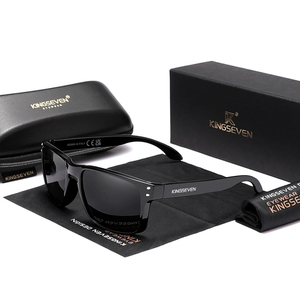
KINGSEVEN Brand Square Retro Sport's TR90 Sunglasses Women Men Carbon Fiber Pattern Design Outdoor Sports Eyewear 758
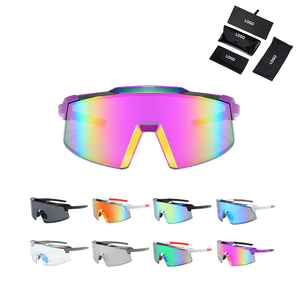
2024 Hot Sale Custom Logo Brand Running Glasses UV400 Sports Sunglasses Mountain Bike Riding Road Sports Sun Glasses
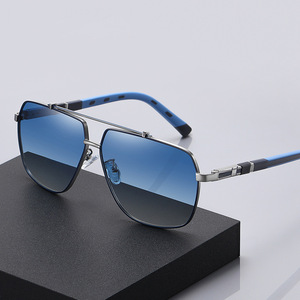
Spot Wholesale Fashion Men's Polarized Sun Glasses Large Frame UV400 Protection Mirror Lens Carbon Fiber Temple Pilot Sunglasses
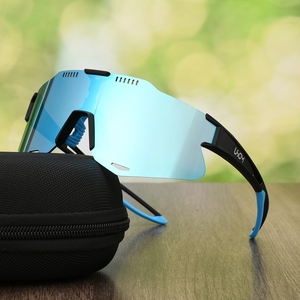
Custom New Big Frame TR 90 Gafas Sport Mountain Running MTB Bike Road Cycling Sunglasses Glasses Mens Outdoor Sport Sunglasses
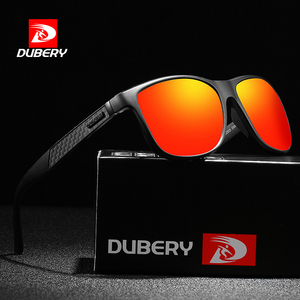
DUBERY 2020 Sport Driving Sunglasses New Classic Polarized Sun Glasses,sports Sunglasses Popular Polarized Carbon Fiber PC Men
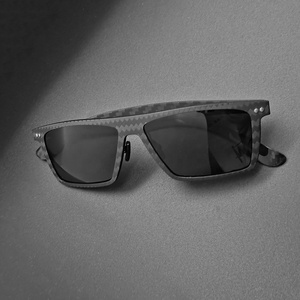
100% Full Real Carbon Fiber Sunglasses UV400 Polarized Outdoor Ultra Light Durable Luxury Sunglasses For Driving
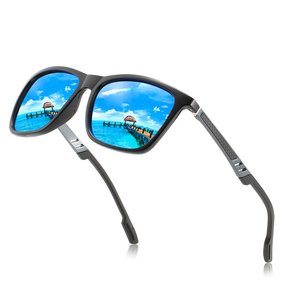
High-End Luxury Square Men's Polarized Sunglasses Premium Carbon Fibre Frame with TAC Lenses Direct From Manufacturers
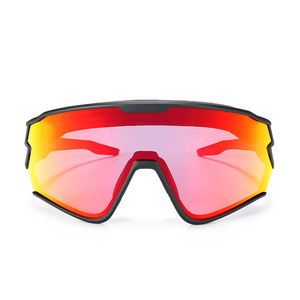
Custom Logo TR90 Cycling Glasses Interchangeable Photochromic Polarized Sports Sunglasses for Running
Aeronautical-Grade Composites vs. Standard Eyewear Plastics
As a specialized China carbon fiber glasses manufacturer, our facility combines Italian-inherited frame geometry principles with high-precision aerospace composite fabrication. Discover the architectural divergence between genuine carbon fiber and imitation alternatives.
Toray T700 Prepreg Curing
We utilize aerospace-grade Torayca T700 carbon fiber fabric pre-impregnated with high-glass-transition temperature (Tg) epoxy resins. Each frame blank undergoes vacuum debulking followed by high-pressure autoclave consolidation at 135°C, eliminating internal voids and achieving a structural density of 1.55 g/cm³.
- Tensile modulus: 230 GPa
- 0% delamination under extreme flexure
- Weave orientations: 3K Twill, Plain, & Forged Marble
5-Axis CNC Precision Milling
Unlike injection molding that relies on thermal plastics, genuine carbon fiber laminates require diamond-coated tungsten carbide milling cutters operating at 24,000 RPM. Our synchronized 5-axis CNC machines engrave precise lens bevel grooves (±0.05mm) and hinge pockets directly into the composite plate.
- Custom multi-curvature lens chanfering
- Integrated titanium wire core slots
- Zero-burr micro-radius edge chamfering
Biocompatible Polyurethane Sealing
Bare carbon fiber can irritate sensitive facial dermal layers if micro-fibers release. Our frames receive a multi-stage ultra-violet (UV) cured aliphatic polyurethane coating in Class 10,000 cleanrooms. This provides complete sweat, sebum, and cosmetic resistance while accentuating the three-dimensional depth of the composite weave.
- ISO 10993 cytotoxicity compliance
- SGS verified 96-hour sweat immersion
- Available in Matte, High-Gloss, or Soft-Touch
| Mechanical Metric / Test | Genuine Prepreg Carbon Fiber | Carbon-Filled Injection (TR90+CF) | Cellulose Acetate (Mazzucchelli) | Beta-Titanium Alloy |
|---|---|---|---|---|
| Density (Weight Index) | 1.50 - 1.58 g/cm³ (Ultralight) | 1.15 - 1.25 g/cm³ (Light) | 1.28 - 1.32 g/cm³ (Standard) | 4.45 - 4.52 g/cm³ (Medium-Heavy) |
| Tensile Strength | > 1,800 MPa | 140 - 180 MPa | 50 - 85 MPa | 900 - 1,150 MPa |
| Thermal Deformation Temp | > 180°C (No Car Heat Warping) | 110°C | 65°C (Prone to Deforming) | > 450°C |
| Hinge Extraction Torque | > 2.2 N·m (Anchor-Locked) | 1.2 N·m | 1.0 N·m | 2.5 N·m (Laser Welded) |
| Bridge Flex Fatigue Cycles | > 50,000 Cycles without Set | 25,000 Cycles | 12,000 Cycles | > 60,000 Cycles |
| Skin Contact Biocompatibility | Hypoallergenic (PU Coated) | Hypoallergenic | Mild Allergens (Plasticizers) | Hypoallergenic |
Key Purchasing Trends Reshaping Carbon Fiber Eyewear
For procurement directors, optical retail chain category managers, and independent brand founders, sourcing carbon fiber eyewear requires anticipating changing consumer expectations and technological convergences over the next five-year cycle.
1. Transition to Bio-Based Epoxy Resins
European and North American import legislation (such as EU REACH revisions and Corporate Sustainability Due Diligence) is compelling eyewear brands to cut petrochemical dependencies. The leading procurement shift in 2025–2030 is Bio-Prepreg Carbon Composites, substituting traditional bisphenol-A based epoxies with plant-derived bio-resins formulated from pine waste or flax oil derivatives.
This reduces product carbon footprints (PCF) by up to 38% while maintaining identical tensile strength, UV stability, and mirror-gloss finishes, offering brands a distinct verified ESG story for retail opticians.
2. Smart Audio & AR Frame Architecture
With the exponential boom of consumer AI smart glasses, optical hardware teams demand temple materials that withstand micro-component integration without adding cumbersome bulk. Traditional acetate warps under the heat dissipated by micro-lithium batteries and Qualcomm Bluetooth SoC modules.
Hollow-Core Molded Carbon Fiber Temples are emerging as the golden standard for smart glasses OEM contracts. Carbon fiber acts as an EMI shield, dissipates micro-processor heat evenly across its graphitic crystalline lattice, and delivers unmatched rigidity for bone-conduction transducers.
3. Forged Carbon Luxury Marble Aesthetics
While traditional 3K/6K twill weaves dominated the past decade, high-end optical buyers are shifting toward Forged (Chopped-Fiber) Carbon Composites. Pioneered by hypercar makers, this process cures millions of non-oriented carbon filament bundles under 100-bar pressures.
The resulting front-frame displays a unique, organic metallic-marble texture where no two finished optical frames are visually identical. Combined with micro-inlaid titanium logo plaques, forged carbon frames achieve retail price points exceeding $300–$500 in luxury optical boutiques.
Heritage Craftsmanship Meets Modern Industrial Scalability
Our factory ecosystem bridges three generations of frame design heritage with modern China-based composite supply chain efficiencies. We provide end-to-end original equipment manufacturing (OEM) and original design manufacturing (ODM) for international eyewear leaders.
Vertical In-House Integration
We eliminate broker markups and subcontractor delays. Tooling design, prepreg composite sheet layup, high-pressure autoclave curing, 5-axis CNC machining, ultrasonic polishing, hinge press-fitting, and packaging are entirely housed within our 25,000 m² production complex.
- Daily production capability exceeding 3,000 finished pieces
- In-house mold making: 7 days rapid prototyping
- Integrated cleanroom lens mounting assembly
Multi-Standard Optical Compliance
International eyewear distribution requires rock-solid regulatory compliance. Every batch of our sunglasses and optical frames comes backed with complete laboratory test records, ensuring frictionless customs clearance across Europe, North America, Japan, and Australasia.
- EN ISO 12312-1:2022 (Sunglasses CE)
- ANSI Z80.3 & US FDA 21 CFR 801.410 (Drop Ball Test)
- ISO 12870:2018 (Ophthalmic Optics - Spectacle Frames)
Uncompromising IP Confidentiality
We treat proprietary design files, unique temple core geometries, and brand trademarks with institutional discretion. Our factory operates under strict Non-Disclosure Agreements (NDA) with physical access-controlled R&D sample rooms to safeguard your trade secrets prior to global market launches.
- Formal bilateral NDA executed before 3D CAD exchange
- Exclusive mold amortization & territory locking options
- Encrypted server storage for client design files
Hybrid Material Mastery
We do not just produce pure carbon fiber; we specialize in advanced composite hybrids. Combining aerospace carbon fiber with Italian Mazzucchelli acetate, Japanese beta-titanium wire cores, and surgical-grade Grilamid TR90 delivers eyewear with the exact flexure, weight balance, and optician adjustability.
- CF-Acetate co-laminated rim blocks
- Carbon-wrapped titanium memory bridge inserts
- Co-molded sweat-resistant sports temples
Frequently Asked Questions for B2B Eyewear Buyers
Clear answers covering minimum order quantities, manufacturing lead times, optical lab glazeability, tooling investments, and custom branding techniques.
1. What is the fundamental difference between "100% Real Carbon Fiber" and "Carbon-Pattern TR90"?
This is the most critical distinction in optical procurement. 100% Real Carbon Fiber is fabricated from woven continuous filaments (such as Toray T700 3K/6K strands) bound in cured epoxy matrix sheets, which are then CNC-milled. It exhibits extreme rigidity, an ultra-lightweight profile (around 16–19g complete frame), a cool tactile touch, and genuine fibrous optical depth.
In contrast, Carbon-Pattern TR90 is an injection-molded polyamide plastic (e.g., EMS TR90) with a water-transfer hydro-dipped or heat-stamped graphic applied to its surface. While TR90 offers superior elasticity at a competitive price point, it lacks the tensile modulus, heat endurance, and luxury market positioning of genuine aerospace carbon composites.
2. What are your Minimum Order Quantities (MOQ) for custom OEM and Private Label orders?
For fully custom OEM designs (requiring new CNC tooling files, custom autoclave laminations, or custom frame silhouettes), our standard MOQ is 300 pieces per model, with flexibility to divide into 2–3 color variations (e.g., 3K Gloss, 3K Matte, Forged Carbon). For ready-to-ship catalog frames where you wish to add your custom laser-engraved logo, custom packaging, and custom lens tinting, our MOQ starts as low as 50 to 100 pieces.
3. Can prescription (Rx) optical lenses be mounted into genuine carbon fiber frames?
Yes. However, because real carbon fiber does not thermally soften like acetate under standard optician frame warmers, cold-glazing techniques must be employed. Our factory precision-mills a standard V-groove bevel at a calibrated 115-degree angle (±0.05mm), allowing dispensing opticians to easily snap in high-index CR-39, polycarbonate, or 1.67/1.74 Rx lenses. Furthermore, our hybrid carbon-acetate frames allow thermal adjustments on the temple tips for custom ear fitments.
4. How do you anchor hinges into carbon fiber frames to prevent pull-out failure?
Unlike thermal plastic frames where hinges are heat-staked into place, pure carbon fiber requires precision mechanical anchoring. We utilize dual-anchor titanium hinge casings with reverse undercut pockets that are co-bonded with structural aerospace epoxies or mechanically fastened with counter-sunk micro-screws directly into the carbon layers. Our hinges consistently pass 20,000-cycle bridge fatigue and temple flexure tests without loosening.
5. What are the prototyping and bulk production lead times?
Our rapid development pipeline follows these milestones: 3D CAD design rendering: 3 to 5 business days; Functional CNC milled prototype samples: 12 to 18 days; Mass production tooling & autoclave curing: 35 to 45 days following sample sign-off. Air express door-to-door courier shipping (DHL/FedEx) takes 4 to 6 days worldwide.
6. Which lens technologies do you offer with your sunglass programs?
We provide a comprehensive selection of lens configurations matched to your brand's market segment: 1.1mm Triacetate Cellulose (TAC) Polarized lenses (Category 3, 100% UV400); Nylon (Polyamide) High-Clarity Polarized lenses (ultra-low internal stress, ideal for luxury aviators); Polycarbonate (PC) Shatterproof lenses for high-speed mountain cycling; and Fast-Activating Photochromic lenses (Cat 1 to Cat 3 transition).
7. Does carbon fiber pass international drop ball and impact safety testing?
Absolutely. Carbon fiber's strength-to-weight ratio is approximately 5 times greater than that of 316L stainless steel. Our complete sunglasses assemblies, paired with 2.0mm polycarbonate lenses, easily exceed the US FDA 21 CFR 801.410 drop-ball test (a 5/8-inch steel ball dropped from 50 inches without cracking) and meet high-velocity sports impact ratings under ANSI Z87.1.
8. What custom logo branding methods can be executed on carbon fiber temples?
Due to carbon fiber's dark textured weave, we offer four premium branding techniques: 1. Micro-inlaid metal plaques (brushed steel, titanium, or 18k gold PVD finish seated flush into the temple); 2. Ultra-high precision fiber-laser etching (revealing a crisp silver-grey subterranean fiber trace); 3. UV pad-printing with epoxy hardeners; and 4. Silk-screened high-build gloss varnishes creating tactile tone-on-tone relief.
9. What is your Quality Control (QC) inspection protocol before shipping?
Every single frame undergoes an exhaustive 6-stage inline inspection: 1. Raw composite ultrasonic flaw detection; 2. Five-axis CNC dimensional checking with digital dial calipers; 3. Cross-hatch adhesion testing (ASTM D3359) on protective PU coatings; 4. Lens optical birefringence polariscope checks to eliminate optical distortion; 5. 96-hour continuous salt spray chamber exposure (ASTM B117); and 6. 100% manual hand-buffing and temple hinge torque alignment.
10. Can you handle custom retail packaging and private label fulfillment?
Yes, we deliver complete turnkey packaging programs. Options include faux carbon fiber rigid clamshell cases, embossed microfiber lens cleaning cloths, serialized authenticity warranty cards, barcode labeling, and FSC-certified recyclable kraft outer gift boxes ready for direct retail display or Amazon FBA fulfillment.
Ready to Engineer Your Brand's Next Carbon Fiber Eyewear Line?
Connect directly with our engineering department. Share your 2D/3D design files, reference SKUs, or target price requirements. Our technical sales engineers respond within 12 hours with structural feasibility assessments, mold cost breakdowns, and FOB/DDP quotation schedules.