75+
Years Engineering Heritage
3,000+
Daily Finished Capacity
1,000+
New Tooling Models / Year
90+
Countries Global Export
Precision Tooling & Eyewear Portfolios
High-Precision Pediatric & Adult Optical Solutions
Combining proprietary micro-injection molds, ultra-light pure titanium, and handcrafted organic acetate to deliver reliable performance for worldwide optometric distributors.
1. Pediatric Biomechanical Ergonomics & Materials Engineering
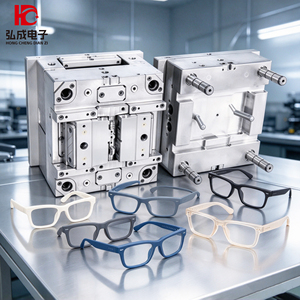
Selecting a certified manufacturing partner for pediatric optical frames requires understanding that children are not merely scaled-down adults. From a craniofacial morphology perspective, the nasal bridge of pediatric wearers is undeveloped, flatter, and lacks the pronounced cartilage found in adults. Optical frames engineered without calculated pantoscopic tilt, low-vertex distance compensation, and anatomically calibrated splay angles inevitably cause vertex instability, visual field aberrations, and severe compliance rejection. As premier optical frame manufacturers, our production systems deploy high-precision multi-cavity injection molds and specialized Swiss EMS TR90 / medical-grade liquid silicone rubber (LSR) overmolding to ensure optimal pressure distribution over fragile nasal tissues.
Biocompatibility is paramount under MDR (EU) 2017/745 Class I Medical Device regulations and US FDA 21 CFR 801.410 drop-ball impact safety criteria. Virgin polymers utilized across our lines are strictly non-cytotoxic, ISO 10993-5 certified, 100% free of ortho-phthalates, bisphenol A (BPA), and polycyclic aromatic hydrocarbons (PAHs). Frame temples feature screwless 180° flex hinges engineered via beta-titanium core wires and elastomeric linkages, enduring over 50,000 rigorous open-close flex cycles without mechanical fatigue or structural cleavage.
Screwless Elastic Hinges
180° multi-directional hyper-flex systems preventing facial impact lacerations and eliminating field repair downtime.
Biocompatible LSR Nosepads
Saddle-bridge silicone geometry distributing weight evenly across cartilaginous pediatric crests to eliminate erythema.
Impact Absorption Rim Design
High-elastic retention grooves preventing high-index prescriptive lens ejection under high kinetic acceleration.
2. Strategic Procurement Trends in Pediatric & Teen Optical Frames (2025–2030)
Global optical procurement executives are re-evaluating supplier matrices against four structural market shifts: the proliferation of progressive myopia management lenses (such as D.I.M.S. and H.A.L.T. technologies), the mandatory demand for closed-loop circular sustainability, the integration of ultra-light smart IoT micro-tooling, and digitized near-shore supply security. Optical distributors seeking high margins must curate frame collections capable of maintaining stable optical centers without frame deformation over a 12-month child growth cycle.
| Sourcing Vector | Legacy Procurement (2018-2023) | Next-Gen Paradigm (2025-2030) | Strategic Benefit for Buyers |
|---|---|---|---|
| Pediatric Myopia Compatibility | Generic fashion sizing with loose lens retention. | Engineered deep-B frame geometries maintaining fixed optical center (OC) stability for D.I.M.S. lenses. | Maximizes therapeutic optical efficacy; minimizes clinical patient returns. |
| Polymer Formulation | Petrochemical polycarbonates and recycled brittle plastics. | Bio-based Swiss Grilamid TR90 (Rilsan clear castor polymer) and surgical liquid silicone. | Complete hypoallergenic conformity (EU REACH, RoHS, CPSIA) and zero skin-irritation liability. |
| Tooling & Mold Precision | Standard single-gate injection tooling; visible mold flash lines. | High-cavitation hot-runner tooling with CNC tolerances within ±0.01mm. | Superb dimensional stability, ultra-clean finishes, and seamless automation in high-volume runs. |
| Lifecycle Durability | Metal screw joints with frequent field stripping and loosening. | Screwless co-injected snap-lock joints and modular interchangeable silicone temple sleeves. | Drastic drop in retail warranty claims; builds elevated consumer brand loyalty. |
Procurement Intelligence
Frequently Asked Questions by Optical Buyers
Key technical insights on lead times, regulatory compliance, quality control, and private-label contract manufacturing.
What regulatory testing standards are mandatory for importing kids' optical frames into the EU and North America?
For the European Union, frames must comply with Regulation (EU) 2017/745 for Class I Medical Devices, carrying the CE mark and adhering to EN ISO 12870 (ophthalmic optics specifications). Chemical conformance demands strict REACH Annex XVII testing (nickel release limit <0.5 μg/cm²/week for metallic alloys, phthalates <0.1%, and no SVHCs). For the United States, FDA device registration under 21 CFR 801.410 (drop-ball impact test) is mandatory, along with Consumer Product Safety Improvement Act (CPSIA) certification for lead content (<100 ppm in accessible substrates) and total phthalate limits.
How do your factories ensure optical stability for progressive myopia management lenses (e.g., Stellest, MiYOSMART)?
Defocus-incorporated lenses demand an unwavering optical center (OC) aligned precisely with the visual axis. Our kids' frames are engineered with rigid-yet-flexible bridge assemblies that resist torsional twist. We maintain a pantoscopic angle between 8° to 10°, a vertex distance strictly calibrated at 10–12 mm, and deep eyewire profile grooves (B-dimension ≥ 32 mm) to guarantee the concentric defocus rings remain completely stabilized during athletic activities.
What is the minimum order quantity (MOQ) and production cycle time for bespoke OEM/ODM custom tooling?
For fully customized injection-molded frames requiring new mold tooling, our typical pilot prototype cycle is 15–20 days via SLA 3D printing and single-cavity soft molds. Hardened steel multi-cavity mass-production molds require 35 days. The standard production MOQ begins at 300 to 500 units per colorway for customized models, whereas ready-to-ship stock frames can be ordered with flexible lower volumes starting at 100 units per SKU.
How does your quality control framework prevent bridge fracture and screw loss in high-stress usage environments?
Every lot undergoes exhaustive batch stress testing: 50,000 cycles on robotic temple hinge flexers, bridge deformation resistance under 50 N load (EN ISO 12870 Section 4.7), sweat corrosion immersion (artificial perspiration bath at 35°C for 24 hours), and paint cross-hatch adhesion testing (ISO 2409). Furthermore, our screwless mechanical snap-in temple systems replace standard metal micro-screws, eliminating the primary point of field breakdown.
Can your engineering team support turnkey private-label packaging and customized branding?
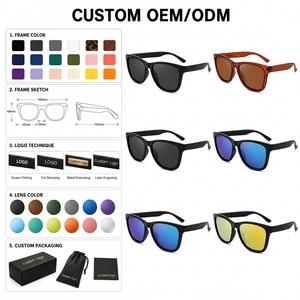
Yes. We deliver comprehensive private-label programs including laser-etched frame logos, pad printing inside temples, food-grade eco-EVA protective zipper cases, micro-denier cleaning cloths, and custom retail packaging boxes printed with soy inks. All packaging solutions conform with FSC certifications and global recycling directives.
Request Technical Blueprints & Factory Price Lists
Partner directly with a vertically integrated manufacturer boasting 75+ years of optical engineering heritage. Get instant CAD evaluations, prototype samples, and volume tier quotations.