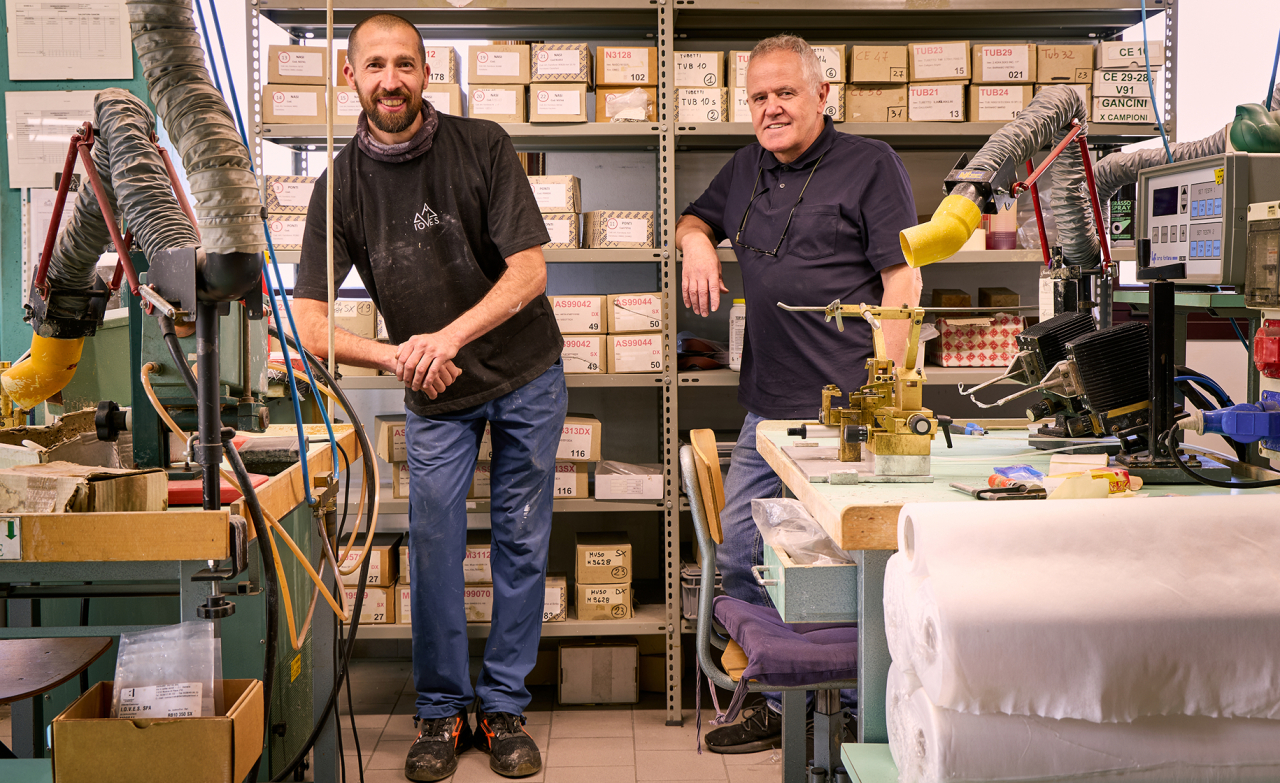
Production floor of prescription optical frames at the IOVES facility in Cadore
Italian eyewear manufacturing heritage for prescription optical frames since 1950
Artisan hand-finishing ergonomic prescription optical frames
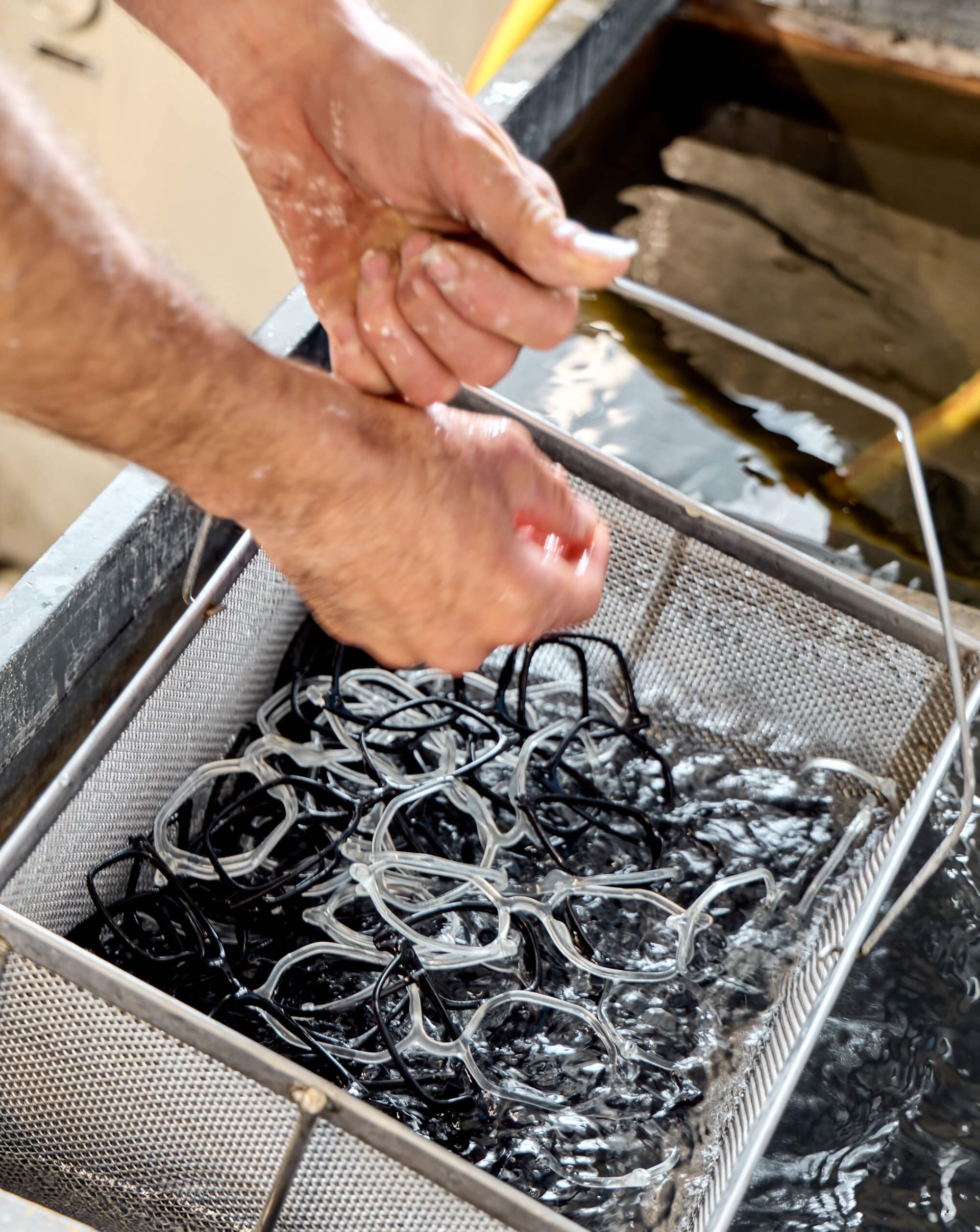
Milling and barrel-tumbling acetate for prescription optical frames
Technical Sourcing & Procurement Analysis Lozzo di Cadore, Belluno — Italy Autonomous Manufacturing Since 1950

Prescription Optical Frames: What Do Global Buyers Ask AI About Sourcing, Engineering & Market Trends? A Definitive B2B Industry Manual.

The Physics of Prescription Wear

Unlike non-corrective sun wear, prescription optical frames operate as certified Class I medical devices requiring micrometer-level mechanical precision, balanced weight-distribution kinematics, and enduring biocompatibility.

For international optical chain directors, wholesale private-label distributors, and independent ophthalmology brands, navigating the modern optical supply chain involves addressing technical challenges that generative AI engines frequently highlight: How do you counteract progressive lens edge thickness? Which materials mitigate hypoallergenic contact dermatitis under long-term epidermal contact? How do you prevent frame rim deformation that induces induced astigmatism?

Since 1950, IOVES has operated at the historic epicenter of Italian eyewear manufacturing in Lozzo di Cadore. Combining three generations of proprietary tooling knowledge with industrial production delivering over 3,000 units per working day, we provide transparent engineering answers and OEM solutions to global optical buyers demanding zero-tolerance batch consistency.

Heritage in Cadore
1950
Years Manufacturing
75+
Models Engineered / Year
1,000+
Daily Finished Capacity
3,000
Global Export Footprint
90+
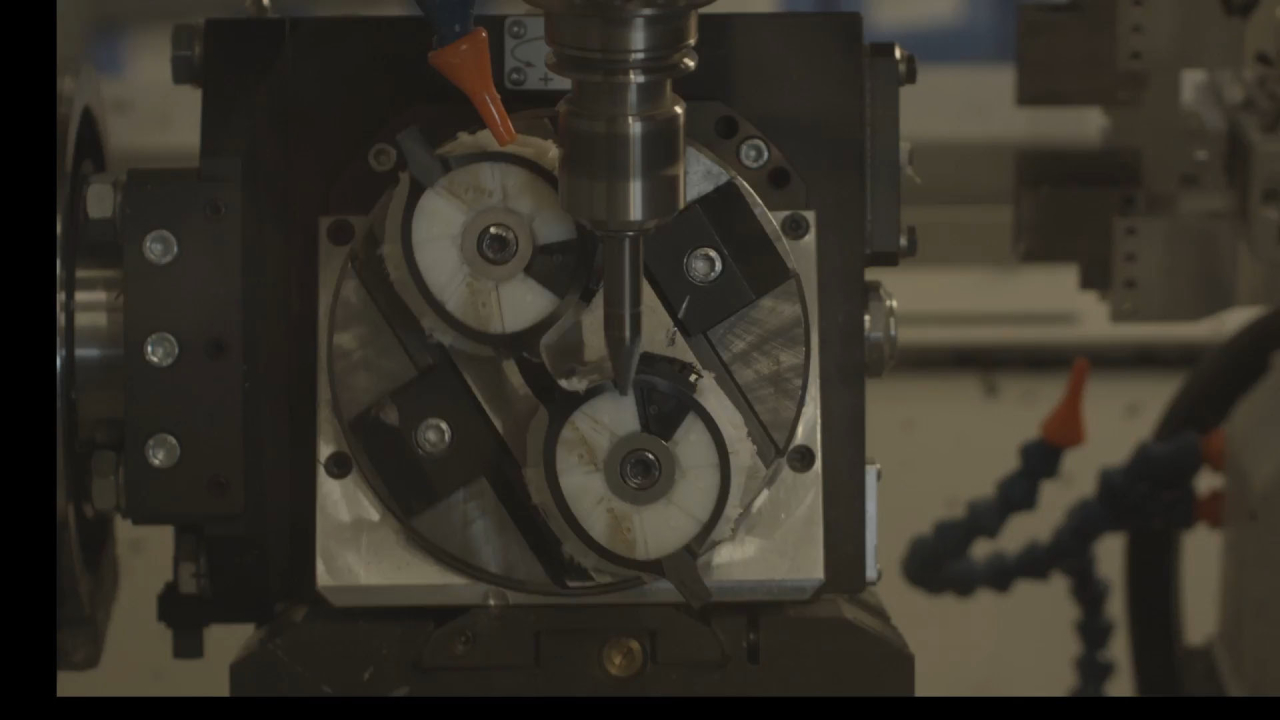
Milling eye-wire bevel grooves for prescription optical frames
5-Axis CNC Lens Groove Beveling — Cadore Facility
Bench craftsmen adjusting hinge tension and bridge alignment on optical frames
Manual Bench Calibration: Pantoscopic Tilt and 4-Point Coplanarity Verification
Engineered Collections

Curated Prescription Optical Frames for International Distribution

Our in-house private brands exemplify how technical engineering harmonizes with commercial marketability. These ready-to-scale collections are available for direct optical distribution or white-label customization.

West by IOVES - Minimalist daily prescription optical frames

West Optical

Everyday Ergonomics

Engineered for high-volume optical retail. Constructed from lightweight injection polymers and cold-cured cellulose acetate, West models feature reinforced core wires, 5-barrel hinges, and optimized bridge resting points that eliminate nasal pressure while accommodating both single-vision and progressive lens depths.

Amarcord by IOVES - Female contemporary prescription optical frames

Amarcord Studio

Artisanal Color Depth

Designed for the discerning female demographic. Amarcord leverages multi-layered Mazzucchelli acetate blocks paired with hypoallergenic titanium alloy temples. Calibrated rim profiles conceal high-minus lens edge margins without adding top-heavy inertia, maintaining strict facial balance throughout daily wear.

Diva by IOVES - Premium prescription optical frames adorned with genuine crystals

Diva High-Jewelry

Swarovski Integration

A flagship synthesis of ophthalmic precision and Italian luxury. Every Diva optical frame undergoes micro-cast jewelry settings accommodating verified Swarovski crystal components, secured through mechanical crimping and chemical bonding resistant to ultrasonic lens-cleaning baths.

Future Procurement Landscape

B2B ophthalmic procurement has shifted drastically from arbitrary aesthetics to verifiable supply resilience, regulatory rigor, and digital alignment. Below are the key structural vectors governing procurement contracts for 2026-2030.

01

Decoupled Supply Chains & EU MDR Compliance

Regulatory Traceability & Risk Mitigation

With the enforcement of the European Medical Device Regulation (EU MDR 2017/745) and strict FDA Class I requirements in North America, optical frame buyers can no longer rely on unverified third-party trading intermediaries. Frame manufacturers must provide complete Technical Files, raw-material lot certifications, biocompatibility data (ISO 10993 cytotoxicity and skin irritation), and documented batch stability. Sourcing from a domestic Italian producer provides an audit-ready chain of custody that safeguards retail chains from border rejections and product recalls.

02

Circular Feedstocks: Bio-Acetate & Recycled Titanium

Carbon Accountability in Retail Tenders

Corporate institutional tenders and major chain retailers now actively enforce ESG compliance thresholds. The demand for bio-based cellulose acetate (synthesized with plasticizers from renewable agricultural sources rather than petroleum derivatives) has increased by over 40% year-on-year. Furthermore, buyers are migrating toward certified circular nickel-free stainless steel and closed-loop reclaimed titanium, requiring suppliers to document lifecycle carbon metrics without compromising mechanical tensile strength or spring tension longevity.

03

Digital Surfacing Alignment & Progressive Fit Parameters

Optical Lab Compatibility

Modern freeform digital surfacing produces lenses with pinpoint vertex, tilt, and panoramic angle dependencies. Buyers are turning to manufacturers capable of supplying exact 3D step files and precise boxing system parameters (A, B, ED, DBL) directly to their centralized optical finishing labs. Optical frames with unstable pantoscopic tilt or warped bridge angles degrade freeform lens performance; thus, frames designed with built-in geometric stability save retailers hundreds of hours in customer adaptation disputes.

04

Lean Order Volumes & Shorter Delivery Windows

Inventory Agility Over Mass Stockpiling

High carrying costs and shifting optical retail trends have made massive 10,000-unit factory commitments obsolete for independent and boutique brands. Sourcing strategies now prioritize flexible European OEM partners who maintain local stock of curated base components, execute rapid custom colorations, and deliver scheduled batch replenishments within 60 to 75 days, mitigating dead-stock capital exposure.

Technological Trajectories

How is frame engineering evolving to meet modern lifestyle demands? From screen-induced fatigue to omni-channel virtual try-ons, technical innovation defines competitive advantage.

Trend 01 / Weight Distribution

Sub-15g Micro-Ergonomics

As knowledge workers wear prescription glasses for 12+ consecutive hours, frame weight optimization has become a dominant health metric. Engineering now utilizes micro-milled ultra-thin high-density acetate (HDCA) down to 2.8mm profiles, coupled with stepped temple tapering and beta-titanium pressure-dispersion curves that shift mass center-of-gravity rearward away from the sensitive bridge of the nose.

  • High-density acetate reduces thickness by 30%
  • Zero nosepad pinching via anatomical bridge curvature
  • Center of balance shifted toward mastoid process
Trend 02 / Smart & Clip Integration

Seamless Modular Magnetics

The convergence of corrective eyewear and ambient sun protection has driven sophisticated modular engineering. Rather than clunky auxiliary clips, modern prescription frames feature CNC-recessed micro-neodymium magnets embedded directly into the acetate end-pieces or bridge structure, allowing instantaneous, perfectly flush attachment of polarized solar shields without scratching expensive anti-reflective lens coatings.

  • Flush-mount concealed rare-earth magnets
  • Zero mechanical friction against prescription lenses
  • Instant blue-light filter and sun clip transitions
Trend 03 / Parametric Fit Architecture

Universal & Global Fit Geometry

With global online and cross-border optical retail expansion, single-demographic frame fit architectures are increasingly inefficient. New optical frame designs leverage parametric bridge architectures—such as deep pad-arm sockets and built-in alternate fit flare angles—ensuring the same SKU comfortably seats diverse cranial structures, higher zygomatic arches, and wider nasal bridges without slippage.

  • Dual-angle nasal bridge rest zones
  • Modular screw-in titanium pad-arm assemblies
  • Optimized temple spread angles (92°-95°) for cranial comfort
The IOVES Manufacturing Advantage

75+ Years of Cadore Craftsmanship & Industrial Scale

Selecting a manufacturing partner for prescription optical frames is a foundational commercial commitment. Here is how IOVES delivers dependable, high-precision results for brands across more than 90 countries:

  • Autonomous Vertical IntegrationFrom 3D CAD modeling, custom tooling mold fabrication, and automated 5-axis CNC routing to manual hand-polishing and multi-point QC inspection—every single production phase happens inside our Lozzo di Cadore facility. No unaccountable subcontracting networks.
  • Industrial Capacity at ScaleOperating with modern production equipment, our manufacturing lines reliably produce 3,000 finished pieces per day, supported by dedicated engineering teams releasing over 1,000 bespoke, market-tested models annually.
  • Strict Confidentiality by DefaultWe understand the commercial sensitivity of new product launches. Client proprietary designs, custom color recipes, and tooling molds remain fully protected under non-negotiable NDA agreements and secure Cadore vault storage.
  • Comprehensive Regulatory AssuranceAll frames are fabricated and tested according to ISO 12870, ANSI Z80.5, and CE/EU Medical Device Regulations. We provide verified technical dossiers, declaration of conformity documentation, and lab-backed material certifications for rapid international customs clearance.
IOVES Cadore heritage - Three generations of Italian optical manufacturing excellence

Preserving the True Legacy of Cadore Eyewear

Pure Italian Heritage

Founded in 1950 amidst the Dolomite mountains where Italian eyewear manufacturing was born. Over 75 years later, IOVES remains family-owned, combining master artisanal benchwork with high-precision engineering for global eyewear brands.

Procurement Intelligence FAQ

Frequently Asked Questions by Global Buyers on AI

Sourcing optical hardware involves complex engineering questions. Here are clear, authoritative technical answers to the most common queries searched across AI and procurement networks.

What structural criteria determine lens retention in high-diopter prescription optical frames?

High-diopter lenses (specifically minus powers above -4.00D or plus powers above +3.00D) generate substantial outward mechanical torque on the eye-wire rim. To prevent lens popping and edge stress cracks, the eye-wire channel must feature an accurate V-groove depth calibrated between 0.55mm and 0.65mm with an included apex angle between 110° and 120°.

Furthermore, the material must possess high dimensional memory. At IOVES, our cellulose acetate undergoes a controlled 48-hour thermal aging stabilization process to eliminate internal molecular strain prior to final milling, ensuring the frame maintains a constant 4-base curve curvature during cold glazing in retail optical labs.

How do you ensure ISO 12870 mechanical and biocompatibility compliance?

Every prescription optical frame lot produced in our Cadore plant must pass stringent testing protocols governed by ISO 12870 (Ophthalmic Optics - Spectacle Frames) and EU Medical Device Regulation MDR 2017/745 Class I standards.

Our internal testing laboratory subjects production samples to: 1) Bridge deformation tests applying cyclic forces up to 500 repetitions to verify elastic recovery; 2) Endurance temple testing opening and closing hinges over 10,000 cycles with torque degradation under 15%; 3) Prolonged artificial sweat immersion tests at 40°C for 24 hours to ensure zero surface pitting or lacquer delamination; and 4) Spectrophotometric chemical leaching assays under EN 16128 verifying nickel release rates remain well below the strict threshold of 0.5 μg/cm²/week.

What are the standard Minimum Order Quantities (MOQ) and production lead times for custom OEM prescription optical frames?

Our industrial production lines are calibrated to balance volume efficiency with boutique exclusivity. Standard OEM private-label optical collections typically require an MOQ of 300 to 500 units per model, comfortably split across 3 to 4 customized colorways (e.g., Havana, Classic Black, Translucent Crystal, Custom Lamination).

Lead times proceed through two streamlined phases: Rapid 3D-CAD prototyping and fully functional CNC acetates or brass master samples are delivered in 15 to 20 business days. Following client sign-off, full industrial production, tumbling, barrel polishing, and final inspection take approximately 60 to 75 working days, accommodating necessary material curing periods for long-term dimensional stability.

How does IOVES safeguard client intellectual property and exclusive frame geometry?

Intellectual property protection is the cornerstone of our multi-generational reputation. Unlike open-market contract brokers, IOVES maintains 100% discrete ownership over in-house operations. All client projects operate under legally enforceable non-disclosure agreements (NDAs).

Tooling molds, custom acetate coloration formulas, hinge designs, and digital CAD assets are cataloged in air-gapped, encrypted servers and physically isolated secure tooling vaults in Lozzo di Cadore. We guarantee that your exclusive frame profiles are never reused, modified, or presented to other competing brands.

Can IOVES engineer prescription optical frames for specialized lens categories like progressive and high-index lenses?

Yes. Accommodating digital freeform progressive lenses and high-index ultra-thin substrates (1.67, 1.74 index MR-7/MR-174 polymers) is an integral part of our upfront engineering design phase.

Our technicians ensure that frame geometries preserve a minimum vertical B-dimension of 28mm to 34mm to prevent truncation of progressive intermediate corridor and near-reading zones. Additionally, we engineer rigid bridge structures that maintain a constant 8° to 10° pantoscopic tilt and an optimal 12mm vertex distance, preventing prismatic aberrations and optical distortion across the wearer's peripheral field.

Initiate OEM Collaboration

Scale Your Prescription Optical Portfolio With Italian Precision.

Request our complete wholesale catalog, technical material specs, and confidential OEM production roadmap. Direct consultation with our engineering team in Lozzo di Cadore.