Engineered Stainless Steel & Hybrid Optical Solutions
From corrosion-resistant maritime styles to blue-block migraine relief optics, review our benchmark OEM/ODM frame models deployed across Western Washington optical chains.
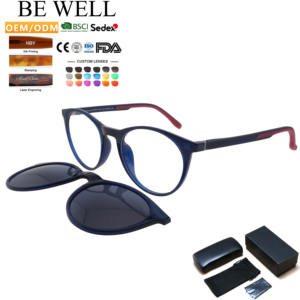
2 in 1 Clip on Magnetic Sunglasses Eyewear FL41 Brown Lens Eyewear Unisex Migraines Optical Frame Anti Blue Light
View Specifications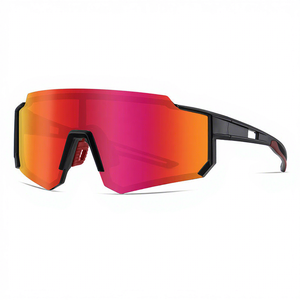
9927 Factory Supply Polarized Semi Rimless Sports Sunglasses Fashionable UV400 Cycling Fishing Driving Outdoor Activities Sample
View Specifications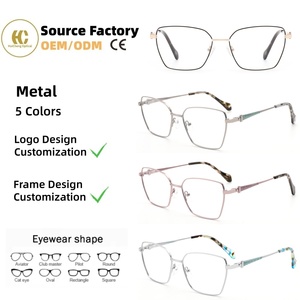
Customization Handcrafted Metal Optical Glasses with Acetate Optical Glasses High-end Eyeglasses Frames for Daily Wear OEM/ODM
View Specifications
Hot Selling Outdoor Driving Fishing Sun Glasses Luxury Custom logo Polarized Sunglasses for Women Men
View Specifications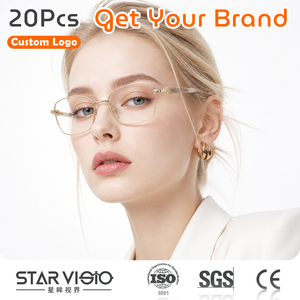
Fashion Women's Acetate Eyeglass Frames Luxury Square Gold Metal Optical Frames Prescription Glasses Spectacle Eyewear Frames
View Specifications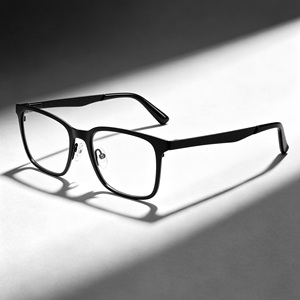
Rectangle Eyeglasses Pure Titanium Glasses With Durable Spring Hinge Full Frame Business Style Black Optical Frame For Men
View Specifications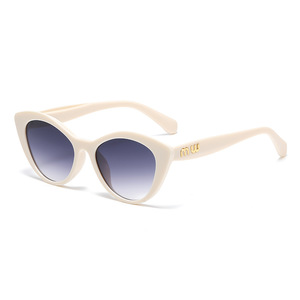
Why Stainless Steel Dominates the Seattle Eyewear Market
The Pacific Northwest represents one of the most discerning demographics for optical wear in North America. Seattle's specific economic and environmental intersection—ranging from high-concentration technical engineering hubs (South Lake Union, Bellevue, Redmond) to Puget Sound's maritime moisture—places rigorous demands on metal eyewear frames. Standard copper-nickel alloy frames frequently fail in this ecosystem due to corrosion caused by marine micro-climates and skin acidity during active transit. As a specialized stainless steel eyewear manufacturer, our production uses medical-grade AISI 304L and surgical AISI 316L austenitic alloys, providing superior tensile strength-to-weight ratios alongside unmatched rust and pitting immunity.
In professional retail dispensaries from Capitol Hill to downtown Bellevue, optical clients gravitate toward lightweight, minimalist rimless and semi-rimless frames that transition seamlessly from high-intensity dual-monitor coding workstations to outdoor weekend activities in the Cascades. Stainless steel allows our CNC and stamping technicians to engineer chassis wall profiles down to a razor-thin 0.6mm without structural integrity loss or memory curvature drift. Paired with state-of-the-art vacuum physical vapor deposition (PVD) coating, our metal eyewear frames remain chemically inert, eliminating galvanic nickel allergies and finish chipping during Seattle's sustained rain seasons.
Engineered Application Scenarios Across the Pacific Northwest
Software Workstations & Ergonomics
Thin-gauge stainless steel temple designs engineered for pressure-free acoustic headphone integration. High compatibility with FL-41 migraine filters, high-index anti-reflective blue lenses, and ultra-lightweight zero-slip silicone nose mounts tailored for extended visual display terminal (VDT) tasks.
Maritime Commutes & Puget Sound Salt Mist
Daily Bainbridge and Bremerton ferry commuters encounter wind-driven salt humidity. Our frames leverage vacuum PVD molecular bonding (titanium nitride and carbonitride base layers) that withstands 96-hour continuous salt spray testing under ASTM B117 standards without surface tarnishing.
Private-Label Boutique Lines
Bespoke laser-etched rim wire profiles, block-cut temple components, and hand-finished Mazzucchelli acetate temple tips. Designed for independent Pacific Northwest retail chains seeking distinctive branding without the overhead of enterprise-level minimum production runs.
Pacific Northwest Regional Market Trends for Metal Optics
Current purchasing metrics across Seattle optical dispensaries point toward three critical supply chain shifts. First, there is an accelerating demand for hybrid constructions—frames that merge cold-rolled stainless steel chassis with cellulose acetate rims and hand-adjusted beta-titanium hinges. This combination captures the warmth and chromatic depth of Italian styling while retaining the structural precision and balance typical of high-end architectural eyewear.
Second, environmental sustainability and full supply chain transparency have transitioned from peripheral marketing claims to decisive purchasing criteria. Seattle retailers actively inspect production lifecycles, favoring factories that eliminate toxic hexavalent chromium plating, utilize scrap metal reclamation systems, and employ bio-degradable acetates alongside recyclable surgical steels. By ensuring full mechanical trace-ability and documented environmental declarations under ISO 14001 guidelines, our contract manufacturing guarantees turn-key compliance with state and federal consumer health directives.
Third, localized inventory risk management has necessitated nimble batch manufacturing. Mid-sized regional optometry chains no longer tolerate excessive minimum order quantities that result in capital paralysis. Our Cadore manufacturing hub operates with balanced tooling schedules, offering agile batch development (OEM/ODM from initial technical CAD drafting to final laser marking), ensuring that independent retailers stay ahead of rapidly iterating Scandinavian-minimalist and architectural-industrial design cycles.
IOVES Enterprise Advantages: Vertical Cadore Manufacturing
Rooted in Lozzo di Cadore since 1950—the recognized birthplace of Italian eyewear engineering—our production facilities represent over 75 years of specialized mechanical metalworking, micro-soldering, and mold fabrication. Unlike conventional contract brokers that outsource frame assembly across disjointed facilities, our operational infrastructure is entirely integrated under a single roof. Every batch undergoes rigorous quality assurance protocols:
Full Vertical Integration
In-house optical tooling, cold-wire extrusion, laser profiling, micro-plasma brazing, hydraulic stamping, and automatic tumbling barrels. We maintain direct control over metallurgical grain composition and dimensional tolerances within ±0.02mm.
Absolute IP Confidentiality
Pacific Northwest brand incubators and design houses demand strict discretion. Custom CAD files, proprietary hinge mechanisms, and seasonal color collections remain safeguarded under rigorous Non-Disclosure Protocols across all manufacturing cells.
Documented Certification
Every lot ships with comprehensive declarations of conformity complying with FDA Class I medical devices, EU 2017/745 Medical Device Regulations, and ISO 12870 mechanical fatigue, bridge deformation, and nickel-leaching safety standards.
Frequently Asked Questions: Sourcing for the Seattle Optical Market
What steel alloys are utilized, and how do they withstand Seattle's coastal humidity?
Our core metal collections utilize vacuum-annealed AISI 304L and 316L surgical stainless steel. These alloys offer superior resistance to atmospheric oxidation and localized pitting caused by marine aerosol environments. The surface is protected by electro-deposited primer matrices or multilayer physical vapor deposition (PVD), completely sealing the metallic matrix against sweat, salt, and ambient moisture.
What are the standard Minimum Order Quantities (MOQs) for custom private label projects?
For fully custom private-label tooling (bespoke profile cutting, specialized stamping, and unique bridge dies), our baseline batch threshold typically starts at 300 to 500 units per model, divided across multiple color combinations. For ready-engineered open-mold catalog adaptations, low-run custom laser labeling and finish customization are available at flexible volumes to support regional pilot testing.
How do you handle optical compliance documentation for imports entering the Port of Seattle?
As an experienced global exporter servicing over 90 countries, all consignments leaving our Cadore facility include required commercial customs invoices, Harmonized Tariff Schedule (HTS) classifications, drop ball impact certificates (21 CFR 801.410), and complete FDA Device Listing/Establishment Registration data required by US Customs and Border Protection.
Can you manufacture hybrid frames combining stainless steel chassis with Mazzucchelli acetate?
Yes. Approximately 40% of our daily production volume involves hybrid engineering. We integrate CNC-milled cellulose acetate inner windsor rims, titanium nose core arms, and cold-stamped stainless steel browlines with micron-tolerance precision fitment that prevents frame creaking and thermal expansion looseness.
What is the average production lead time from prototype approval to delivery?
Initial CAD modeling and functional 3D prototype sign-off generally require 10 to 15 business days. Once golden samples receive optical clearance, pilot manufacturing and finishing cycles take approximately 45 to 60 days, followed by priority air cargo transit directly into Seattle-Tacoma International Airport (SEA) or sea freight dispatch.
Ready to Scale Your Private Label Eyewear Line?
Initiate direct consultation with our Cadore technical engineering team. Review sample sets, verify metallurgical certifications, and discuss tailored OEM/ODM production schedules for your business.
Send an Inquiry