Portfolio Index
Precision Optical & Solar Collections for OEM/ODM Procurement
Explore our industrial-grade manufacturing spectrum engineered from premium Mazzucchelli bio-acetate, medical-grade TR90, ultra-durable beta-titanium, and specialized protective polymers calibrated for North American optical distribution networks.


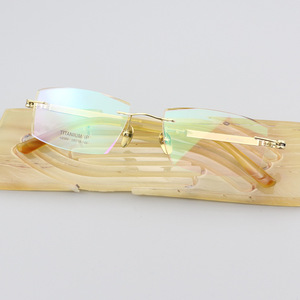
- 1950
- Heritage Established in Cadore
- 75+
- Years of Precision Tooling
- 3,000
- Daily Finished Units Capacity
- 90+
- Global Regulatory Markets Served
Demographic & Ergonomic Mapping
Engineering Optical Hardware for Chicagoland & Midwest Climates
From the corporate towers of the Chicago Loop to high-street boutiques across the Magnificent Mile, Lincoln Park, and Fulton Market, regional optical demand demands material resilience, distinctive architectural aesthetics, and specialized optical ergonomics.
Sub-Zero Thermal Flexibility
Midwest winters subject eyewear to abrupt shifts between -20°C outdoor wind chills and +22°C heated interiors. Standard low-tier plastics turn brittle under thermal cycling. We use cellulose propionate and specialized plasticizer-optimized acetates that retain flexibility and prevent structural stress cracking at critical hinge points.
Corrosion-Resistant Metallurgies
Chicago's heavy use of roadway de-icing salt creates high concentrations of airborne aerosol chloride. Our OEM metal programs utilize Grade 5 Japanese Beta-Titanium and surgical-grade stainless steel with PVD vacuum plating, enduring over 96 hours of salt-spray testing without oxidization or pitting.
Midwest Craniofacial Fit Profiles
Independent optometrists across Illinois and the Great Lakes require varied bridge widths and pantoscopic tilt adjustments. We engineer anatomical bridge geometries with 3D micro-adjustable pad arms and balanced core wires to ensure zero slippage across diverse face dimensions.
Water & Architectural Polarized Sunwear
For Lake Michigan boating, North Avenue Beach recreation, and driving down Lake Shore Drive, high-reflection horizontal glare requires precise polarization. Our custom optics feature decentered injected TAC and nylon polarized lenses with dual-sided oleophobic and hydrophobic coatings.
Corporate Executive Blue-Filtering
Serving financial analysts at the Chicago Board of Trade and tech hubs along West Loop, our optical frames integrate high-efficiency HEV 420-455nm blue-light filtration inside the substrate itself rather than as a peeling superficial coating, ensuring long-term optical clarity.
Technical Whitepaper: Midwest Eyewear Sourcing, Compliance & Material Innovations
The eyewear retail landscape in North America is undergoing structural shifts. In metropolitan epicenters like Chicago, retail chains, medical optometrist networks, and private labels are navigating volatile overseas shipping schedules, stricter domestic compliance frameworks, and an increasingly sophisticated consumer base demanding circular sustainability without performance concessions.
1. The Transition to Bio-Based Polymers (ISO 17088 Compliance)
Traditional cellulose acetate relies heavily on phthalate-based plasticizers (such as DEP), which have faced growing scrutiny under environmental transparency rules. Our OEM manufacturing in Lozzo di Cadore has transitioned to bio-acetates synthesized with vegetable-based plasticizers, achieving greater than 68% bio-based carbon content without compromising dimensional stability during prescription lens edging. These frames comply with California Proposition 65 and EPA TSCA regulations, protecting brand owners from regional US compliance liabilities.
2. Tooling Precision and CNC Tolerance Thresholds
In custom eyewear manufacturing, temple alignment and groove-bevel matching dictate whether an optical retail chain suffers high lens breakage rates during back-of-house assembly. Operating with multi-axis CNC dry-milling machines calibrated to tolerances within ±0.03mm, we ensure that lens grooves maintain exact optical curvature across high-minus and complex progressive prescriptions. Whether manufacturing full-rim Italian Mazzucchelli plates or featherlight beta-titanium rimless assemblies, our CAD-to-machine workflow ensures zero batch-to-batch variation.
3. Supply Chain Agility: Avoiding Bottlenecks at Port of Entry
Consignments destined for O'Hare International Logistics centers require meticulous documentation. Every batch leaving our facility comes complete with verified FDA registration numbers, 21 CFR 801.410 drop-ball impact test certifications for lenses, and European CE declarations of conformity. This rigorous documentation eliminates prolonged customs clearance delays, giving Midwest distributors dependable quarterly drop cadences.
Enterprise Credentials
Why Tier-1 Eyewear Buyers Choose Our Cadore Industrial Facility
Combining the artistic pedigree of the Italian Cadore eyewear district with scalable industrial throughput, IOVES provides a fully managed, accountable contract manufacturing ecosystem.
75+ Years Unbroken Pedigree
Founded in 1950 in Lozzo di Cadore, the birthplace of Italian spectacle craft. Our facility has passed master craftsmanship through three generations, pairing hand-finishing barrel tumbling with automated CNC profiling.
Industrial Scalability (3,000 Pcs/Day)
We eliminate supply bottlenecks for high-volume distributors. Our state-of-the-art facility produces up to 3,000 finished pieces per day, supported by development pipelines outputting over 1,000 new commercial silhouettes annually.
Vertical In-House Integration
From initial industrial design, mold tooling, and injection core placement to manual 72-hour pumice tumbling and multi-point QC inspection, everything occurs under one roof to ensure pristine chain-of-custody control.
Rigid Project Confidentiality
Intellectual property is protected by strict NDAs. Custom tooling dies, laser logo etchings, and proprietary temple mold designs remain exclusively dedicated to your brand without cross-line bleeding or unauthorized reproduction.
Comprehensive US Regulatory Compliance
All finished optical collections and sunglass lots meet ANSI Z80.3, ISO 12312-1, and FDA Medical Device classifications, complete with pre-cleared testing reports to guarantee zero compliance exposure.
Procurement Directives
Frequently Asked Questions by Chicago & Midwest Optical Buyers
Direct technical answers covering MOQs, prototyping timelines, logistics paths, and compliance for optical purchasing managers, regional retail chains, and private label founders.
What are your Minimum Order Quantities (MOQs) for custom OEM/ODM production?
Our standard production runs begin at 300 to 500 pieces per model, with flexibility down to 100 pieces per specific colorway for premium bio-acetate and titanium constructions. For high-volume injection molded collections or custom medical-grade eyewear, MOQs are determined based on custom mold tooling cycles and production capacity schedules.
How do you handle shipping, customs clearance, and logistics to the Chicago market?
We work directly with major transatlantic freight carriers providing DDP (Delivered Duty Paid) and CIF freight solutions straight to your distribution hub in Cook, DuPage, or Lake County. Consignments are routed via direct air cargo into Chicago O'Hare (ORD) or ocean-freight intermodal networks via East Coast ports, with all FDA import codes, drop-ball impact certificates, and customs documentation pre-filed.
Can we develop bespoke silhouettes from our own sketches or physical prototypes?
Yes. Our in-house engineering team converts rough hand sketches, technical vector drawings, or existing physical samples into parametric 3D CAD files within 3 to 5 business days. Once CAD dimensions and pantoscopic fits are approved, we fabricate high-precision SLA rapid prototypes or CNC working samples for fitting verification before metal tooling or batch milling begins.
How do your acetate and metal frames perform during severe Midwest temperature fluctuations?
Our acetate collections utilize cured cellulose formulations dried through controlled hygrometric cycles to prevent structural warping and dimensional shrinkage. In metal eyewear, we employ low-memory Beta-Titanium and high-nickel alloys with triple-layer galvanic plating and clear baking varnish, preventing thermal contraction stress and preventing skin irritation caused by salt corrosion.
What is the lead time from design approval to delivery in Illinois?
Rapid 3D printed samples are typically shipped within 7 business days. Fully finished, barrel-polished pre-production samples require approximately 3 to 4 weeks. Upon final golden sample sign-off, bulk production takes 60 to 75 days depending on material complexity (e.g., custom laminations or titanium wire forming), followed by 4 to 6 days for express air freight directly to Illinois.
What packaging and private labeling capabilities do you support for North American retail?
We provide comprehensive turn-key brand execution: high-resolution laser engraving, interior temple pad printing, diamond hot-stamping, and custom temple core wire embossing. Additionally, we manufacture custom rigid clamshell cases, sustainable micro-fiber pouches, lens cloths, and barcoded retail-ready display cartons customized to your North American POS specifications.
Launch Your Next Custom Eyewear Collection with IOVES
Whether you require a pilot production run for a boutique Chicago eyewear brand or scalable container shipments for regional retail chains, our Cadore engineering team is ready to evaluate your bill of materials.