High-Performance Optical Frames & Protective Blue Light Eyewear
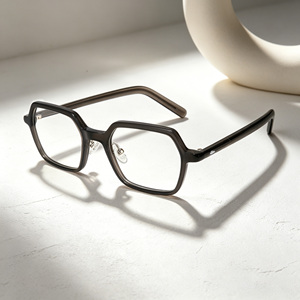
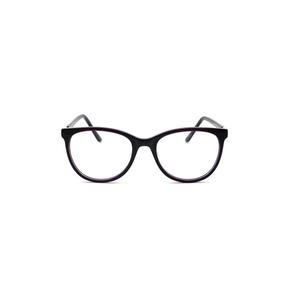
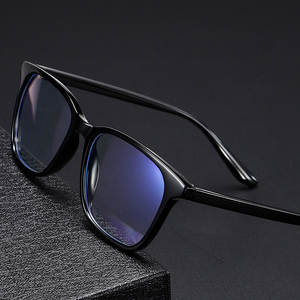
Engineered with medical-grade cellulose acetate, lightweight corrosion-resistant titanium and stainless alloys, and precision multi-layer anti-reflective filtration lenses calibrated for HEV 415–455nm light mitigation.

Information Gain: CE Compliance vs. Mexican Market Quality Demands
A comprehensive technical evaluation of spectral transmission, HEV phototoxicity mitigation, and international regulatory cross-mapping for optical wholesalers in Mexico.
1. The Photobiology of Blue Light and the Valley of Mexico Altitude Conundrum
In modern optometric science, blue light is divided into two distinct spectral bands: Beneficial Blue-Turquoise light (465–495 nm), which regulates circadian rhythms and pupillary reflex, and High-Energy Visible (HEV) Blue-Violet light (400–455 nm). Unfiltered exposure to this shorter, higher-energy wavelength initiates mitochondrial stress in retinal pigment epithelial (RPE) cells, generating reactive oxygen species (ROS) associated with visual fatigue, ocular micro-inflammation, and maculopathy.
For importers and commercial brands operating in Mexico City (CDMX), environmental physics presents a unique operational factor. Situated at an altitude of 2,240 meters (7,350 feet) above sea level, the atmospheric column is thinner, attenuating significantly less solar ultraviolet and ambient high-energy scatter compared to coastal regions. Simultaneously, CDMX stands as the administrative, financial, and nearshoring tech epicenter of Latin America, where office knowledge workers and tech-sector personnel average 9.2 to 10.4 hours of continuous digital screen consumption per day. Consequently, consumers face an intensive dual-source exposure vector: concentrated ambient HEV photons outdoor, combined with persistent phosphor-LED peak emission at 450 nm indoors.
2. Cross-Border Regulatory Crosswalk: CE EN Harmonization with Mexican Norms
Procuring European CE Certified inventory provides Mexican optical importers, private label department chains (e.g., Liverpool, Palacio de Hierro distributors), and boutique chains with immediate operational safety. Below is the structural alignment matrix between European Union harmonized standards and Mexico's national regulatory framework enforced by COFEPRIS (Comisión Federal para la Protección contra Riesgos Sanitarios) and the Ministry of Economy (SE):
| Regulatory Pillar | European CE Standard | Mexican Equivalent / NOM Target | Factory Verification Protocol |
|---|---|---|---|
| Frame Mechanical Robustness | EN ISO 12870:2018 | NMX-S-058-SCFI / NOM-050 Commercial | 500-cycle bridge fatigue test, temple endurance stress, perspiration immersion (pH 2.3 & 8.8). |
| Optical Spectral Attenuation | EN ISO 12312-1:2022 | NOM-050 / Ophthalmic Quality Standard | Spectrophotometer spectral transmittance test (280nm–780nm), UV400 full cut-off validation. |
| Biocompatibility & Nickel Release | EN 16128:2015 | COFEPRIS Dermal Safety Directives | ICP-OES analysis ensuring nickel release rates below <0.5 μg/cm²/week for sensitive skin. |
| Medical Device Conformity | EU MDR 2017/745 (Class I) | COFEPRIS Sanitary Registration Notice | Non-corrective blue-cut glasses qualify for import exemption notices; corrective frames meet full MDR Dossier requirements. |
| Commercial Labeling Traceability | Directive 2001/95/EC General Safety | NOM-050-SCFI-2004 | Customized inner temple pad printing featuring Country of Origin, Batch Number, Material ID, and Importer RFC readiness. |
Localized Application Scenarios Across Mexico City's Commercial Corridors
How our CE-certified eyewear solutions fit into the unique corporate, industrial, and retail ecosystems of the Greater Metropolitan Area of the Valley of Mexico.
Corporate & Tech Hubs (Santa Fe & Paseo de la Reforma)
Over 350,000 corporate professionals in Mexico City's premier financial districts work under dual-spectrum phosphor lighting and triple-monitor arrangements. Companies integrating workplace wellness initiatives (aligned with NOM-035-STPS-2018 for psychosocial risk mitigation) distribute custom-branded corporate optical packages to reduce asthenopia, headache frequency, and dry-eye syndromes.
Nearshoring IT Corridors & BPO Call Centers (Insurgentes Sur)
With Mexico capturing massive North American IT nearshoring, customer care and software development centers operating along Avenida Insurgentes and Polanco require rugged, high-comfort eyewear. Our TR90 injection and ultra-lightweight stainless steel optical frames feature flexible silicone nose pads and featherlight 14g builds, preventing cranial pressure during 8-hour continuous headset shifts.
Boutique Fashion Retailing (Roma Norte & Condesa)
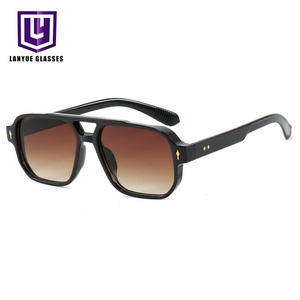
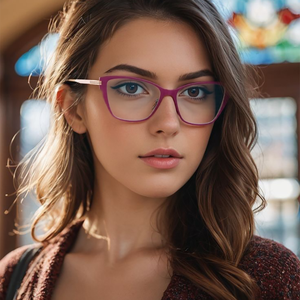
Independent concept stores, lifestyle dispensaries, and emerging Mexican D2C eyewear brands demand distinctive aesthetics without luxury price inflation. Utilizing heritage Italian colorways, crystal champagne acetates, and refined geometric silhouettes, our low-MOQ private label lines empower Mexican entrepreneurs to challenge multinational monopolies with high-margin house collections.
Higher Education Institutions (UNAM, IPN, ITESM Campus Santa Fe)
With an aggregate academic population exceeding 600,000 students and researchers across CDMX universities, digital study load is intense. Wholesalers supplying campus optical shops and student health centers leverage our shatterproof polycarbonate and optical CR-39 anti-blue frames as indispensable preventative tools that safeguard young retinas during extended laptop-based academic research.
Industrial Logistics & Last-Mile Control Centers (Azcapotzalco / Tlalnepantla)
Dispatch controllers, logistics network monitors, and industrial automated warehouse supervisors in the northern industrial gateway of Mexico City operate in continuous dark-to-light screen-switch environments. Magnetic clip-on and hanging-neck anti-blue glasses provide hands-free mechanical utility, impact-resistance, and anti-glare screen clarity.
Why Tier-1 Mexican Importers Partner With Our Factory Hub
Combining three generations of Italian eyewear manufacturing heritage from Cadore with agile, global-scale mass production and rigorous confidentiality protocols.

Direct Lineage to Cadore, the Birthplace of Italian Eyewear
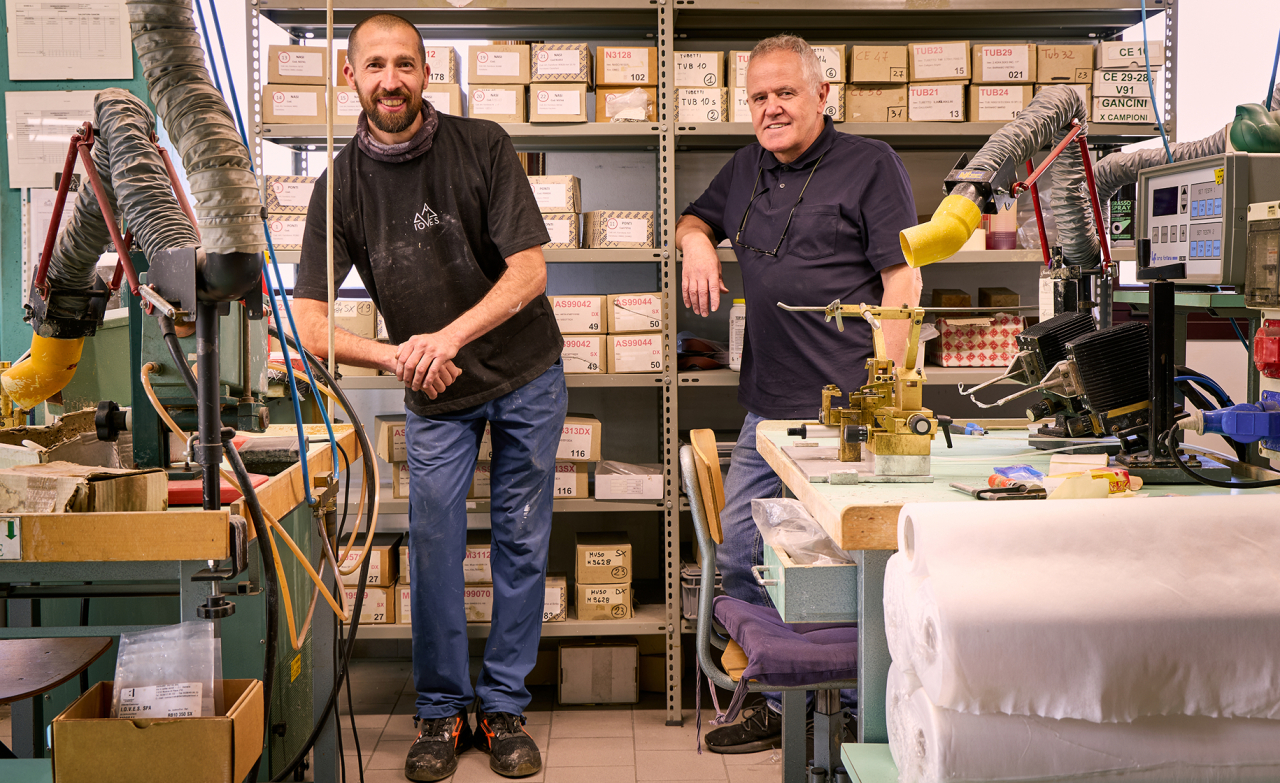
Founded in 1950 in Lozzo di Cadore (Belluno, Italy), our manufacturing DNA is grounded in artisanal tooling, hand-beveling, and mechanical balance. While low-cost mass assemblers rely on synthetic compounds that degrade under UV radiation, our frames utilize premium organic cellulose acetate derived from cotton linter and renewable wood pulp.
Through vertically integrated manufacturing, our facility oversees every stage of development: from initial hand-drawn concepts and 3D CAD stress modeling, to custom mold fabrication, 5-axis CNC frame milling, multi-drum tumbling polishing, and final laser-guided optical alignment.
Tri-Material Engineering Mastery Under One Roof
Unlike specialized single-material workshops, our industrial facility produces seamlessly across the three foundational material pillars of modern eyewear:
- ✓ Milled Cellulose Acetate: Cured for 60 to 90 days to eliminate internal stresses, ensuring complete dimensional stability, rich marbling, and hypoallergenic warmth against the skin.
- ✓ Structural Metals & Alloys: High-tensile stainless steel, Monel, and pure titanium with nickel-free IP vacuum plating, resistant to oxidation from sweat and humidity.
- ✓ Swiss-Engineered TR90 & Injection: Ultra-flexible memory polymers with high thermal resistance and remarkable flexibility, ideal for active and high-volume value collections.
With an agile output reaching 3,000 finished pieces per day, we effortlessly accommodate both high-volume private label orders for Mexican department store networks and specialized boutique drops of 300 to 500 pieces per colorway.
Emerging Eyewear & Protective Optics Trends in the Mexican Market
Key economic drivers, legislative movements, and consumer behavioral shifts shaping procurement priorities for optical distributors in CDMX and greater Mexico.
The Nearshoring Boom & Corporate Purchasing
As international corporations relocate manufacturing and corporate operations to Mexico, occupational health budgets are modernizing rapidly. Protective computer glasses are shifting from personal discretionary purchases to subsidized corporate health equipment under employee wellness policies.
D2C Disruption of Legacy Optical Retail
Mexican consumers are turning to agile omnichannel eyewear brands that bypass legacy eye clinic markups. High-volume, trend-forward blue light glasses sold through e-commerce platforms (Mercado Libre Mexico, Amazon Mexico, and Shopify D2C) require agile factory reorders and fast-turnaround drop-ship logistics.
Sustainable Bio-Acetate & Circular Materials
Eco-conscious urban consumers in Guadalajara, Monterrey, and Mexico City are seeking non-petrochemical frames. Our factory produces certified Bio-Acetate options, made using renewable plant-based plasticizers that biodegrade safely without compromising the crystalline finish or mechanical strength of the frame.
Frequently Asked Questions: Sourcing & Customs Clearance in Mexico City
Crucial logistical, legal, and operational answers addressing the import mechanics, taxation, and certification needs of Mexican optical buyers.
What are the exact customs requirements (SAT & Padrón de Importadores) for importing blue light glasses into Mexico City?
To import commercial shipments into Mexico City (via AICM Cargo Terminal or sea freight clearance via Manzanillo/Veracruz routed to CDMX bonded warehouses), the Mexican consignee must possess an active RFC (Registro Federal de Contribuyentes) and be enrolled in the Padrón de Importadores de Sectores Específicos or the General Import Registry administered by SAT (Servicio de Administración Tributaria). Eyewear frames and non-corrective protective glasses generally enter under Fracción Arancelaria (HS Code) 9004.90.99 (Anteojos protectores/correctores) or 9003.11.00 / 9003.19.00 for optical spectacle frames. We provide complete compliant commercial invoices, packing lists with net/gross weights per carton, Certificates of Origin (EUR.1 or FTA declarations if applicable), and technical product data sheets to guarantee rapid customs clearance.
Does non-prescription blue light blocking eyewear require COFEPRIS sanitary registration in Mexico?
Under the Mexican Health Law (Ley General de Salud) and COFEPRIS classifications, non-corrective, zero-diopter (plano) blue light blocking computer glasses are classified as consumer wellness products rather than Class I medical devices, meaning they do not require an active Registro Sanitario de Dispositivos Médicos. However, if frames are imported with prescription corrective lenses (monofocal, bifocal, progressive), they fall under medical device regulations requiring sanitary dossiers. Our factory provides clear declaration documents confirming plano, non-corrective status to prevent unnecessary customs holds and administrative delays.
How does our factory support NOM-050-SCFI-2004 labeling requirements for Mexican retail?
NOM-050-SCFI-2004 regulates the commercial information that must appear on consumer products sold in Mexico. To ensure immediate domestic retail readiness and avoid the high expense of re-stickering shipments at Mexican bonded warehouses (Almacenes Generales de Depósito), our factory prints regulatory data directly onto inner polybags and retail packaging before export. This includes: Commercial Name, Importer Legal Business Name and RFC, Country of Origin (e.g., "Hecho en Italia" or factory-origin specifications), frame dimensions (eye-bridge-temple size codes), and Spanish-language care instructions.
What are the typical Minimum Order Quantities (MOQs) and production lead times for CDMX optical brands?
For custom OEM/ODM production (including custom private label pad printing, laser logos, custom acetate acetification, and branded packaging suites), our standard MOQ is typically 300 pieces per model, with flexible color splits (e.g., 100 pcs per colorway across 3 color variations). For in-stock catalog models ready for rapid branding, MOQs start as low as 100 pieces. Prototype sampling takes 10 to 14 working days, followed by mass production in 30 to 45 days depending on raw material customization. Air freight delivery into Mexico City International Airport (AICM) requires only 4 to 7 business days via DHL, FedEx, or specialized air cargo forwarders.
Can you tailor bridge fits and temple ergonomics specifically for Latin American facial features?
Yes. Ergonomic balance is a cornerstone of our R&D team. Standard European acetate frames often feature narrow bridge widths (16-18mm) and shallow nose pads, which can slip down the nose bridge or press uncomfortably against cheekbones on Mexican and Latin American facial structures. We engineer tailored Universal Fit / Low Bridge Fit variants featuring widened bridge profiles (19-21mm), deeper multi-dimensional nose pads, and carefully curved temple angles that distribute weight evenly, ensuring all-day comfort without sliding.
What quality assurance protocols guarantee that CE certificates and optical ratings are authentic?
Every production batch is accompanied by our verified Declaration of Conformity (DoC) referencing test reports from accredited third-party laboratories (such as SGS, Intertek, or Certottica). Tests confirm frame stability under EN ISO 12870, optical spectral cut under EN ISO 12312-1, and impact resilience. In addition, our internal quality lab conducts 100% optical clarity and transmission spot-checks, hinge friction cycle tests, and drop-ball impact verifications before sealing any export cartons.
Ready to Scale Your Eyewear Line with Direct Factory Partnership?
Whether you are expanding a corporate vision program in Santa Fe, developing a boutique eyewear line in Polanco, or seeking a compliant high-volume manufacturing partner for retail distribution across Mexico, our engineering team in Cadore is at your service.