Featured Men's Optical & Performance Frames
Engineered for physiological ergonomics, torsional strength, and modern optical aesthetics. Select a frame below to request rapid prototyping specifications, batch pricing tiers, or material samples.
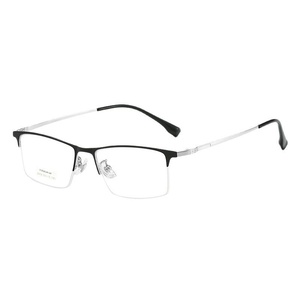
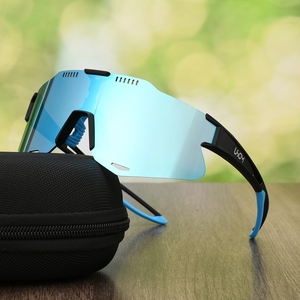

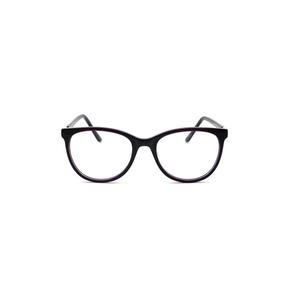
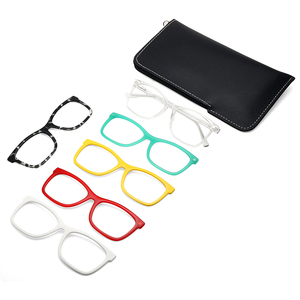
Procurement Dynamics in Men’s Optical Frames: 2026–2030 Technical Outlook
In modern enterprise optical procurement, brand buyers and multi-door optical chains are transitioning away from high-volume, homogeneous supply models toward vertically integrated micro-precision manufacturing. Men's optical frames are subject to acute mechanical expectations: wearers prioritize structural resilience against torsional deflection, hyper-lightweight mass distribution, hypoallergenic dermal interfaces, and streamlined cross-functionality (such as magnetic polarized clip integrations and blue-light attenuation).
Our proprietary manufacturing data across global supply pipelines in 90+ jurisdictions confirms three primary procurement vectors transforming contract terms:
Beta-Titanium & High-Density Acetate Shift
Procurement teams are actively replacing standard heavy metals with cold-worked Beta-Titanium alloys (0.6mm-0.8mm profiles) and ultra-thin, high-density cellulose acetate (HDCA). This shift drops average frame bridge-to-temple weight below 14.8 grams while boosting tensile elastic recovery to prevent temple splay after repetitive handling.
Modular Multifunctional Frameworks
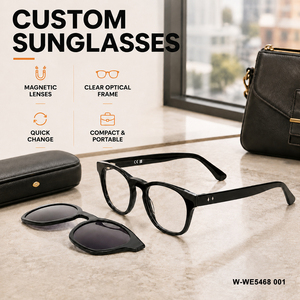
The convergence of prescription eyewear with outdoor protection has driven demand for multi-lens magnetic clip assemblies (5-in-1 TR90 suites). Buyers require NdFeB rare-earth magnets recessed cleanly into the temple lug points, preventing accidental decoupling under high kinetic vibration such as cycling and running.
Closed-Loop Regulatory Compliance
Global optical retail requires absolute compliance audit trails. Sourcing directors must secure REACH-compliant plasticizers (zero phthalates), ISO 12870 nickel-release resistance verification on plated bridges, and Medical Device Regulation (EU MDR 2017/745 Class I) technical files for immediate customs clearance.
Future-Proofing Private Label Margins Through Single-Source Integration
A persistent risk in optical supply chains is fragmentation: prototyping with one studio, cutting raw acetate plates via secondary subcontractors, and outsourcing electroplating to unverified third parties. This fragmented workflow increases defect variation (such as hinge screw torque inconsistency and galvanic corrosion) up to 8.2% per production lot. At IOVES, design, 5-axis CNC machining, tumble barrel hand-polishing, ultrasonic cleaning, micro-laser welding, and ISO-standard barrel hinge tensioning take place in our Lozzo di Cadore facility under one roof. This single-source workflow guarantees that your pilot-run approved prototype mirrors full-scale volume runs down to ±0.05mm tolerances.
Why Institutional Eyewear Buyers Choose IOVES
With over 75 years of continuous production in Belluno, Italy, we combine historical craft heritage with scalable industrial throughput.
75+ Years Industrial Lineage
Continuously family-owned in Cadore since 1950. We bring institutional memory across metallurgical behaviors, acetate curing protocols, and anatomical fit geometry that generic contract facilities cannot duplicate.
Full Vertical Integration
From 3D CAD modeling and prototype silicone molding to automated injection, computerized acetate milling, manual bridge pin setting, and final optical lens trace verification—all operations remain 100% in-house.
Enterprise Discretion & IP Protection
We operate as the confidential manufacturing backbone for global designer houses and optical retail chains. Proprietary geometries, tooling molds, and regional distribution channels are protected by strict bilateral NDAs.
Documented EU/FDA Compliance
Every shipment is accompanied by CE Declarations of Conformity, technical dossiers matching ISO 12870 standards, drop-ball impact test verification, and complete material traceability logs for seamless customs processing.
Frequently Asked Questions for B2B Optical Sourcing
Technical specifications, minimum order thresholds, and operational standards clarified for supply chain officers and professional buyers.
What are the standard Minimum Order Quantities (MOQ) and production lead times for custom men's optical frames?
For custom acetate and metal OEM/ODM developments, our standard production batch MOQ starts at 300 to 500 pieces per model (divided across 2–3 colorways), depending on tooling and raw material customization. For stock-supported lines and active private label programs, lower volume thresholds can be accommodated. Prototype iteration generally requires 15–20 business days, with full-scale container or bulk air-freight production runs completing within 45–60 days following final sample golden seal approval.
How does IOVES verify metallurgical biocompatibility and coating longevity against sweat corrosion?
All metallic elements (including Beta-Titanium, monel, stainless steel, and high-nickel alloys) are tested in strict accordance with EN ISO 12870 and EN 16128 standards for nickel release. Our electroplating and PVD (Physical Vapor Deposition) surface coatings undergo 48-hour artificial sweat immersion tests and cyclic salt-spray environmental chamber analysis to guarantee zero flaking, peeling, or oxidation after prolonged daily wear.
Can you support customized ergonomic adaptations for distinct geographic demographic profiles?
Yes. Our in-house engineering team regularly optimizes bridge pantoscopic tilt, vertex distance, and splay angles to accommodate diverse anatomical characteristics. We engineer specialized "Asian Fit" / Universal Fit options featuring build-up acetate nose pads (extending pad protrusion by 3.5mm-5.0mm) alongside micro-adjustable titanium pad arms suited for European and North American facial topographies.
What quality control protocols are applied to hinge friction and temple alignment?
Every frame lot undergoes mechanical cyclic endurance testing, where barrel and flex spring hinges are subjected to 20,000 continuous open-and-close actuations without loss of structural alignment or hinge screw back-out. Frame balance is audited on precision granite inspection surface plates to verify that horizontal lens plane alignment and four-point temple touch tolerances sit within strict ±0.5mm boundaries.
How are client-owned industrial designs, custom molds, and proprietary trademarks protected?
Intellectual property protection is fundamental to our enterprise business model. Tooling dies, injection molds, custom acetate lamination templates, and proprietary laser-engraved pad designs are assigned exclusively to the contracting client under legally binding NDAs. Custom tooling remains quarantined in our dedicated tool library and is never repurposed across other customer collections or standard factory portfolios.
Ready to Scale Your Optical Frame Supply Chain?
Connect with our Cadore engineering and commercial team to receive complete B2B master catalogs, comprehensive material composition sheets, and wholesale contract volume quotes.
Send an Inquiry