Curated Eyewear Prototypes Ready for Custom OEM/ODM Scaling
From ergonomic sports eye protection and Japanese-grade Beta-Titanium frames to organic bio-acetate lifestyle sunglasses, review our factory-audited prototyping benchmarks built for immediate sample turnaround and scaled bulk export.
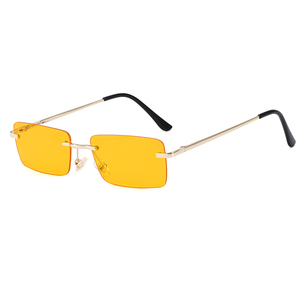
Superhot Eyewear 45700 Rimless Rectangular Eyeglasses Spring Hinges Blue Light Blocking Frame for Unisex 2025 Styling
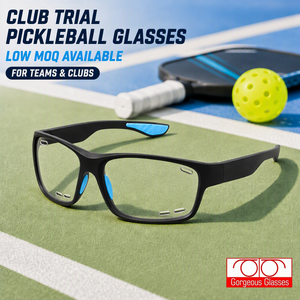
Club Trial Pickleball Glasses Clear Photochromic Lens Sports Eyewear Low MOQ Custom Logo OEM for Teams
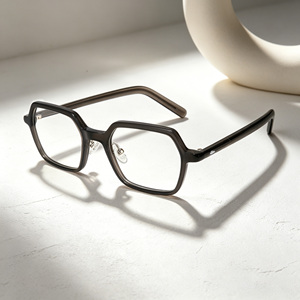
Retro Eyeglasses Transparent Grey Acetate Optical Glasses With Rubber Nose Pad Acetate Spectacle Frames Unisex For Men And Women
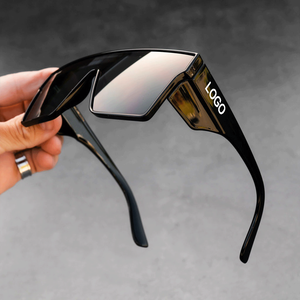
High Quality Custom Logo Z87+ Safety Glasses Ansi Construction Work Outdoor Sports Z87 Sunglasses
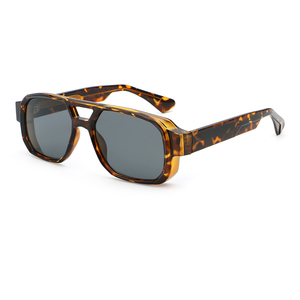
High End Eyeglasses Men Women Fashion Sunglasses PC Lens UV400 Protection Frames Vintage Style Sunglasses
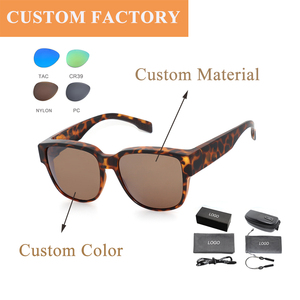
High Quality TR90 Full Rim Rectangle Sunglasses Classic Leopard Style Polarized TAC UV400 Protection Lightweight Custom Logo
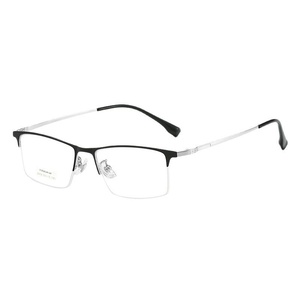
Ultra-light Beta Titanium Semi-rimless square Eyeglass Frame for Men Business Smart Optical Glasses Blue-light protection Summer
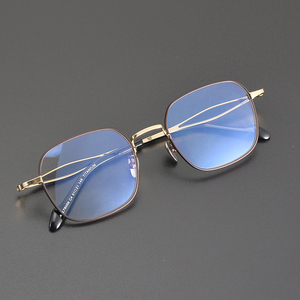
High Quality Latest Design Spectacle Eyewear Frames Beta Titanium Glasses Frame Japanese Handmade Eyeglasses Wholesale ARLT6059
Why Global Optical Importers Rely on Our Prototyping Ecosystem
By bridging Italian design pedigree originating from historic optical districts with China's high-velocity precision manufacturing infrastructure, we eliminate developmental bottlenecks between initial concept sketches and commercial container shipments.
Fully Integrated CAD-to-Mold Cycle
Every phase is managed under one unified quality system: 2D concept rendering, 3D parametric CAD modeling, rapid master pattern 3D printing (SLA/DMLS), precision multi-axis CNC blank milling, and production injection die sinking.
Strict IP Confidentiality & NDA Defense
We treat proprietary eyewear architectures with absolute confidentiality. CAD files, 3D scan data, custom hinge patents, and exclusive acetate sheet laminations remain encrypted in isolated internal network servers.
Multi-Material Hybrid Prototyping
Direct engineering competence spanning organic Mazzucchelli-grade cellulose acetate, Japanese Beta-Titanium wire EDM, Grilamid TR90 injection molding, surgical stainless steel, and ballistic polycarbonate safety lenses.
Global Regulatory Documentation
Export prototypes are accompanied by comprehensive laboratory test reports, including CE EN ISO 12312-1 conformity, ANSI Z80.3, ANSI Z87+ high-velocity ballistics, FDA drop-ball certifications, and REACH nickel release audits.
The Technical Evolution: From Artisanal Prototyping to Sub-Micron Digital Tooling
Eyewear prototyping serves as the vital risk-mitigation nexus within high-end optical brand commercialization. A standard discrepancy of merely 0.15mm along the lens groove bevel (eyewire V-bevel angle) will trigger stress birefringence, optical distortion, or spontaneous lens expulsion during mechanical thermal testing.
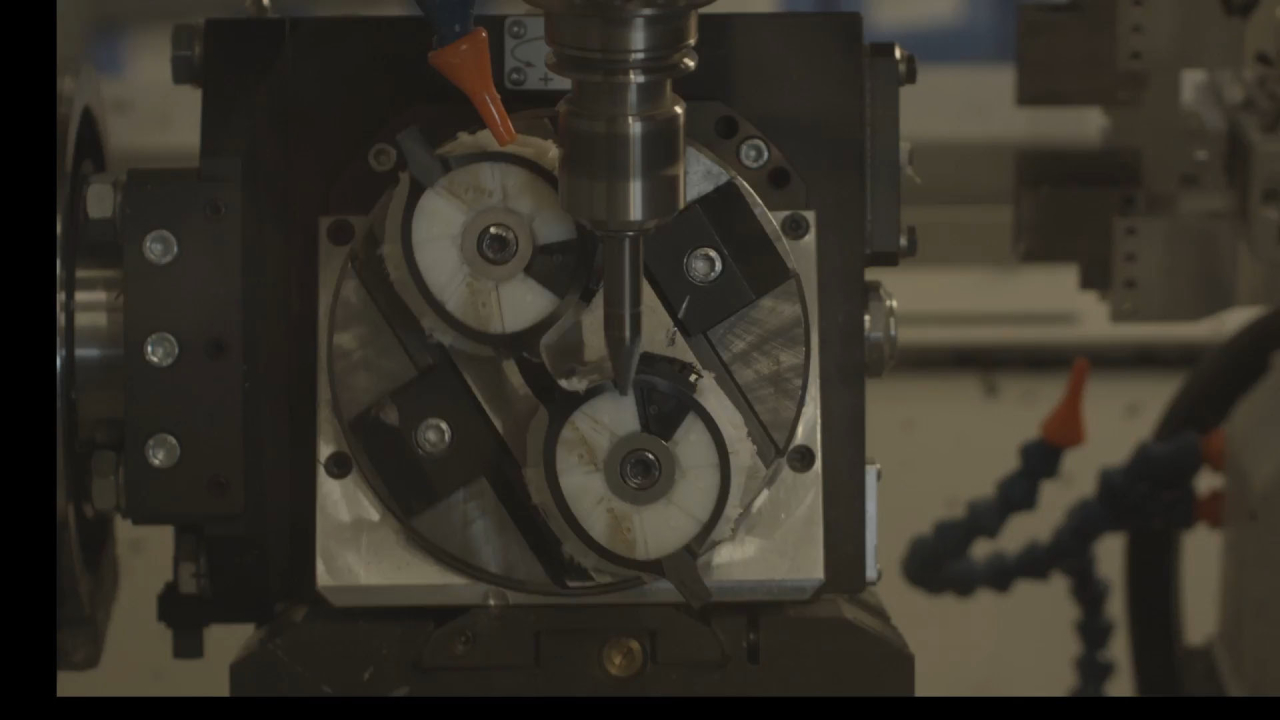
Modern Chinese eyewear prototyping facilities have adopted advanced aerospace machining standards, transforming traditional bench-filing into automated 5-axis simultaneous high-speed CNC routing. Master samples that previously demanded 4 weeks of hand-carving are now rendered with repeatable precision in 48 to 72 hours.
- Stereolithography (SLA) & PolyJet Jetting: 25-micron layer resolution for ergonomic face fitment validation and bridge pantoscopic angle assessment.
- Direct 5-Axis CNC Milling: High-feed machining of raw extruded cellulose acetate blocks and forged pure titanium billets without tooling deformation.
- Silicone Vacuum Casting: Low-volume polyurethane urethane elastomer molding for impact-resistant sports goggle and safety chassis trials.
- Co-ordinate Measuring Machines (CMM): Contact and optical 3D scanning verifying hinge pin alignment and curvature tolerances within ±0.015mm.
Engineering Benchmark: Eyewear Prototyping Methodologies Compared
Procurement teams must calibrate prototyping methodologies against structural design goals, thermal tolerance requirements, and projected production tooling lead times.
| Prototyping Technology | Optimal Materials | Dimensional Accuracy | Lead Time | Mechanical Suitability | Ideal Application Phase |
|---|---|---|---|---|---|
| 5-Axis High-Speed CNC | Cellulose Acetate, Beta-Ti, Al-Mg | ±0.02 mm | 3 - 5 Days | Production Grade (100%) | Master samples, buyer pre-selling, trade fair showcases |
| Direct Metal Laser Sintering (DMLS) | Grade 5 Titanium Powder, Inconel | ±0.05 mm | 4 - 6 Days | High Structural Density | Complex organic bridges, custom integrated hinges |
| High-Resolution PolyJet / SLA | Photosensitive Resin, VeroClear | ±0.08 mm | 24 - 48 Hours | Aesthetic / Visual Only | Bridge fit ergonomics, head curvature ergonomic testing |
| Silicone Tooling (Vacuum Casting) | PU Resins, Optical Polyurethane | ±0.10 mm | 7 - 10 Days | Near Production Elastomer | Sports goggle frames, tactical wraps, bridge gaskets |
| Pilot Hard Tooling (Pre-Hardened P20) | TR90, Ultem, Polycarbonate, TPU | ±0.015 mm | 15 - 20 Days | Identical to Mass Production | Drop ball impact testing, ANSI Z87+ formal certification |
Future Eyewear Procurement & Manufacturing Trends (2025-2030)
Navigating shifting trade dynamics, sustainability mandates, and the integration of wearable micro-electronics demands proactive supply chain alignment with top Chinese production partners.
Circular & Bio-Based Acetates
Global optical retail brands are transitioning rapidly toward circular raw materials. Sourcing strategies now prioritize bio-acetate synthesized from wood pulp and cotton lint with diethyl phthalate (DEP)-free bio-plasticizers, achieving biodegradation under standard industrial composting parameters.
- FSC-certified cellulose acetate flakes
- Zero chemical migration compliant (ISO 10993)
- Carbon-neutral pilot batching
- Recycled stainless core wire reinforcement
Smart Audio & AR Frame Chassis
Prototyping factories are increasingly engineering hybrid structures designed to house micro-speakers, touch capacitive sensors, and bone conduction drivers. This demands precision cavity routing inside TR90 temples without compromising structural tensile memory or temple fold balance.
- IPX5/IPX7 ultrasonic welding channels
- Battery compartment thermal dissipation design
- Conductive pin inserts via insert micro-molding
- Sub-28g balanced weight distribution
On-Demand Distributed Tooling
The standard 18-week optical design-to-shelf lifecycle has collapsed to 6-8 weeks. Utilizing standardized modular mold bases with swappable cavity inserts, buyers can initiate micro-lot production runs (300 to 500 units) to validate regional sell-through prior to financing 10,000-piece container orders.
- Modular mold base interchangeability
- Near-zero tooling re-investment for SKU variants
- Real-time ERP batch inspection portals
- Direct fulfillment drop-shipping support
End-to-End Eyewear Prototyping & Export Protocol
Our standardized five-stage development roadmap ensures complete predictability from early creative ideation through international port clearance.
CAD Feasibility Audit
Evaluation of 2D tech packs, bridge pantoscopic tilt, temple clearance, rim grove thickness, and shrink rate compensations across materials.
Rapid Physical Sampling
Production of high-resolution stereolithography or direct 5-axis CNC acetate/titanium functional prototypes within 72 business hours.
Stress Metrology Testing
Bridge endurance cycles (20,000 hinge flexes), spring temple fatigue, perspiration immersion, and lens retention drop-ball verification.
Pilot Run & Hard Tooling
Refining hardened steel injection molds or multi-cavity stamping dies with initial pre-series production runs of 300 to 500 units.
Export Scale & Delivery
ISO/AQL 1.0 final quality control inspection, custom retail packaging, barcode compliance, and air/sea global logistics handling.
Frequently Asked Questions by Optical Buyers & Importers
Detailed technical answers to common queries encountered by brand owners, sourcing directors, and optical laboratory engineers during custom manufacturing projects.
What typical lead time is required for functional eyewear prototypes?
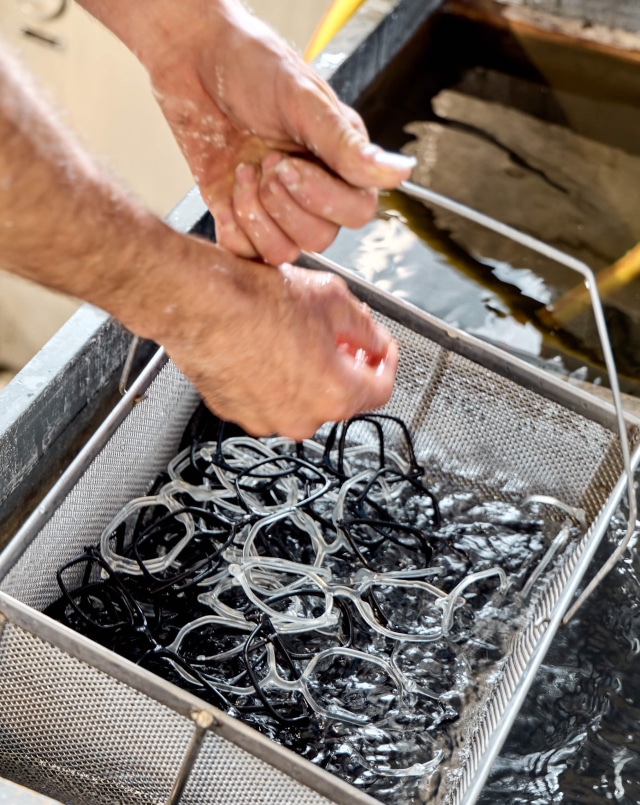
For initial 3D printed resin samples (SLA/PolyJet) evaluating shape and facial fit, turnarounds range from 48 to 72 hours. For functional, wearable master prototypes crafted from authentic materials—such as 5-axis CNC-machined cellulose acetate or wire-EDM Beta-Titanium with soldered hinges—production timelines average 7 to 10 working days, inclusive of hand-lapping and barrel-tumbling polish.
How do you guarantee proprietary IP security for unreleased frame designs?
Confidentiality is our primary protocol. All CAD files, 3D surface files (IGES/STEP), and custom hinge blueprints are retained within air-gapped, encrypted network clusters protected by dual-factor authentication. Formal bilateral non-disclosure agreements (NDAs) subject to international trade law are executed prior to transmitting any customer proprietary design data.
What minimum order quantities (MOQ) apply from sampling to mass production?
Prototyping carries zero MOQ limitations; clients may request single-unit master models for marketing photoshoots, buyer presentations, or dimensional inspection. Upon graduating to pilot series production, flexible MOQs begin as low as 300 pieces per model (divided across 2-3 acetate colorways) for high-end CNC acetate, and 500 to 1,000 pieces for complex custom injection-molded TR90 or PC sports styles.
Which international quality standards and testing certifications are supported?
Prototypes and mass-scale exports are built to fulfill the rigorous statutory directives of global target destinations. Our internal metrology laboratories conduct tests corresponding to European CE (EN ISO 12312-1:2022, EN ISO 12870), United States FDA 21 CFR 801.410 (impact resistance drop-ball testing), ANSI Z80.3, ANSI Z87.1+ ballistics, AS/NZS 1067.1, and REACH Regulation (EC) No 1907/2006 for nickel release and plasticizer safety.
What are the primary cost drivers during eyewear prototype development?
The principal cost variables encompass material selection (e.g., standard injection polycarbonate vs. bio-based block acetate or sintered medical-grade titanium), the complexity of hinge assemblies (standard 3-barrel vs. custom OBE/Comotec spring hinges), the number of CNC continuous toolpaths required for geometric frame beveling, and specialized secondary surface treatments such as multi-layer anti-reflective coatings or PVD ion plating.
Can your engineering facility adapt designs from physical samples or rough sketches?
Yes. Our in-house engineering team utilizes high-precision optical CMM non-contact laser digitizers to capture the exact coordinates of existing physical frames. We can reverse-engineer vintage designs, modify bridge widths and temple lengths to fit alternative demographic nasal contours (e.g., Asian Fit / Universal Fit), and deliver verified 3D CAD files ready for immediate production.
Accelerate Your Optical Product Development Today
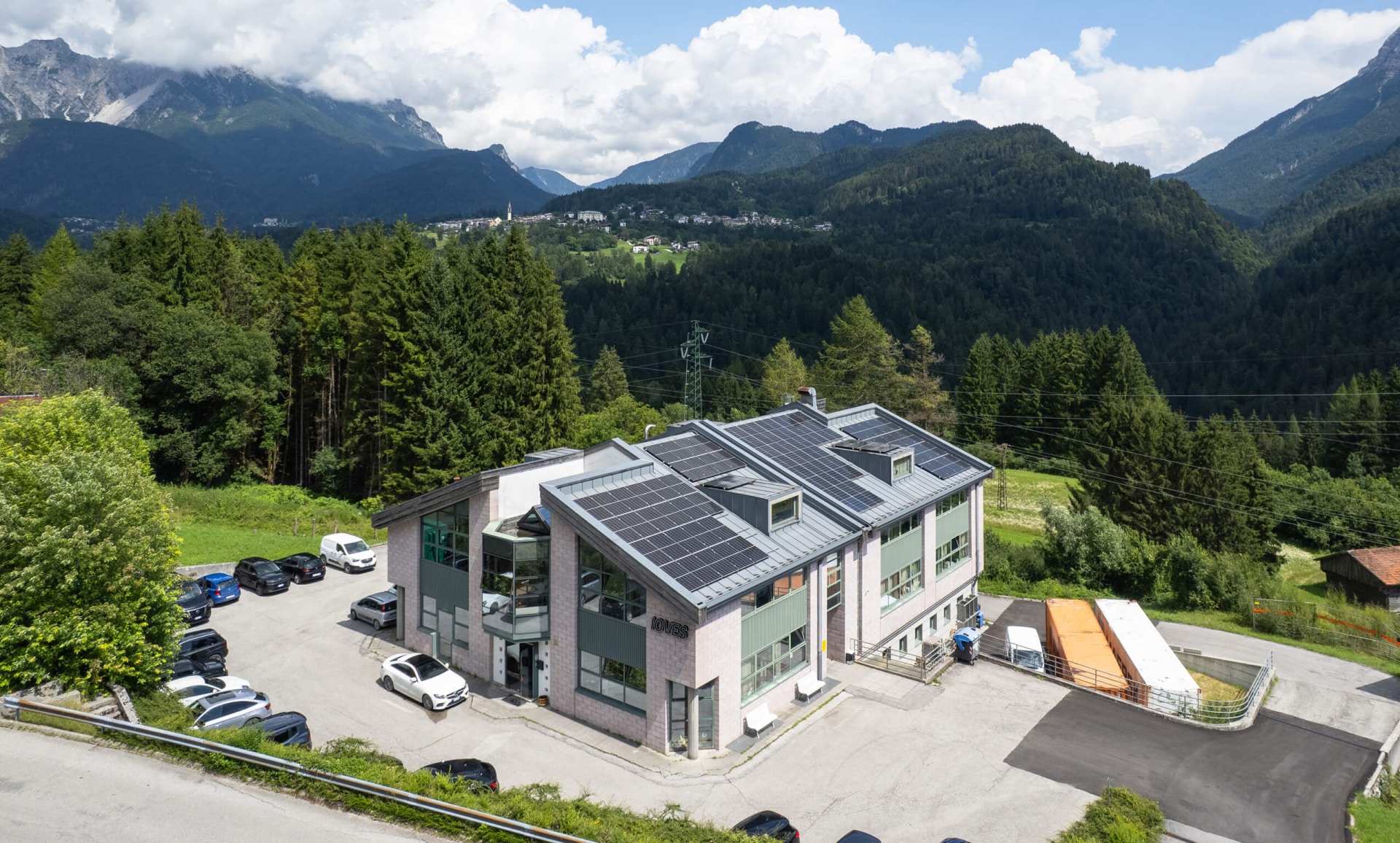
Whether you require a single high-precision CNC prototype for investor review or a turnkey OEM/ODM partner capable of producing 3,000 pieces per day across 90+ global export destinations, our Cadore-heritage engineering team in China is prepared to audit your tech pack.