Featured Sustainable & High-Precision Eyewear Lines
Explore export-grade frames spanning bio-based acetates, aircraft pure titanium, ergonomic TR90 polymers, and optical tooling developed under rigorous European quality standards.

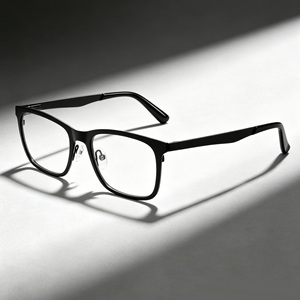
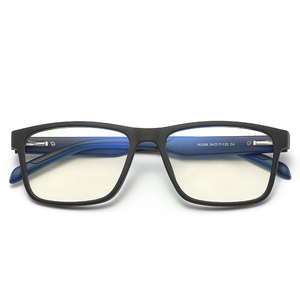

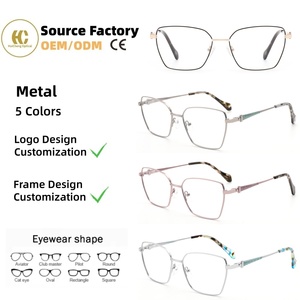

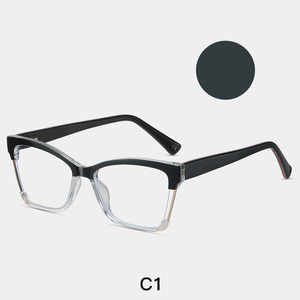
The Engineering Reality of Bio-Based Acetate in Modern Eyewear Manufacturing
Bio acetate represents a foundational shift in optical polymer chemistry rather than a mere marketing differentiator. Traditional cellulose acetate relies heavily on fossil-fuel-derived plasticizers—primarily diethyl phthalate (DEP) and dimethyl phthalate (DMP)—to achieve thermoformability and mechanical ductility. In contrast, certified bio acetate replaces petrochemical plasticizers with bio-derived esters, specifically triethyl citrate (TEC) extracted from fermented citric acid or vegetable-origin triacetin. Combined with natural cellulose wood pulp sourced from certified FSC (Forest Stewardship Council) forests and cotton linters, genuine bio-acetate formulations achieve a bio-based carbon fraction between 68% and 94% pursuant to ASTM D6866 radiocarbon testing, while maintaining complete compliance with ISO 14855 and ISO 17088 standards for industrial biodegradability.
For optical retail groups, distributor networks, and independent designer labels, transitioning to bio-based acetate introduces specific engineering considerations. Milling bio acetate necessitates recalibrated CNC feed rates and spindle speeds: standard high-speed machining (24,000 RPM) must be calibrated downward to avoid localized exothermic plasticizer degradation, preventing frame warpage and preserving chromatic depth. Furthermore, ultrasonic hinging and tumbling cycles demand non-toxic, biodegradable organic polishing pastes to avoid chemical leaching. At IOVES SPA, with our generational manufacturing roots in Lozzo di Cadore since 1950, our manufacturing team controls these technical variables in-house, ensuring bio acetate frames achieve identical mechanical flexural memory, dimensional stability, and hinge-torque retention compared to legacy cellulose compounds.
ASTM D6866 Bio-Carbon Traceability
Verification of renewable plant-derived carbon content utilizing accelerator mass spectrometry (AMS), eliminating phthalate leaching risks and meeting REACH Annex XVII benchmarks.
Precision CNC Flexural Balance
Maintains an elastic modulus between 2.2 and 2.8 GPa. Structural integrity prevents temple splay under mechanical stress while facilitating cold lens insertion at optical dispensary levels.
ISO 12870 Environmental Stability
Exhaustive weathering tests including 48-hour 60°C dry-heat thermal shrinkage below 0.25%, UV radiation resistance (ISO 4892), and zero skin perspiration blistering (ISO 105-E04).
Top 10 Bio Acetate Eyewear Manufacturers & Exporters: Global Sourcing Matrix
An objective industrial assessment comparing manufacturing footprints, material compliance certifications, OEM/ODM operational scope, and technical specializations across leading manufacturing hubs.
| Manufacturer / Exporter | Manufacturing Hub | Primary Material Expertise | Core Certifications | Daily Capacity | Export Focus |
|---|---|---|---|---|---|
| IOVES SPA (Since 1950) | Lozzo di Cadore, Belluno (Italy) | Bio-Acetate, Pure Titanium, Hybrid Metal & Injection | CE, ISO 9001, ISO 12870, REACH | 3,000 pcs | Global (90+ Countries, US/EU/APAC) |
| Mazzucchelli 1849 (Polymer Supplier) | Castiglione Olona (Italy) | M49 Bio-Based Acetate Raw Sheets | ISO 14855, ASTM D6866, FSC | Material Supplier | Global Eyewear Brands |
| Fukui Optical Consortium | Sabae, Fukui (Japan) | Bio-Plasticizers + Beta-Titanium Combinations | JIS B7285, CE Compliant | 1,200 pcs | High-End Boutique Brands |
| Oyonnax Artisan Cluster | Ain Region (France) | Hand-Finished Luxury Eco-Acetate Frames | Origine France Garantie, CE | 800 pcs | European Designer Houses |
| Shenzhen Premium OEM Group | Henggang, Shenzhen (China) | Automated CNC Bio-Acetate & Clip-On Sun | ISO 9001, FDA Registered, BSCI | 15,000 pcs | Mass Market & Fast Optical |
| Wenzhou Optical Industrial Corp. | Ouhai, Wenzhou (China) | Cost-Effective TR90, CP & Bio-Cellulose | CE, ISO 13485 | 25,000 pcs | Global Retail Volume Chains |
| Belluno Craft Consortium | Veneto (Italy) | Bespoke Handcrafted Organic Acetate | Made in Italy 100%, CE | 600 pcs | Luxury Independent Boutiques |
| Guangzhou Vision Technology | Huadu, Guangzhou (China) | Multi-Material Injection, AR/VR Tooling | ISO 9001, CE, ANSI Z87.1 | 8,000 pcs | Tech-Wear, Eyewear Importers |
| Hong Kong Eyewear Exporters Ltd. | Hong Kong / Pearl River Delta | Private Label Turnkey Acetate Programs | Sedex, BSCI, FDA | 10,000 pcs | North American Department Stores |
| Cadore Heritage Studio | Auronzo di Cadore (Italy) | Artisanal Crystal & Inlaid Bio-Acetate | CE, ISO 9001 | 500 pcs | Couture Eyewear & Jewelers |
Why Tier-One Importers & Brands Partner with IOVES SPA
For three generations, IOVES has operated at the epicenter of global optical innovation in Lozzo di Cadore. Here is how our vertically integrated infrastructure safeguards our B2B partners' investments.
Complete Vertical In-House Control
From 3D CAD modeling, mold machining, multi-axis CNC milling, to 72-hour organic tumbling and ultrasonic temple assembly, our entire supply chain is held under one roof in Cadore. This removes subcontracting delays, eliminates intellectual property leaks, and enforces uniform metallurgical and polymer tolerance.
Strict IP Non-Disclosure & Exclusivity
We respect client designs with legal and technical discretion. Client mold tooling, customized laminate color combinations, and proprietary hinge mechanisms remain completely confidential. We protect high-fashion labels, private retail chain designs, and bespoke collections with ironclad non-compete execution.
Tri-Material Multi-Platform Flexibility
Few factories worldwide master all three primary eyewear categories concurrently. IOVES balances high-yield bio-cellulose acetate processing, vacuum-brazed Japanese beta-titanium engineering, and medical-grade precision injection molding (TR90/ultem), giving clients cohesive collections from a single qualified vendor.
Strategic Procurement Vectors Reshaping Global Eyewear Sourcing
Procurement executives must align supply strategies with changing environmental mandates, consumer expectations, and agile manufacturing protocols.
1. European Digital Product Passports (DPP) & Chemical Auditing
Starting in 2026, the European Union's Ecodesign for Sustainable Products Regulation (ESPR) will mandate digital traceability for consumer optical goods. Buyers must verify the molecular origin of frame plasticizers. Procurement departments can no longer accept unverified supplier declarations; they require certified isotopic analysis and supply-chain custody tracking from raw wood pulp through distribution.
2. Dual-Track Nearshoring and Offshore Cost Hedging
Global supply disruptions have prompted optical distributors to implement hybrid sourcing models. Volume basics and fast-fashion seasonal accessories are commonly sourced from high-capacity Asian hubs, whereas high-margin flagship collections, core optical ranges, and premium bio-acetate lines are anchored in established Italian districts like Cadore. This dual-track strategy ensures rapid turnaround, brand prestige, and reliable container deliveries during global logistical constraints.
3. Reduced Minimum Order Quantities (MOQs) with Rapid Micro-Batching
The era of committing to 2,000 units per colorway is receding. Agile fashion brands require initial production runs of 200–300 units per SKU to gauge real-time sell-through metrics across omnichannel retail. Advanced CNC-programmable tooling, laser engraving, and modular mold inserts allow factories like IOVES to offer responsive production runs without cost penalties, minimizing unsellable dead stock.
Technological Innovations in Bio-Acetate Eyewear Engineering
Next-generation polymer advances deliver higher thermal stability, renewable color integration, and closed-loop recyclability.
Algal & Agricultural By-Product Plasticizers
Researchers are synthesizing triethyl citrate and succinate esters from agricultural waste streams (corn husks, non-food beet molasse, and marine microalgae). This reduces the carbon footprint by up to 60% compared to first-generation bio-resins while eliminating competition with agricultural food resources.
Botanical Colorants & Closed-Loop Scrap Recycling
Post-industrial CNC milling scrap—which can comprise up to 45% of an acetate sheet during face-front cutting—is collected, re-granulated, filtered, and pressed into recycled acetate sheets. Combining recycled content with non-toxic, plant-derived pigments allows closed-loop, circular frame programs.
Cold-Pressing & Titanium Bonding
Recent advances in ultrasonic adhesive bonding and vacuum laminating allow precision joining of 0.8mm ultra-thin bio-acetate veneers to medical-grade titanium chassis. This yields frames with classic acetate warmth and tortoise aesthetics, paired with titanium lightness and flexibility.
Frequently Asked Questions: Bio Acetate Sourcing & Manufacturing
Direct, technically grounded answers to common engineering, commercial, and regulatory questions raised by optical sourcing executives.