75+
Years Eyewear Heritage
1,000+
New Tooling Models / Year
3,000
Daily Finished Pairs
90+
Countries Exported
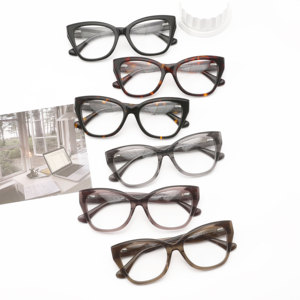
Flagship Export Optical Collections
Precision-engineered presbyopia reading glasses, luxury optical frames, and polarized performance spectacles ready for OEM custom private labeling and global wholesale volume distribution.
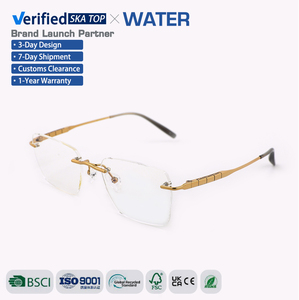
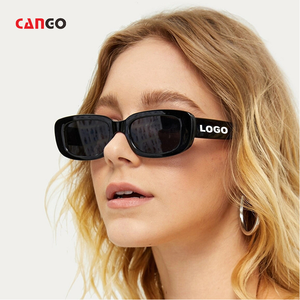
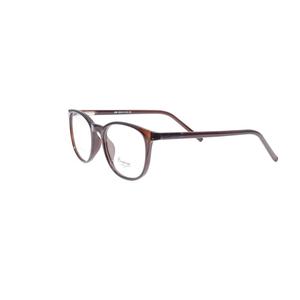
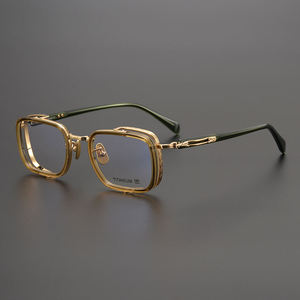
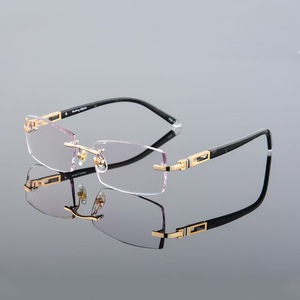
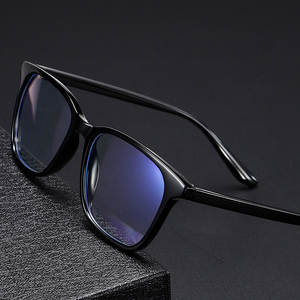
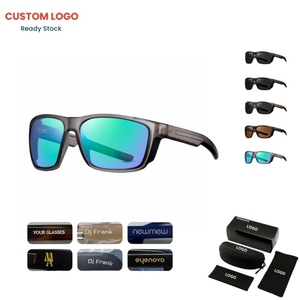
Strategic B2B Presbyopia Product Line Recommendations
For enterprise procurement officers, optical retail chains, and international importers, optimizing SKU assortment requires balancing margin velocity with structural durability. According to recent demographic presbyopia trends, reading glasses are no longer regarded merely as commoditized optical aids; they are pivotal fashion accessories requiring rigorous ergonomic validation.
Executive Acetate Series
Targeted at boutique optical chains and high-tier department stores. Features multi-barrel hinges, wire-core reinforced temples, and Mazzucchelli-grade custom cellulose acetate.
- Diopter Range: +1.00D to +3.50D
- Zero-distortion CR-39 / High-Index Resins
- Hand-polished beveling with smooth bridge contact
Office Blue-Block Progressives
Engineered for corporate and remote professionals spending extensive hours facing dual monitors. Incorporates smooth corridor progressive lenses without visible transition lines.
- HEV420 blue-spectrum absorption
- Anti-reflective hydrophobic coating layer
- Ultra-light memory titanium and fine alloy builds
Everyday Injected TR90 Ultra-Light
Ideal for mass-market optical programs, pharmaceutical retail, and large volume commercial distributors needing unmatched flexural strength and impact resilience.
- Swiss EMS TR90 hypoallergenic polymer
- Weight profile below 14.5 grams per frame
- Integrated snap-fit hinges eliminating screw fallout
Presbyopia Optics: Engineering & Market Evolution Trends
Critical structural insights into raw materials, optical physics, and computerized lens technologies driving next-generation reading glasses manufacturing.
The reading glasses manufacturing ecosystem is undergoing an unprecedented structural shift. Traditional injection-molded, single-vision reading glasses are rapidly losing market share to ergonomically calculated digital progressive corridor lenses and smart photocurable resins. In the modern visual environment, the focal distance of human eyes fluctuates constantly between smart terminals (30-40cm), desktop workstations (60-70cm), and conversational room distances (1-2 meters).
From a metallurgical and polymer standpoint, procurement professionals must scrutinize three fundamental material trends:
Bio-Based Acetate & Circular Polymers
Regulatory frameworks such as EU REACH, RoHS, and California Prop 65 demand certified phthalate-free, bio-derived cellulose acetates formulated from renewable cotton fibers and wood pulp, achieving over 68% biodegradability without sacrificing mechanical rigidity or dimensional stability during optical glazing.
Beta-Titanium & Micro-Alloy Metallurgy
Transitioning from standard copper-nickel alloys to cold-worked Beta-Titanium and medical-grade 316L stainless steel allows temples to achieve thicknesses down to 0.7mm. These frameworks yield superior tensile memory, zero galvanic corrosion, and complete biocompatibility against dermal sweating.
Aspherical Thin-Profile Cast Optics
Spherical aberration in conventional reading lenses introduces peripheral distortion and eye fatigue. Modern automated casting utilizes 1.56, 1.60, and 1.67 index aspherical designs, reducing center thickness by up to 28% and ensuring optical centers align impeccably with optical axes across pupil variations.
Future B2B Procurement Criteria (2025–2030)
Data-driven decision matrix contrasting legacy wholesale practices with modern supply chain engineering.
| Evaluation Dimension | Conventional Eyewear Sourcing | Advanced OEM/ODM Manufacturing Standard | Strategic Buyer Advantage |
|---|---|---|---|
| Optical Lens Technology | Basic spherical acrylic/PMMA single vision | Precision aspheric CR-39 / Polycarbonate with multi-layer AR coating | Zero optical distortion, reduced return rates, premium retail pricing power |
| Hinge Engineering | Standard external solder friction joints | Tested 25,000-cycle spring barrel hinges & screw-locking anchor threads | Exceptional temple durability, universal face-width fitment, low warranty costs |
| Regulatory & QC Audit | Random sample post-packaging check | 100% in-line dimensional gauging, FDA registered, CE EN ISO 12870 certified | Seamless customs clearance, zero product recalls across EU/US markets |
| Production Lead Time | Fragmented sub-tier contracting (90–120 days) | Vertically integrated CAD/CAM prototyping to mass tooling (45–60 days) | Agile inventory turnover and rapid response to seasonal optical trends |
| IP Protection Protocol | Open catalog distribution risking design leak | Strict NDA binding, private custom molding, dedicated proprietary cavity seals | Absolute brand exclusivity and defensible marketplace IP positioning |
Why Global Brands Partner With Us
75+ years of optical engineering heritage combined with vertically integrated industrial scale.
Three Generations of Heritage
Operating since 1950 from the historic eyewear cradle of Cadore, Italy, our manufacturing lineage embodies deep institutional knowledge, refined artisanship, and reliable industrialized repeatability.
100% Vertical Integration
From initial hand sketching and CAD technical modeling to high-speed CNC milling, automated injection molding, assembly, and multi-point optical inspection—all operations exist strictly under one roof.
Absolute Confidentiality
We enforce rigorous IP security protocols. Proprietary mold sets, private brand colorways, and bespoke engineering drawings remain protected with multi-tier non-disclosure guarantees across the entire lifecycle.
Total Regulatory Compliance
Every shipment is supported by comprehensive documentation: CE declarations of conformity, FDA medical device registration, ISO 12870 standard test reports, and certified UV400/Blue-Block optical lab metrics.
Frequently Asked Sourcing & Manufacturing Questions
Direct technical answers to clarify OEM/ODM workflows, tooling capabilities, minimum order volumes, and logistical execution.
Where are your optical frames and reading glasses manufactured?
All engineering, rapid prototyping, mass production, and final quality control stages are conducted in our vertically integrated manufacturing facility in Lozzo di Cadore (Belluno), Italy—the historic foundation of high-end optical craftsmanship. This centralized footprint guarantees that sampling precision matches final volume production without third-party outsourcing variances.
What raw materials and tooling processes do you accommodate for reading glasses?
We operate specialized automated production lines across three core material technologies: precision-milled cellulose acetate (block and sheet laminate), ultra-lightweight high-nickel alloys and Beta-Titanium, and high-precision injection polymers including Swiss EMS TR90 and bio-based polyamides. We handle mold cavity creation, electroplating, anodizing, and multi-axis tumbling in-house.
What are the Minimum Order Quantities (MOQ) for custom private label reading glasses?
For stocked frame styles requiring customized laser engraving, pad printing, and private packaging, our MOQ starts flexibly from 10 to 100 pairs per SKU. For fully bespoke OEM/ODM projects requiring custom CNC tooling, customized acetate colors, or unique metal profiles, typical production batches require 300 to 500 pairs per model, distributed across selected colorways and diopter increments (+1.00D to +3.50D).
How do you ensure optical precision and diopter accuracy across mass batches?
Each batch of lenses undergoes automated lensmeter mapping to verify dioptric tolerances within ±0.06D, adhering strictly to EN 14139 and ANSI Z80.31 standards. Prism imbalances, optical center deviations, and surface astigmatism are monitored through high-resolution optical sensors before lens edging and automated insertion into frame rims.
Can you produce progressive multifocal and blue-light blocking reading glasses?
Yes. Our optical lab supplies both short and long corridor anti-fatigue progressive lenses that integrate computer intermediate zones with near presbyopia power seamlessly. Our blue-blocking solutions utilize monomer-infused HEV absorbing matrices or high-durability vacuum electron beam dielectric coatings, providing 420nm protection with high visual clarity.
How do you protect client design IP, custom CAD drawings, and private brand molds?
Confidentiality is our default corporate policy. We execute binding bilateral Non-Disclosure Agreements (NDA) before reviewing client technical briefs. Custom tooling and molds are assigned encrypted tracking codes, locked in secure tooling vaults, and never exhibited, shared, or repurposed for open catalog wholesale.
What is the standard lead time from initial 3D rendering to final container dispatch?
Conceptual CAD and technical blueprints are delivered within 5 to 7 business days. 3D resin printed or CNC hand-worked functional prototypes require 14 days. Once prototypes and optical certifications are validated by the client, mass manufacturing and assembly typically span 45 to 60 days, followed by air/ocean freight logistics to over 90 destination ports globally.
Initiate Your Eyewear Manufacturing Partnership
Consult with our engineering directors in Cadore. Accelerate your market entry with certified Italian craftsmanship, verified quality metrics, and scalable OEM/ODM infrastructure.