Custom Trimming
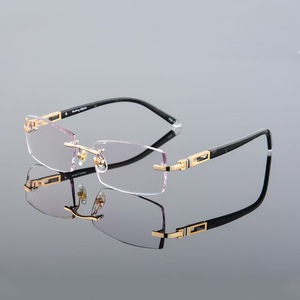
Explore high-precision CNC rimless profiles, sport polarized semi-rimless shields, and aerospace-grade lightweight alloy chassis engineered to exacting global optical standards.
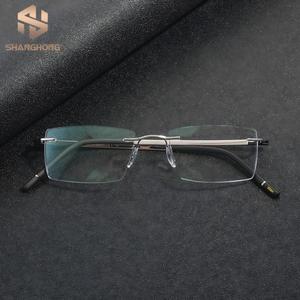
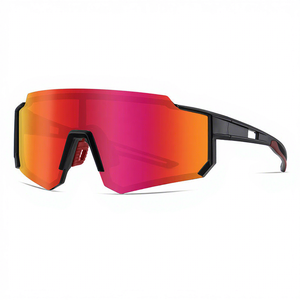
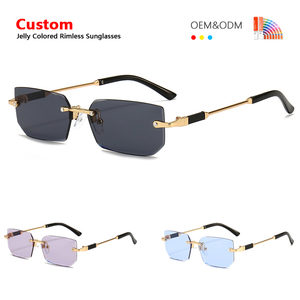
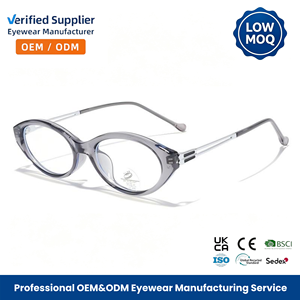
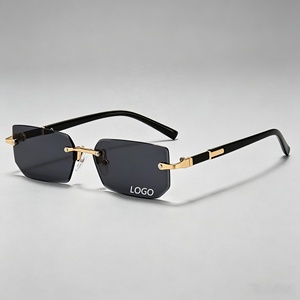
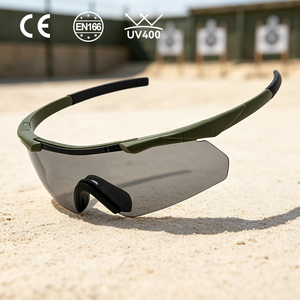
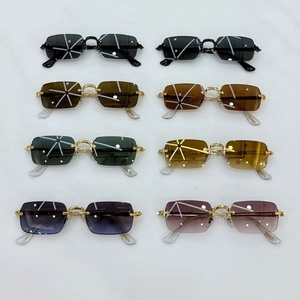
Fully integrated daily manufacturing capacity covering metal wire drawing, micro-grooving, and injection molding.
Rapid tooling, CAD engineering, and sample generation supporting global private label distribution.
Documented compliance across ANSI Z80.3, ISO 12870, CE Medical Device Regulations, and FDA standards.
Automated optical micro-drilling and high-tenacity nylon thread tension calibration systems.
Semi-rimless (nylon browline or inverse half-rim) frames demand advanced structural engineering compared to full-rim counterparts. Sourcing from certified China manufacturing facilities offers distinct technical advantages in material processing and structural longevity.
Semi-rimless frames rely on a calibrated high-molecular nylon monofilament (typically 0.5mm–0.8mm) recessed into a diamond-beveled lens canal. Our automated grooving infrastructure maintains an even 0.55mm slot depth, completely eliminating perimeter micro-cracking in high-index polycarbonate and CR-39 lenses.
The upper load-bearing bridge uses memory beta-titanium or high-density Cu-Ni monel wire treated with micro plasma-arc welding. This ensures flexural resilience during temple expansion, preventing mechanical torque from transferring directly onto exposed lens corners.
Sweat acidity and environmental exposure accelerate plating oxidation along the lower rimless chassis. Our dual-chamber Physical Vapor Deposition (PVD) guarantees uniform 1.2μm to 2.5μm coating depth, surpassing 72-hour artificial perspiration immersion tests without pitting or delamination.
Strategic procurement teams are fundamentally shifting how wholesale semi-rimless frame contracts are negotiated. The convergence of digital optometry, lightened base-curve profiles, and circular material chains dictates next-generation manufacturing specifications.
Direct Metal Laser Sintering (DMLS) titanium brackets eliminate assembly screws entirely, producing custom-fit chassis assemblies directly connected to prescription lenses with zero shearing fatigue.
Transitioning from petroleum-derived nylon threads to bio-polyamide retaining loops derived from non-edible castor oil, offering identical tensile strength with a 45% reduced lifecycle carbon footprint.
Modern digital device usage demands modified base curve geometries. Semi-rimless brow bars are now engineered with micro-adjustable 7°–12° pantoscopic inclinations directly within the temple hinge box.
Upper browline profiles are adopting internal micro-chambers to accommodate 1.1mm flex-printed circuit boards for open-ear directional audio and blue-light telemetry modules without altering frame thickness.
| Material Engineering Grade | Tensile Yield Strength | Density (g/cm³) | Corrosion Resistance | Primary Production Application |
|---|---|---|---|---|
| Aerospace Beta-Titanium (Ti-15V-3Cr-3Sn-3Al) | 980 MPa | 4.65 | Immune to Saline & Perspiration | High-end rimless bridge bars, featherweight temples |
| Swiss EMS TR90 Grilamid Injection | 85 MPa | 1.02 | High Chemical Resistance | Sports semi-rimless sunglasses, ballistic wrap frames |
| Cold-Drawn Nickel-Silver (Monel Alloy) | 550 MPa | 8.80 | Electroplated Passivated | Commercial wholesale optical chassis, classic browlines |
| High-Molecular Polymer Cellulose Acetate | 65 MPa | 1.28 | Solvent Sensitive, UV-Stable | Luxury architectural temple sleeves, laminate rim accents |
Partnering directly with a premier China wholesale optical manufacturing factory eliminates multi-tier trading margins and guarantees stringent QA compliance across high-volume assembly runs.
Unlike small assembly workshops, our vertically integrated plant houses full wire extrusion, multi-axis micro CNC milling, automated electrolytic polishing, and cleanroom vacuum plating under one roof. Every batch undergoes exhaustive hinge-flex endurance (over 20,000 cycles) and salt-fog corrosion verification before dispatch.
Detailed answers addressing factory audits, minimum order quantities (MOQs), surface plating durability, and technical assembly tolerances for optical distributors and retail chains.
Access direct B2B pricing, comprehensive CAD engineering blueprints, technical compliance test reports, and unbranded showroom samples for wholesale review.