Engineered Precision: Commercial Eyewear Lineup
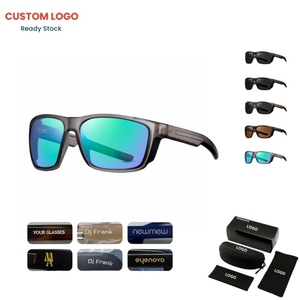
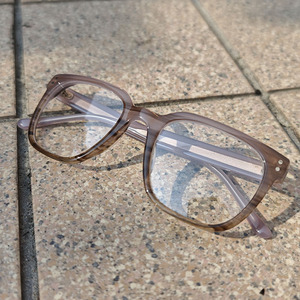
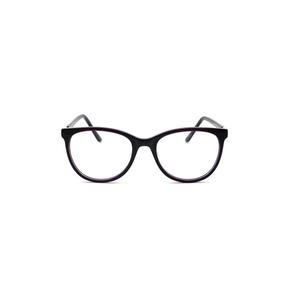
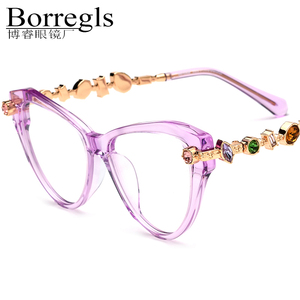
Explore high-yield private label sunglasses, pure titanium executive silhouettes, migraine therapy optics, and custom 3D injection-molded tech housings ready for global wholesale distribution.
Global Eyewear Sourcing Dynamics: Engineering, Compliance, & Supply Chain Geopolitics
A comprehensive procurement briefing for optical chains, private label brands, and multinational import conglomerates seeking maximum margin stability and verifiable product integrity.
The international fashion eyewear landscape has decisively transitioned from low-cost, disposable frame trading to high-precision optical engineering and sustainable material accountability. For wholesale procurement officers, optical brand direct-to-consumer (D2C) founders, and regional distributors, navigating the modern supply chain requires deep analytical visibility into material metallurgy, polymer purity, CNC machining tolerances, and regulatory harmonization across jurisdictions including the European Union, United States, and Australasia.
Core Procurement Insight: Sourcing fashion eyewear in 2026 demands an integrated manufacturing paradigm where rapid prototyping (3D stereolithography and multi-axis CNC tooling) converges seamlessly with traditional craftsmanship—such as multi-stage tumbling, hand-beveled acetate edges, and ion-assisted vacuum PVD titanium coating.
As retail chains and independent optical boutiques compete against vertically integrated conglomerates, private label margins depend strictly on partnering with suppliers that manage the entire product development lifecycle in-house. When tooling, injection molding, hinge cold-forging, lens polarizing, and final packaging take place under one unified quality architecture, product recall risks collapse to less than 0.05%, while lead-time variances decrease by over 38%.
Bio-Acetate & Circular Cellulose Propionate
Buyers are moving aggressively away from fossil-based synthetic plastics toward eco-acetate derived from sustainably farmed wood pulp and cotton lint. Plasticizer formulations have shifted from petrochemical phthalates to plant-based triethyl citrate, ensuring biocompatibility and biodegradability within 180 days in industrial composting facilities.
- Zero phthalate skin irritation (ISO 10993 compliant)
- High mechanical memory and warm touch finish
- Multi-layer Havana and tortoiseshell color stratification
Aerospace Grade Beta-Titanium & Memory Alloys
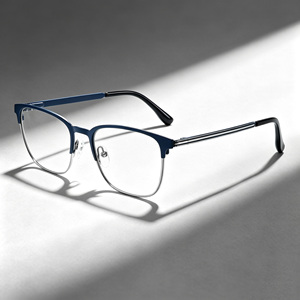
Premium executive frames require micro-tolerances. Utilizing Japanese-standard pure titanium (Grade 2) and Beta-titanium (Ti-15V-3Cr-3Sn-3Al) alloys delivers frame fronts weighing less than 8.5 grams with remarkable tensile resilience, zero nickel-leaching corrosion, and hypoallergenic longevity.
- PVD vacuum ion-plating prevents saltwater corrosion
- Screwless barrel hinges withstand 25,000+ open-close cycles
- Flexible bridge and temple architecture without deformation
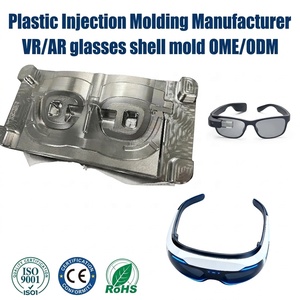
Augmented Reality & Smart Wearable Enclosures
The boundary between consumer eyewear and high-tech wearable tech has blurred. Optical manufacturers must now maintain Class 10,000 cleanroom injection molding capabilities, providing high-impact polycarbonate and Grilamid TR90 housings engineered to nest micro-displays, waveguide prisms, bone conduction speakers, and Li-ion power cells.
- Precision snap-fit enclosures with IPX5 moisture seals
- Electromagnetic interference (EMI) internal shielding
- Structural drop shock absorption verified by finite element analysis
Engineering Specifications & Material Performance Benchmarks
A technical cross-comparison of the primary structural materials used across wholesale optical frames and high-fashion sunglass manufacturing.
| Substrate Material | Specific Density | Tensile Strength | Skin Biocompatibility | Finishing Capabilities | Recommended Market Tier |
|---|---|---|---|---|---|
| Mazzucchelli Bio-Acetate | 1.28 g/cm³ | 55 - 70 MPa | Hypoallergenic (No Phthalates) | Hand-buffing, 7-barrel hinges, deep lamination | High-End Luxury / Boutique Optical |
| Pure Titanium (Grade 2 / Beta) | 4.51 g/cm³ | 480 - 620 MPa | 100% Nickel-Free / Medical Grade | Ion-beam PVD, ceramic micro-blasting, laser welding | Executive Business & Minimalist Luxury |
| Swiss EMS Grilamid TR90 | 1.01 g/cm³ | 75 - 85 MPa | Food-Contact Certified | Rubberized soft-touch, water-transfer, polarized snap-fit | Sports Performance / Active Lifestyle |
| Optical-Grade Polycarbonate (PC) | 1.20 g/cm³ | 60 - 72 MPa | Standard Safe Contact | Mirror coating, gradient UV400 dip, anti-fog inner coat | Fast Fashion / Promotional / Driving |
| Monel & Stainless Steel 304L | 7.90 g/cm³ | 520 - 750 MPa | Requires Nickel-Barrier Clear Coat | Electrophoretic lacquering, diamond cut engraving | Commercial Volume / Retail Chain House Brands |

Three Generations of Manufacturing Integrity: From Cadore Precision to Scaled Global Export
Rooted in an eyewear heritage dating back to 1950 in the Cadore eyewear district—the cradle of artisanal frame craftsmanship—our operations fuse the exacting standards of traditional Italian optical engineering with China's unmatched tooling speed and high-throughput production agility.
Unlike brokerage agents or assembly-only intermediaries, we operate a vertically integrated production ecosystem. Every stage—from rapid industrial design sketching, CAD/CAM mould engineering, injection tool milling, multi-axis tumbling, hand-finishing, and automated hinge alignment to lens drop-ball safety inspection—is governed under a single quality management system.
Emerging Procurement Trends Shaping Eyewear Sourcing Through 2030
Anticipate structural market shifts in consumer demand, optical ergonomics, and functional tints before allocating your capital inventory.
Specialty Therapeutic Optical Tints (FL-41 & Melanin)
Wholesale demand for functional lens eyewear has spiked by 42% year-over-year. Beyond baseline blue-light filters, optical buyers are procuring FL-41 rose-tinted spectrophotometric lenses specifically engineered to block 480–520 nm wavelengths, providing medically recognized relief for digital migraine sufferers, photophobia patients, and post-concussion light sensitivity.
- Clinically proven photophobia mitigation
- Available with prescription (Rx) and non-Rx planar finishes
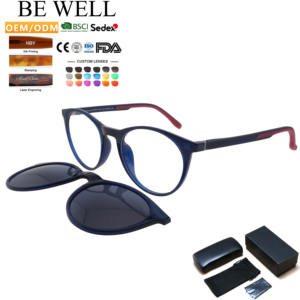
- Magnetic 2-in-1 clip-on mechanism integration
Triacetate Cellulose (TAC) & Nylon Polarized Lenses
Traditional acrylic sunglass lenses are being phased out in mid-to-high market tiers. Importers are standardizing on 1.1mm to 1.4mm multi-layer Triacetate Cellulose (TAC) and injection-molded optical Nylon lenses that incorporate anti-scratch polysiloxane hard coatings, oleophobic hydrophobic surface treatments, and vacuum back-surface anti-reflective (AR) layers.
- 99.9% vertical glare polarization efficiency
- Zero optical wave distortion (Class 1 optical clarity)
- UV400 total spectrum cutoff (280nm - 400nm)
Modular Quick-Release Magnetic & Ergonomic Systems
Multi-functional eyewear systems featuring neodymium magnetic bridges, click-together neck-hanging temples, and modular prescription inserts are dominating lifestyle retail channels. Retail buyers prefer versatile stock-keeping units (SKUs) that deliver high perceived value and impulse purchase interest without requiring complex retail optometry adjustments.
- Integrated rare-earth neodymium magnetic locking
- Soft-touch continuous headband configurations
- Compact travel packaging and drop-test packaging
Frequently Asked Questions for Professional Eyewear Importers
Clear, direct answers regarding minimum order quantities, compliance certifications, tooling investments, and international logistics protocols.
Scale Your Eyewear Brand with Proven Manufacturing Authority
Whether you require custom mould tooling for next-generation smart eyewear, exclusive Mazzucchelli acetate boutique collections, or high-volume wholesale polarized sunglasses, our engineering team is ready to analyze your technical specifications.