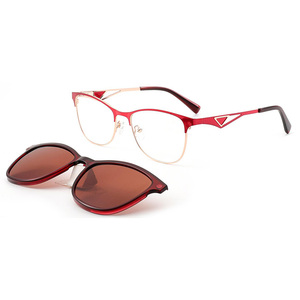
Dual Mechanism
Magnetic Fashionable Red Metal Clip-On Eyeglasses Multiple Frame Colors No MOQ Polarized Lens Women Optical Frames
High-tensile drill mounts, diamond-beveled edges, memory titanium bridges, and magnetic modular attachments manufactured to global CE, ISO 9001, and FDA tolerances.
Magnetic Fashionable Red Metal Clip-On Eyeglasses Multiple Frame Colors No MOQ Polarized Lens Women Optical Frames
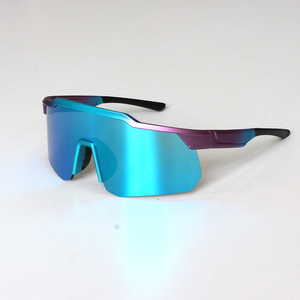
FUYUANDA High-End Men's Polarized Sunglasses Custom Logo Red Luxury Eyewear Blue TR90 Bike Mirror Cycling Protection
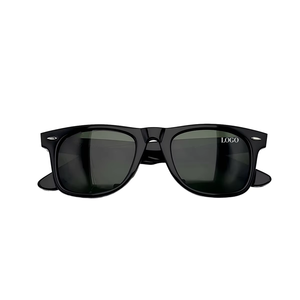
Retro Vintage Italy Designer Sunglasses 2140 UV400 Protection Full Rim Acetate Luxury Outdoor Travel Fashion New Unisex
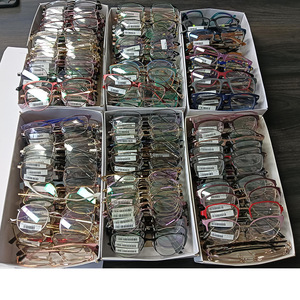
In Stock High Quality Wholesale Acetate Metal PC TR Optical Eyeglasses Frames For All Face Spectacles Glasses Sunglasses
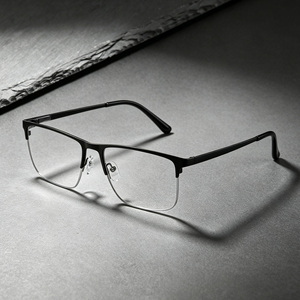
Good Quality Pure Titanium Optical Glasses Half Frame Men's Business Style Semi-Rimless Spectacle Mount Frame
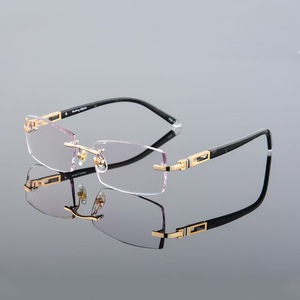
Custom Rectangle Gradient Tint Plano Prescription Optical Frame High-End Alloy Diamond Trimming Rimless Glasses
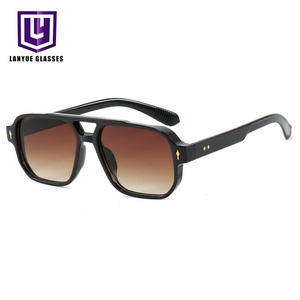
Retro 70s Pilot Teardrop Double Bridge Flat Top Oversized Thick UV400 Polarized Fashion Sunglasses Women Optical Series
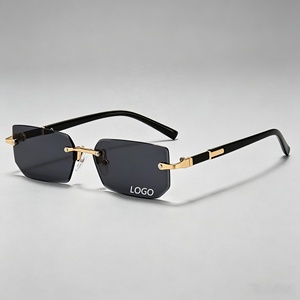
Private Label Rimless Eyewear Sunglasses UV400 Protection CE ISO 9001 Certified For Daily Retail Optical Programs
Rimless optical eyewear represents the pinnacle of frame manufacturing complexity. Unlike conventional full-rim or acetate injection designs where the eye-wire absorbs bending moments, rimless structures transmit mechanical loads—including torsional flexure, pantoscopic tilt adjustments, and temple hinging forces—directly into the lens substrate through micro-bored drill points. Sourcing engineers evaluating Chinese suppliers must look past surface-level electroplating and audit the physics of the bridge tensioning, bushing elasticity, and metallurgical fatigue thresholds.
Historically, rimless eyeglasses relied on threaded metal miniature screws secured by micro-washers and hex nuts. While economical for baseline production, threaded designs suffer an inherent failure mode: recurring vibration loosening combined with asymmetric stress concentration on the perimeter of the drilled polycarbonate or MR-8 lens. Premium export lines now implement double-compression silicone or high-molecular polyamide POM compression bushings.
In automated CNC assembly setups, the bridge and temple chassis feature barbed dual prongs. When driven into matched ultrasonic-reamed lens cavities lined with compression sleeves, the polymer collar deforms outward radially, locking the metal anchor across a 360-degree surface area. This spreads clamping force over 4.2 times the surface area of a standard screw-nut assembly, reducing localized shearing forces below the critical 18 MPa threshold where lens stress cracking initiates.
A frequent point of confusion among international optical distributors is balancing tensile strength with malleable adjustability in bridge and end-piece hardware. Sourcing teams must demand rigorous raw material certs:
Exhibiting 99.2% titanium purity, this material is designated exclusively for cold-stamped bridge components, pad arms, and nose bridges where permanent manual adjustment by optical dispensers is required without risk of work hardening or brittle fracture.
Utilized for ultra-fine temple arms (down to 0.75mm diameter). Beta-Ti features an ultra-high yield strength (>850 MPa) allowing extreme elasticity, featherweight frame construction under 3.8 grams, and uncompromised shape memory under lateral torsion.
Export frameworks undergo high-vacuum physical vapor deposition (PVD) using titanium nitride (TiN) or chromium carbide under 10^-3 Pa environments, guaranteeing salt-spray resistance surpassing standard 96-hour ISO 12870 laboratory anti-corrosion tests.
How automation, advanced polymers, and omni-channel customized fulfillment are redefining the B2B supply chain for global distributors and retail optical chains.
Global procurement is shifting definitively away from standard polycarbonate to Mitsui Chemicals' MR-8 and MR-7 polyurethanes (Abbe value 41-42). These resins deliver superior tensile pull-out strength at drill holes (>80N), eliminating spider-web fissures while accommodating high minus prescriptions.
Luxury optical margins are increasingly driven by architectural lens profiling. 5-axis robotic cutters execute prismatic diamond cuts, custom beveled step-facets, and perimeter hand-polished edge tints directly matching the galvanic finish of the bridge and temple mounts.
Leading buyers are moving toward flexible tooling platforms that offer interchangeable nose bridge widths (16mm to 21mm) and tailored temple drop lengths within single OEM orders, allowing opticians to optimize pantoscopic tilt and vertex distance per wearer morphology.
The boundary between classic ophthalmic hardware and smart wearable tech is dissolving. Rimless bridges are now engineered with micro-wiring channels to support temple-integrated bone conduction transducers and micro-sensor packages without compromising minimalist aesthetics.
Full vertical integration spanning tool development, multi-axis wire EDM, CNC reaming, multi-stage IP vacuum plating, and certified Class-1 medical device export compliance.
Our centralized manufacturing ecosystem delivers disciplined mass production without variance. High-capacity automated Swiss-type lathes and CNC bending units produce 3,000 calibrated frames daily, supporting major national optical chains across North America, Europe, and Asia.
Our dedicated engineering department releases over 1,000 catalogued models every year across acetate, titanium, metal alloy, and injection materials. We transform 2D CAD concept blueprints into physical functional prototypes within 14 business days.
From metallurgical blending and laser micro-welding to ultrasonic cleaning, automated tumbler polishing, pad printing, and manual optician inspection—every single production phase stays under one accountable management umbrella, protecting OEM confidentiality.
Seamlessly integrate pure titanium bridge components with Japanese Mazzucchelli acetate temple sleeves, stainless steel core wires, or TR90 co-injections. We specialize in cross-material bonding that passes thermal shock cycles from -20°C to +60°C.
Confidentiality is our baseline operational protocol. Proprietary chassis molds, customized temple engraving files, and patented hinge mechanics are safeguarded under enforceable non-disclosure agreements, backed by isolated production lines for tier-one private labels.
Every frame batch leaves the facility with complete CE Declarations of Conformity, FDA Device Facility Establishment Registrations, REACH-compliant nickel-release test reports, and ISO 12870 mechanical fatigue certifications ready for customs release.
Direct technical answers addressing the real concerns of optical purchasing executives, product managers, and supply chain directors.
Stress cracking is prevented through a three-stage mechanical safeguard: First, our tooling utilizes specialized step-drills that ream the hole and chamfer the rim simultaneously at 18,000 RPM under coolant spray, removing microscopic crack-initiation burrs. Second, we integrate high-elasticity polytetrafluoroethylene (PTFE) or polyoxymethylene (POM) compression collars between the metal prongs and the lens cavity, guaranteeing zero metal-to-glass contact. Third, we mandate lens substrate compatibility guidelines (recommending high-impact polyurethane MR-8 or polycarbonate with minimum 2.0mm edge thickness for drill mounts) to all purchasing distributors.
Pure Titanium (commercial grades 1 through 4) possesses exceptional biocompatibility, zero nickel content, and high ductility, making it the ideal raw material for the nose bridge and adjustable nose-pad arms where the dispensing optician must manipulate angles to fit varied facial structures. Conversely, Beta-Titanium is an alloy enriched with vanadium, chromium, and aluminum; it possesses extreme elastic recovery and high tensile strength. We specify Beta-Ti for the ultra-thin temple arms to ensure spring tension that securely grips the cranium without requiring heavy screw-driven spring hinges.
For custom private label OEM rimless collections requiring proprietary bridge tooling and laser-engraved temple branding, our standard MOQ is 300 pieces per model (divided into 2-3 electroplating colorways such as IP Matte Gunmetal, IP Rose Gold, and Polished Silver). For our ready-to-ship inventory chassis, MOQ is as low as 50 pieces. Custom prototyping requires 15 business days for 3D tooling and physical sample delivery, while full-scale mass production orders average 45 to 60 calendar days post-approval of golden samples.
We utilize physical vapor deposition (PVD) vacuum ion plating rather than basic wet galvanic dipping. After an intensive 7-stage ultrasonic degreasing process, frames enter a high-vacuum chamber where titanium ions are bombarded onto the metal substrate alongside inert nitrogen gas, creating a protective ceramic-like hard coat layer measuring between 0.3 to 0.5 microns. This surface delivers superior surface hardness (exceeding 2000 HV), making it immune to acidic human sweat, UV radiation, and seawater exposure in strict accordance with ISO 12870 standard test protocols.
Yes. A major pain point for optical retail chains is the lack of standardized repair consumables. For all private label contracts, we supply custom-branded accessory kits containing exact-tolerance drill-mount compression pliers, barbed pin-cutting tools, replacement POM double-sleeves, screwless plastic anchors, medical-grade silicone nose pads, and digital lens-drilling coordinate templates compatible with Briot, Nidek, and Essilor automated edgers.
We provide full legal documentation sets with every commercial shipment: For the European Union, we supply CE Declarations of Conformity under Medical Device Regulation (EU) 2017/745 (MDR Class I for optical frames) and EN ISO 12870:2018 technical documentation. For the United States, our shipments are cleared under our active FDA Device Facility Establishment Registration and Device Listings, alongside third-party REACH Regulation (EC) No 1907/2006 test certificates verifying non-detectable nickel release rates (<0.5 μg/cm²/week).
Direct manufacturing partnerships, transparent metallurgical pricing, rapid CAD prototyping, and turnkey private-label packaging. Request our comprehensive technical export catalog today.