Business IP Series
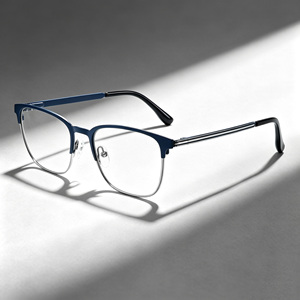
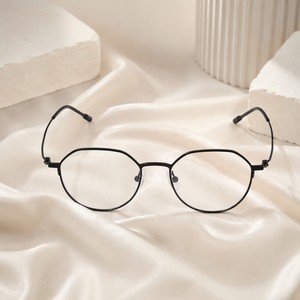
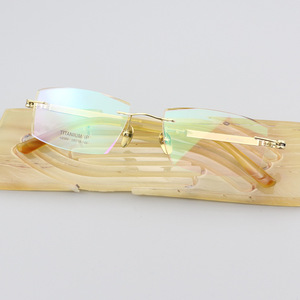
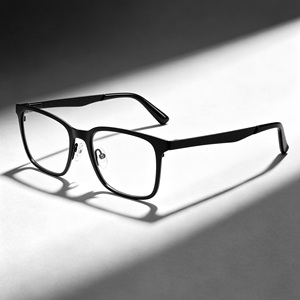
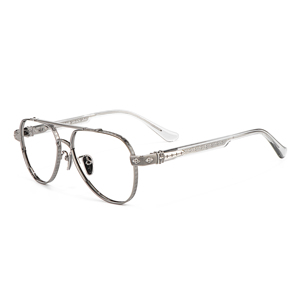
High Quality Blue Colored Plating Pure Titanium Eyeglasses Frames Men's Business Style
Pure Ti 99.5%
IP Navy Plating
Weight: 12.8g
Direct-from-factory Japanese pure titanium (Grade 1 & Grade 2) frames manufactured with micro-plasma laser welding, ion vacuum deposition (PVD), and precision optical tolerances. Ready for bespoke private label batching or bulk distribution.
Over 75 years of optical legacy rooted in the heart of Italian frame making.
Scaled industrial capacity across precision titanium, acetate, and metal lines.
In-house tooling, prototyping, and CAD/CAM engineering teams under one roof.
Supplying CE-marked eyewear collections to verified opticians worldwide.
At IOVES, we eliminate third-party subcontractor variance by operating a fully vertically integrated manufacturing system in Lozzo di Cadore (Belluno). Sourcing premium Grade 1 and Grade 2 titanium wire and plates, our master technicians manage precision hydraulic cold-stamping, automated 5-axis CNC micro-milling, laser seam welding, and proprietary physical vapor deposition (PVD) ion plating in cleanroom environments.
Every production batch undergoes exhaustive dimensional analysis, 500-cycle bridge fatigue testing, and 48-hour synthetic sweat immersion testing to verify complete structural integrity and zero nickel release before customs dispatch.
We operate as an unbranded industrial backbone for retail chains, optical franchisors, and designer labels requiring strict intellectual property protection. Our engineering division signs robust bilateral Non-Disclosure Agreements (NDAs) before prototype blueprints are generated.
Clients benefit from full laser-engraved branding, bespoke pad printing, localized CE declaration files, EU MDR (2017/745) Class I technical dossiers, and tailor-made packaging ready for optical dispensary retail display.
Understanding the mechanical, chemical, and galvanic properties of titanium variants is critical for optical procurement directors evaluating warranty return ratios and wearer comfort.
| Material Classification | Titanium Purity (wt%) | Tensile Strength (MPa) | Vickers Hardness (HV) | Primary Component Application | Biocompatibility & Corrosion Resistance |
|---|---|---|---|---|---|
| CP-Ti Grade 1 (Alpha) | ≥ 99.5% Pure Titanium | 240 – 380 MPa | 120 – 150 HV | Front eyewires, nose pads, solid bridges | Optimal biocompatibility; 100% hypoallergenic; completely immune to human sweat. |
| CP-Ti Grade 2 (Alpha) | ≥ 99.2% Pure Titanium | 345 – 480 MPa | 160 – 200 HV | CNC machined structural lugs, rimless mount blocks | Exceptional weldability in argon atmospheres; zero nickel migration. |
| Beta-Titanium (β-Ti 15-3-3-3) | ~ 78% Ti, 15% V, 3% Cr, 3% Sn, 3% Al | 850 – 1150 MPa | 280 – 340 HV | Ultra-flexible temples, spring hinges, flex bridges | High elastic return memory; excellent flexural fatigue resistance; nickel-free. |
| Standard Nickel-Silver / Monel | 0% Ti (65% Cu, 18% Ni, 17% Zn) | 350 – 550 MPa | 130 – 170 HV | Budget commercial frames (Conventional) | High risk of contact dermatitis; requires thick electroplated barrier layers. |
Titanium exhibits an aggressive affinity for atmospheric oxygen and nitrogen above 400°C, which causes embrittlement in the Heat-Affected Zone (HAZ). IOVES utilizes enclosed argon-purged robotic laser chambers, maintaining oxygen concentrations below 15 ppm during bridge-to-rim joins. This prevents weld fracture even after 25,000 temple flexion cycles.
Unlike cheap wet electroplating that chips and peels, our frames receive physical vapor deposition in high-vacuum cathode arc chambers. We deposit Titanium Nitride (TiN) or Diamond-Like Carbon (DLC) films (0.8–1.5 μm) directly onto the titanium substrate, yielding a surface hardness exceeding 2000 HV and surviving 96 hours of salt spray testing (ISO 9227).
Pure titanium's high modulus of elasticity allows ultra-thin rim profiles (down to 1.1 mm eyewire thickness) that securely retain -8.00D high-index poly or 1.74 lenses without rim flaring, chassis twist, or lens slippage under severe thermal fluctuations between -20°C and +60°C.
Wholesale volume buyers, optical retail groups, and international importers must align supply contracts with major shifts in sustainability mandates, metallurgical traceability, and consumer ergonomic demands.
Consumer demographics in the premium optical sector are rapidly moving away from bulky, heavy acetate frames toward featherweight pure titanium structures weighing under 10 grams (chassis only). By utilizing Japanese hollow-core drawn titanium wires and laser-milled sheet profiles, IOVES enables brands to offer all-day wearability with zero nose-pad bridge indentation, driving higher end-user customer satisfaction.
With EU ESG reporting requirements tightening for corporate retail chains, the sourcing of scrap-derived, certified recycled pure titanium ingots will become a standard contractual KPI. Closed-loop scrap recovery during our CNC edge-milling phases ensures that up to 40% of manufacturing swarf is remelted via vacuum arc remelting (VAR) into certified industrial stock, cutting carbon emissions by 68%.
The convergence of prescription eyewear with micro-electronics, directional audio speakers, and sensor arrays requires high EMI-shielding frame materials that maintain structural rigidity under thermal expansion. Titanium's natural electromagnetic shielding and rigid chassis provide the ideal skeletal platform for smart eyewear integration without sacrificing classic optical styling.
Every optical frame imported into the European Economic Area must comply with Regulation (EU) 2017/745 for Class I Medical Devices. IOVES manufactures every pure titanium SKU to conform rigorously with harmonized European standard EN ISO 12870:2018 (Ophthalmic optics – Spectacle frames).
Our compliance documentation portfolio covers:
Counterfeit and low-grade titanium alloys (such as unverified memory alloys contaminated with copper or nickel) plague spot wholesale markets. To protect our partners from regulatory recall and product liability risks, IOVES provides an authenticated Certificate of Conformity (CoC) and X-ray Fluorescence (XRF) spectrometry assay report with every freight bill.
Our buyers receive full audit trails showing raw material batch heats, tensile test records, vacuum chamber batch logs, and dimensional laser scan data covering critical hinge-axis clearances (±0.02 mm).
Direct engineering and commercial answers to simplify optical frame import compliance, production lead times, and private label onboarding.
We classify our materials according to strict international optical conventions (ISO 12870). To bear the "Pure Titanium" stamp, at least 90% of the total frame weight must consist of certified alpha-titanium (Grade 1 or Grade 2) with a minimum 99.0% raw element purity. We perform inline XRF (X-ray Fluorescence) spectroscopic batch analysis on incoming wire spools and plate stock. Furthermore, each shipment includes an accredited metallurgical test certificate demonstrating compliance with ASTM B265 and confirming zero nickel contamination.
Every commercial order arrives with a complete EU Declaration of Conformity (DoC), valid CE labeling on inner temples, technical test reports verifying EN ISO 12870:2018 standards, and EN 16128 nickel release test certificates from accredited independent testing laboratories (such as Certottica or equivalent). We also provide full technical construction files (TCF) for institutional optical retailers requiring single registration number (SRN) entries under EUDAMED.
For custom private label manufacturing involving new 5-axis CNC tooling and dedicated bridge molds, our baseline MOQ starts at 300 pieces per style (spread across 2–3 colorways). Tooling development and pre-production sample approval take 25–35 days. Upon golden sample sign-off, mass production lead times generally range between 60 and 75 calendar days, accounting for micro-laser assembly, multi-stage ultrasonic cleaning, vacuum IP coating, and 100% individual frame optical alignment.
Pure titanium immediately forms an unreactive passive titanium dioxide (TiO2) film upon contact with air, making standard wet galvanic electroplating prone to poor interfacial adhesion, flaking, and blistering. IOVES employs high-vacuum Physical Vapor Deposition (PVD) / Ion Plating (IP). Under a high-voltage plasma state, ionized target metals (such as titanium, chromium, or zirconium) bombard the clean titanium surface, forming a metallurgical bond at the sub-micron scale. This achieves an anti-scratch surface hardness above 2000 HV and exceptional resistance to sebum, sweat, and cosmetics.
Yes. Combining titanium skeleton structures with cured cellulose acetate (including Mazzucchelli 1849 sheet stock) is one of our core specialties in Cadore. We machine precision internal titanium retaining eyewires with recessed lock-grooves that hold hand-polished acetate eye rings without adhesive or chemical bonding. This guarantees that opticians can easily glaze high-prescription or photochromic lenses using standard bench warmers without risking acetate separation or frame misalignment.
Hinge failures and loose screws are the primary cause of warranty claims in optical dispensaries. IOVES integrates CNC-machined titanium hinge blocks fitted with Teflon-sleeved or micro-encapsulated thread-locking screws (Nylok or Tuflok). Additionally, we subject every production run to automated mechanical testing, demanding that hinges endure 20,000 continuous opening/closing cycles at 30 rpm while maintaining a minimum torque resistance of 0.05 N·m.
Connect directly with our engineering and procurement team in Lozzo di Cadore. Request technical spec sheets, full CE/EN 16128 testing portfolios, bespoke OEM tooling quotes, or physical sample sets for retail lab evaluation.