0%

Choosing the right Acetate optical frames involves more than matching a color to your wardrobe. The material should feel substantial, smooth, and carefully finished. When you hold a quality frame, its edges should feel polished, not sharp. The temples should open evenly, while the hinges should move with controlled resistance. Small details matter.

Tom Davies, founder of TD Tom Davies and an experienced bespoke eyewear designer, often expresses the fitting principle this way: “The frame should fit the face, not the other way around.” That idea guides this article. A frame may look impressive in a product photograph yet feel heavy after two hours. Clear acetate can reveal tiny bubbles or uneven layers. Dark Havana patterns may vary between two frames. That is not always a defect, but it deserves inspection.

These ten tips examine material quality, bridge comfort, temple length, lens shape, hinge construction, skin contact, optical measurements, and long-term care. An optician can confirm pupillary distance, lens alignment, and the correct fitting height. Those measurements affect vision and comfort. They should not be guessed from an online chart.

There is no perfect frame for every face. Even experienced buyers make mistakes. I once focused too heavily on color and underestimated the bridge fit. The result looked excellent but slipped during reading. A better choice considers the entire day: commuting, screen use, warm weather, and repeated cleaning. Practical testing often reveals what a mirror hides.
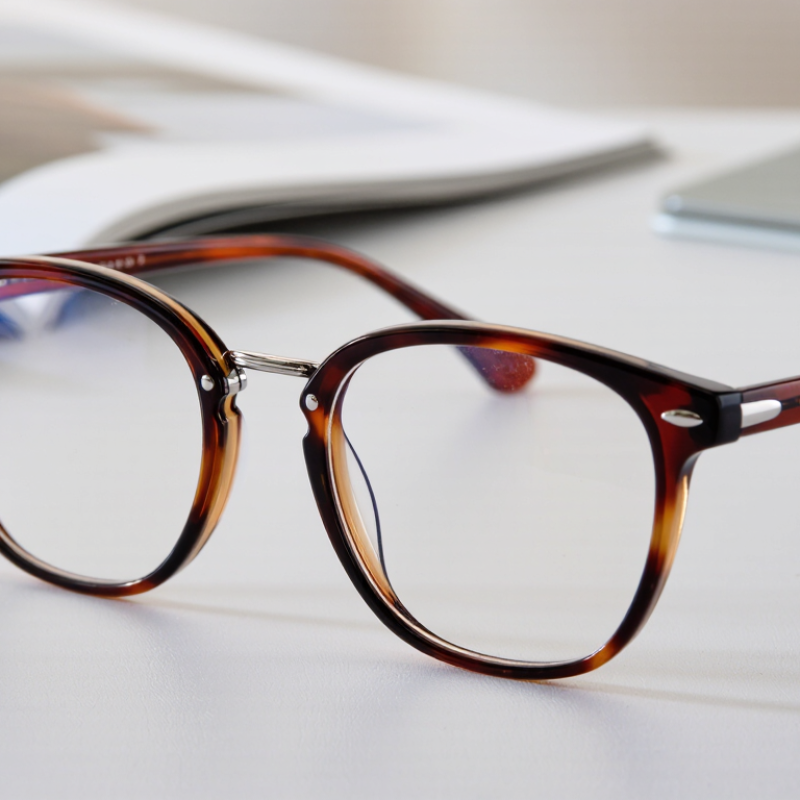
10 Tips for Buying Acetate Optical Frames?

Understanding Acetate Optical Frames and Their Key Benefits

10 Tips for Buying Acetate Optical Frames

Understanding Acetate Optical Frames and Their Key Benefits

Acetate optical frames are made from plant-derived cellulose material, not ordinary injection-molded plastic. They often feel warmer against the skin and offer a richer, more substantial finish. Good acetate can show layered color, polished edges, and smooth temple movement. During fittings, I check the bridge, hinge tension, and frame width before discussing style. A beautiful frame still fails if it slides during reading. Acetate is durable, but it is not indestructible. Heat, pressure, and careless storage can cause warping.

Buying tips: Check the material description and inspect the edges under bright light. Look for even polishing, clean joins, and hinges that open without grinding. Tip three: Try the frame for ten minutes, not ten seconds. Notice pressure behind your ears and marks on your nose. Tip four: Ask whether the frame can be adjusted safely. Some designs need experienced optical fitting, especially around the bridge.

More tips: Match the frame width with your face, rather than relying on a familiar size. Confirm that the lenses will suit your prescription and chosen shape. Ask about replacement parts and care instructions. Keep the frame in a hard case, away from dashboards and radiators. Wipe it with a clean microfiber cloth, never a rough sleeve. My own fitting notes are not perfect; lighting can mislead color choices. Taking a second look outdoors often reveals what the showroom hides.

Checking Frame Quality, Material Thickness, and Craftsmanship

10 Tips for Buying Acetate Optical Frames

Checking Frame Quality, Material Thickness, and Craftsmanship

Acetate frames deserve more than a quick color check. The global eyewear market reached an estimated USD 157.9 billion in 2023, according to Grand View Research. That scale makes quality control increasingly important. Start by checking whether the frame is genuine acetate, not ordinary injection-molded plastic. Acetate usually shows layered color and a warmer hand feel. Look closely. Inspect the front for bubbles, cloudy patches, or uneven lamination. Hold both temples together and check whether they align evenly. A crooked frame often signals weak finishing or poor assembly.

Next, examine material thickness around the bridge, rims, and hinges. Extremely thin acetate may look elegant but can flex excessively. Thick rims should still feel balanced on the nose. Run a fingertip along every edge. Smooth, rounded polishing indicates careful craftsmanship, while sharp corners may cause discomfort. Open and close each temple several times. The hinge should move steadily, without grinding or sudden looseness. Check the screws, barrel alignment, and lens grooves. These small details matter.

My own mistake was judging durability by weight alone. A heavier frame is not automatically stronger. Ask for the acetate sheet’s thickness and production information when available. ISO 12870 provides relevant requirements for spectacle-frame performance and testing. It does not replace hands-on inspection. The World Health Organization estimates that at least 2.2 billion people live with near or distance vision impairment, so dependable eyewear deserves serious attention. Hold the frame under bright light, check symmetry, and test the fit before buying. Some flaws appear only after several minutes of wear.

10 Tips for Buying Acetate Optical Frames? - Checking Frame Quality, Material Thickness, and Craftsmanship

No. Buying Tip What to Check Practical Quality Indicator Useful Reference or Test Warning Signs
1 Confirm the frame material Check whether the frame is made from cellulose acetate rather than generic injected plastic. The seller should clearly identify the material and provide consistent information across the product description and frame markings. Ask for the material specification or product documentation. Appearance alone cannot reliably identify acetate. Vague material claims such as “premium plastic” without a specific composition.
2 Inspect front thickness and balance Look at the rim, bridge, end pieces, and overall weight distribution. Common acetate sheet components are often approximately 2–4 mm thick before shaping, but the finished thickness varies by design and size. Measure with a caliper if exact thickness is important; compare both sides for symmetry. Very thin areas that flex excessively, abrupt thickness changes, or a frame that feels front-heavy.
3 Examine the temple construction Check temple thickness, taper, alignment, and the transition from the hinge to the ear tip. The temples should taper smoothly and remain straight when viewed from above and behind. Place the closed frame on a flat surface; both temple tips should sit at a similar height. Uneven taper, sharp edges, twisting, or visible stress marks around the hinge area.
4 Review the hinge quality Open and close each temple slowly and check the hinge attachment. Movement should be smooth and controlled, without lateral looseness, grinding, or sudden resistance. Operate each side several times and compare the tension between the left and right temples. Loose screws, clicking, metal movement inside the acetate, or a hinge that binds before fully opening.
5 Check the surface finish Inspect the front, edges, bridge, and temples under bright, angled light. A well-finished surface should look even, with smoothly polished edges and no cloudy patches. Use reflected light to reveal fine scratches, uneven polishing, bubbles, or ripples. Rough edges, visible sanding lines, deep scratches, cracks, or inconsistent gloss.
6 Assess symmetry and alignment Compare the bridge, rims, nose pads or pad arms, end pieces, and temple angles. Left and right components should be visually balanced, with no unintended twist in the front. View the frame from the front, top, and back, then place it on a flat surface. One rim sits higher, the bridge is off-center, or the temples do not close evenly.
7 Inspect the lens groove and rim Look for a continuous, clean groove and sufficient rim material around the lens opening. The groove should be even and free from chips, gaps, or rough sections that could complicate glazing. Ask an optician to confirm that the frame can accommodate the intended lens thickness and prescription. Interrupted grooves, chipped edges, hairline cracks, or unusually narrow rim sections.
8 Evaluate joins and embedded components Examine hinge areas, laminated layers, decorative inserts, and any acetate-to-metal transitions. Joins should be flush, secure, and clean, with no open seams or visible adhesive residue. Run a fingertip lightly over the join without applying force; the transition should feel smooth. Gaps, lifting layers, exposed adhesive, discoloration around inserts, or loose metal parts.
9 Check comfort and fit Assess bridge contact, temple pressure, ear-tip position, and frame width. The frame should remain stable without painful pressure, slipping, or contact with the eyelashes. Wear it for several minutes and move your head normally before selecting the final size. Red marks, temple pressure, frequent slipping, or a bridge that leaves a noticeable gap.
10 Verify service and adjustment support Check the return policy, warranty coverage, spare-part availability, and professional fitting service. Reliable after-sales support should explain what is covered and who performs adjustments or repairs. Confirm the written policy before purchase, especially for hinge faults, manufacturing defects, and prescription glazing. No written policy, unclear responsibility for repairs, or no access to a qualified optician for fitting.

Note: Frame thickness and construction details vary by design, size, manufacturing process, and prescription requirements. A qualified optician should confirm final fit and lens compatibility.

Choosing the Right Frame Shape, Size, and Facial Fit

10 Tips for Buying Acetate Optical Frames

Choosing the Right Frame Shape, Size, and Facial Fit

Start with your face, not the display mirror. Oval, square, and heart-shaped guides can help, but real faces rarely fit one category. According to the World Health Organization’s World Report on Vision, at least 2.2 billion people have near or distance vision impairment. Correct prescription placement matters. Choose a frame shape that balances your features and leaves clear space around your eyes. Round frames can soften sharper jawlines. Angular acetate frames may add definition to softer contours. This is only a guide.

According to the World Health Organization’s World Report on Vision, at least 2.2 billion people have near or distance vision impairment.

Measure the frame width against your cheekbones. The front should sit close without pressing your temples. Check the bridge carefully. A wide bridge may slide on a narrow nose, while a narrow bridge can leave red marks. Your pupils should sit near each lens center. Ask an optician to verify this measurement. The Vision Council’s 2023 Consumer inSights report indicates that roughly three in four U.S. adults use vision correction, so precise fitting affects many daily wearers. Check temple length, hinge movement, and brow alignment. Your eyebrows should remain naturally visible.

Try the frame for several minutes. Look down. Smile. Turn your head. Acetate can be professionally adjusted, but it cannot fix every poor size choice. Thicker rims may hide stronger prescriptions, yet they can feel heavier. I have found mirror checks misleading under bright shop lighting. Take a phone photo instead. Fit comes first. Style follows.

Comparing Lens Compatibility, Comfort, and Everyday Function

10 Tips for Buying Acetate Optical Frames

Comparing Lens Compatibility, Comfort, and Everyday Function

Acetate frames can feel warm, stable, and easy to adjust. Check lens compatibility before admiring the color. The Vision Council’s 2024 consumer research indicates that roughly three-quarters of American adults use vision correction. That makes accurate fitting more important than fashion alone. Ask whether the frame suits single-vision, progressive, or occupational lenses. Confirm its lens shape, groove depth, and minimum fitting height. A qualified optician should verify pupillary distance and optical center placement. Small errors can cause headaches.

Hold the frame for a minute. Notice pressure behind your ears and across the bridge. Choose a bridge that rests securely without leaving deep marks. Check that the temples do not touch your cheeks. Thicker acetate may improve durability, but it can add noticeable weight. For strong prescriptions, ask about thinner high-index lenses. For active daily use, compare impact-resistant materials and appropriate coatings. ISO 8980 standards address the optical and mechanical performance of spectacle lenses, but the frame still needs practical testing. Standards do not replace comfort.

Think about heat, sweat, cleaning, and repeated removal. Examine hinge movement and screw stability. Look through the frame while reading, walking, and checking a phone. Progressive wearers need enough vertical space and precise measurements. I once chose a beautiful frame with too little fitting height. It looked right, but reading felt tiring. That mistake still matters. Review the written prescription, lens material, coating options, and adjustment policy before ordering. A reliable fitting is worth more than a dramatic finish.

10 Tips for Buying Acetate Optical Frames: Lens Compatibility, Comfort, and Everyday Function

Scores use a practical 1–10 scale based on common acetate frame constructions. Full-rim acetate generally supports the widest range of prescription lenses, while lightweight and thin acetate designs often provide better comfort for extended daily wear. Actual suitability depends on prescription strength, frame measurements, lens material, bridge fit, and professional adjustment.

Evaluating Style, Price, Care Needs, and Long-Term Value

Buying Acetate Optical Frames

Buying acetate optical frames requires more than a quick mirror check. I have found that style feels different after eight hours. Look for balanced color, comfortable bridge contact, and temples that do not press behind your ears. Thick rims can look distinctive, but they may feel heavy. Try them with your usual hairstyle and prescription lenses in mind. Small details matter.

Price should reflect construction, not only polished packaging. Inspect the hinges, rim edges, and surface finish under clear light. Smooth edges may suggest careful production, although appearance alone proves little. Ask an optician about adjustments, replacement parts, and service coverage. A cheaper frame can become expensive after repeated repairs. I once chose a beautiful pair that slipped constantly. The correction cost was frustrating. That mistake still influences my decisions.

Acetate needs gentle care. Rinse away dust before wiping with a clean microfiber cloth. Avoid hot water, harsh cleaners, and leaving frames on a sunny dashboard. Store them in a firm case, with lenses facing upward. Regular professional adjustments can reduce uneven pressure and extend comfort. Yet no frame lasts forever. Color, fit, and personal taste change. I sometimes overvalue durability and ignore whether I will actually wear the frame. Long-term value includes daily comfort, repair access, and honest self-knowledge, not just a low price.

FAQS

What are acetate optical frames made from?

They are made from plant-derived cellulose material. They often feel warmer and look richer than ordinary molded plastic. Layered colors and polished edges are common details.

How can I inspect frame quality?

Check the edges under bright light. Look for even polishing, clean joins, and smooth hinge movement. A grinding hinge deserves a closer look.

How should an acetate frame fit my face?

Match the frame width with your cheekbones, not only your usual size. The bridge should rest securely without pressing your nose. The temples should not squeeze your head or touch your cheeks.

What should I do when trying on a frame?

Wear it for several minutes. Look down, smile, turn your head, and read something nearby. Notice pressure behind your ears and marks on your nose.

Which frame shape suits my face?

Face-shape guides can help, but they are not strict rules. Round frames may soften angular features. Angular frames may add definition to softer contours.

Can acetate frames support different prescription lenses?

Many can support single-vision, progressive, and occupational lenses. An optician should confirm lens shape, fitting height, and optical center placement. Small measurement errors may cause headaches.

Are thicker acetate frames better for strong prescriptions?

Thicker rims may hide lens edges and improve visual balance. However, they can feel heavier. Ask about thinner lens materials before choosing a heavy frame.

How should I care for acetate frames?

Store them in a hard case, away from dashboards and radiators. Wipe them with a clean microfiber cloth. Heat and pressure can cause warping.

Can acetate frames be adjusted?

Professional adjustment can improve the bridge, temple angle, and hinge alignment. It cannot repair every poor size choice. Ask about safe adjustment methods before ordering.

What mistake should buyers avoid?

Do not choose only by color or showroom lighting. My own mirror checks have sometimes misled me. A phone photo outdoors may reveal the frame more honestly.

Conclusion

Buying Acetate optical frames is about balancing quality, comfort, appearance, and long-term value. Start by learning how acetate differs from ordinary plastic: it is known for its rich color, solid feel, and potential durability when carefully made. Examine the frame’s thickness, smooth edges, secure hinges, even polish, and overall craftsmanship. A well-constructed frame should feel sturdy without being unnecessarily heavy. Pay close attention to shape and size, making sure the bridge sits comfortably, the temples do not pinch, and the frame follows your facial proportions. The right fit should remain stable during daily movement while still feeling comfortable.

Before purchasing, confirm that the frame supports your preferred lenses, including prescription, sun, or specialized options, and consider how its weight will affect all-day wear. Compare prices based on material quality, construction, fit, and expected lifespan rather than appearance alone. Finally, review care requirements: keep the frames in a protective case, clean them with suitable materials, and avoid excessive heat. These steps help you choose a stylish, functional pair that offers lasting value.

Ethan

Ethan

Ethan is a professional marketing specialist dedicated to helping businesses make smarter decisions through clear communication, practical insights, and customer-focused strategy. With an in-depth understanding of the company’s products, services, and industry applications, he transforms complex......