0%

Finding reliable Custom sunglasses production in 2026 requires more than comparing factory prices. A professional sourcing process begins with product clarity. Define the frame material, lens category, dimensions, logo method, target quantity, and delivery market. A clear specification reduces misunderstandings during sampling.

Look for manufacturers with proven experience in your product category. Review factory photos, production records, sample quality, and verified customer feedback. Ask whether the supplier can provide UV protection test reports, material details, and quality-control procedures. For example, inspect acetate edges, hinge movement, lens alignment, and logo placement under bright light. Small defects often become expensive at scale.

Request a physical sample before approving mass production. Confirm the sample against your technical drawing, color reference, packaging plan, and approved tolerance range. Discuss minimum order quantities, tooling costs, payment stages, inspection points, and realistic lead times. Responsible suppliers should communicate delays instead of hiding them. That matters.

Do not assume the cheapest quotation is the best option. A low price may exclude testing, packaging, replacement parts, or export documentation. Requirements can also vary by market, so check applicable product, labeling, advertising, and environmental rules with qualified local advisers. No supplier is perfect. Your first shortlist may still be wrong. Reassess it after sampling, factory communication, and independent inspection. A careful process creates stronger partnerships and helps turn a promising sunglasses concept into a consistent, compliant product.
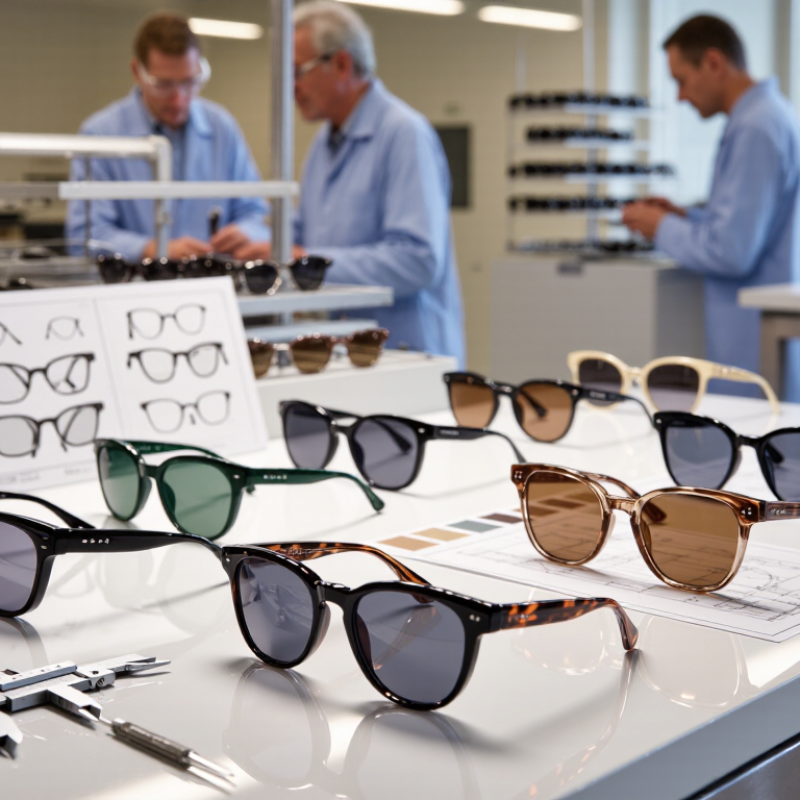
How to Find Custom Sunglasses Production in 2026?

Define Your Custom Sunglasses Product Requirements

Define your custom sunglasses product requirements before contacting a factory. A vague request creates vague samples, unstable pricing, and avoidable delays. According to Grand View Research’s 2024 eyewear market report, global eyewear demand continues to expand, increasing competition for distinctive products. Your specification must therefore be practical and measurable.

Record the frame material, lens material, lens category, UV protection level, dimensions, hinge type, logo method, colors, packaging, and target quantity. Include a technical drawing with bridge width, lens width, and temple length. A two-millimeter error can change comfort noticeably. Specify whether lenses require polarization, impact resistance, or prescription compatibility. ISO 12312-1 provides performance guidance for general-use sunglasses, but factories still need your exact testing expectations. Ask for test reports, sample approval procedures, and production tolerances.

Statista Market Insights estimated the global sunglasses market at roughly 20 billion US dollars in 2024. That scale does not make every design commercially safe. A practical product brief should also state the target customer, retail price, launch season, and acceptable defect rate. I would request at least two sample rounds. Never approve a frame from photographs alone. Check pressure points behind the ears, hinge resistance, lens distortion, and color consistency under daylight. A weak point remains packaging. It can protect the product poorly, even when the sunglasses are well made. Review carton strength and moisture protection before finalizing the order.

Research and Compare Sunglasses Manufacturers

How to Find Custom Sunglasses Production in 2026?

Researching and comparing manufacturers requires more than checking catalog photos. Grand View Research valued the global sunglasses market at approximately $20.6 billion in 2023. It also forecast a 6.3% annual growth rate through 2030. Demand is growing, but supplier quality remains uneven. Market estimates disagree. That is useful. It reminds buyers to verify data before setting production targets.

Request a factory profile, material list, and recent testing records. Compare acetate, recycled plastic, stainless steel, and lens options separately. Ask about minimum order quantities, sample fees, mold charges, and replacement policies. A reliable manufacturer should explain its inspection process clearly.

Measure sample dimensions with calipers, not photographs. Check hinge alignment, frame flexibility, lens clarity, and surface scratches under bright light. Small faults become expensive at scale.

Safety documentation needs careful review. Ask for ultraviolet protection results and applicable optical testing standards, such as ISO 12312-1. Confirm that reports match the exact lens material and model. Do not accept a generic certificate automatically.

The 2024 market analysis from Mordor Intelligence also identified steady growth in protective and fashion eyewear demand, increasing pressure on delivery speed. Faster is not always better. Compare pilot-run defects, communication response time, packaging strength, and production timelines. A low quotation may hide weak quality control, unstable materials, or costly rework. Allow space for mistakes, because early samples rarely reveal every factory problem.

Evaluate Materials, Designs, and Production Capabilities

Finding custom sunglasses production in 2026 requires more than comparing factory prices. Materials shape comfort, durability, appearance, and production risk. Acetate offers rich colors and a polished feel, while recycled nylon supports lighter frames and flexible designs. Ask for material certificates, UV protection test results, and samples under natural light. A frame may look premium online but feel heavy after several hours.

Design evaluation should include bridge width, temple length, hinge strength, lens thickness, and nose-pad comfort. Request a physical prototype before approving bulk production. Check whether the supplier uses CNC cutting, injection molding, hand polishing, or a mixed process. These choices affect edge quality, color consistency, and minimum order quantities.

Small details matter. A loose hinge can damage customer trust quickly.

Production capability also means communication and quality control. Ask for a clear sample timeline, inspection checkpoints, packaging specifications, and replacement procedures for defective pieces. Review how the factory manages color matching across different acetate batches. Confirm whether it can scale from a small test order to larger seasonal demand. Early prototypes often expose design problems that drawings hide. That can feel inconvenient, but it prevents expensive corrections later.

I would not approve a supplier after one attractive sample. Repeated samples, measured tolerances, and honest discussion of limitations provide stronger evidence. Capability is not only about machinery. It is about consistency when conditions change.

Review Samples, Pricing, Minimum Orders, and Quality Standards

How to Find Custom Sunglasses Production in 2026?

A reliable production search begins with physical samples, not attractive catalog images. Request several frame colors, lens tints, and hinge finishes. Check whether both temples close evenly. Hold each lens toward a straight window frame and watch for distortion. Measure bridge width, temple length, and lens thickness with calipers. Small differences can affect comfort and fit. Ask whether samples use final materials or temporary substitutes. They often do not.

Pricing needs a detailed breakdown. Separate frame costs, lens costs, tooling, packaging, testing, and shipping. Ask for prices at three order volumes. A low unit price may hide expensive molds or complicated packaging. Confirm the currency and payment schedule in writing. Also ask how rejected pieces are handled. This point is easy to overlook. It should not be.

Minimum orders vary by color, lens type, and production process. One factory may accept 300 pieces overall but require 100 pieces per color. Request a written MOQ table before approving artwork. Quality standards should cover lens clarity, UV protection documentation, hinge strength, logo placement, and color consistency. A pre-production sample is essential. Then inspect a random batch before final payment. Use measurable limits, such as acceptable scratches or uneven gaps, rather than vague promises.

I have seen polished samples hide weak hinges and inconsistent coating. That is why supplier claims need records, photographs, and independent test reports when appropriate. Expect some rework. Good production is controlled, not magically perfect.

Finalize Contracts, Production, and Delivery Plans

Custom sunglasses production in 2026 depends on disciplined contracts, not attractive samples alone. Before signing, define lens material, UV protection, frame tolerance, logo placement, packaging, inspection standards, and acceptable defect rates. Attach approved drawings and a sealed reference sample. A vague quality clause creates expensive arguments later.

Use Incoterms 2020 to assign freight, insurance, customs, and delivery responsibility clearly. UNCTAD reports that over 80% of global merchandise trade by volume moves by sea. Therefore, a delivery plan should include production time, inspection days, port handling, ocean transit, and customs clearance. Add a realistic buffer of 10 to 20 percent. A perfect forecast is impossible. However, ignoring seasonal port congestion is avoidable. Payment milestones should follow measurable events, such as sample approval, production completion, and passed inspection. Do not release the final balance only because cartons look finished.

Tips Require weekly production photos, batch records, and carton measurements. Use an independent inspection before shipment. Keep written approval for every design change. Confirm whether replacement goods or credit applies to defective units. The 2024 Global Eyewear Market report by Grand View Research estimates continued market growth through 2030, increasing pressure on speed and product consistency. That pressure can encourage rushed decisions. Leave time for one corrective production round, especially when polarized lenses or complex coatings are involved.

FAQS

How should I compare custom sunglasses manufacturers?

Request factory profiles, material lists, recent testing records, and inspection procedures. Compare samples, timelines, communication, packaging, and replacement policies. Catalog photos are not enough.

Which materials should I evaluate?

Compare acetate, recycled nylon, stainless steel, and other suitable frame materials. Check weight, flexibility, color consistency, and surface finish. Ask for material certificates.

What should I inspect on physical samples?

Measure bridge width, temple length, lens thickness, and frame dimensions with calipers. Check hinge alignment, lens clarity, scratches, gaps, and temple closure. Inspect them under bright light.

How can I check lens quality?

Hold each lens toward a straight window frame. Watch for distortion or uneven clarity. Request ultraviolet protection results for the exact lens material and model.

What testing documents should a supplier provide?

Ask for current ultraviolet protection reports and applicable optical testing documents. Confirm that each report matches the final model. Generic certificates may not be reliable.

How should I review pricing?

Separate frame, lens, tooling, packaging, testing, and shipping costs. Request prices for three order volumes. Confirm currency, payment timing, and rejected-piece handling in writing.

What should I know about minimum order quantities?

Minimums may differ by color, lens type, and manufacturing process. A supplier might accept 300 pieces overall but require 100 pieces per color. Request a written MOQ table.

How can I control quality before bulk production?

Approve a physical pre-production sample. Define limits for scratches, uneven gaps, lens distortion, hinge strength, and color variation. Inspect a random batch before final payment.

Can one attractive sample prove production capability?

No. Request repeated samples and measure their tolerances. Confirm whether samples use final materials. I would not approve production after one impressive sample.

What production details should I confirm?

Ask whether the supplier uses CNC cutting, injection molding, hand polishing, or mixed methods. Confirm sample timing, inspection checkpoints, packaging strength, and production capacity. Faster is not always better.

Conclusion

Finding reliable custom sunglasses production in 2026 starts with clearly defining your product requirements. Decide on the target customer, frame shape, lens type, colors, logo placement, packaging, expected quantity, and desired price range. Next, research and compare suitable manufacturers by examining their experience, communication, production equipment, customization options, and ability to meet your schedule. Pay close attention to material choices, design flexibility, lens performance, durability, and whether the factory can support both prototypes and larger orders.

Before making a final decision, review samples carefully for comfort, appearance, finishing quality, and consistency. Compare pricing, minimum order quantities, payment terms, quality control procedures, and relevant product standards. Once the supplier meets your expectations, confirm every detail in a written contract, including approved specifications, timelines, inspection requirements, packaging, shipping responsibilities, and solutions for unexpected delays. A clear production and delivery plan can help reduce risks and create a smoother custom sunglasses production process from initial concept to finished products.

Ethan

Ethan

Ethan is a professional marketing specialist dedicated to helping businesses make smarter decisions through clear communication, practical insights, and customer-focused strategy. With an in-depth understanding of the company’s products, services, and industry applications, he transforms complex......